Shopping Centre Construction in Kenya
Shopping Centre Construction in Kenya — The Complete 2026 Guide
💡Shopping centre construction in Kenya is quietly becoming the country’s most active retail development segment — and it looks very different from the billion-shilling regional malls that usually make headlines. Moreover, a new wave of neighbourhood strip malls is emerging across estates in Kiambu, Likoni, Nairobi, Narok, Nakuru, Mombasa, Machakos, and Eldoret, built around convenience, accessibility, and everyday functionality rather than the “all under one roof” destination model of a large mall. Furthermore, MRE Real Estate’s Sh400 million Manyanja Mall in Nairobi’s Eastlands — anchored by Quickmart, with 80% of its retail space pre-leased before completion — shows exactly how bankable a well-located, well-anchored shopping centre can be, even at a fraction of a regional mall’s scale and budget.
Therefore, this guide covers everything developers and investors need to know about shopping centre construction in Kenya in 2026 — what separates a shopping centre from a mall, the formats driving current demand, the construction process, anchor tenant strategy, and realistic costs at this smaller, faster, and increasingly investable scale.
💡 Why Shopping Centres Are Kenya’s Fastest-Growing Retail Format: As Nairobi expands outward and satellite towns keep growing, congestion, time pressure, and rising transport costs are pushing shoppers toward shorter, more frequent trips close to home rather than planned excursions to a large regional mall. Shopping centres are built for exactly that shift — and for developers, they require a fraction of the capital, land, and approval complexity of a full-scale mall, making them accessible to a much wider range of investors.
At Suimas, we deliver interior design and fit-out for retail developments across this entire spectrum — from single-unit neighbourhood centres to large regional malls. Furthermore, this guide reflects what we consistently see driving success at the shopping-centre scale specifically.
Shopping Centre vs Shopping Mall — What’s the Difference?
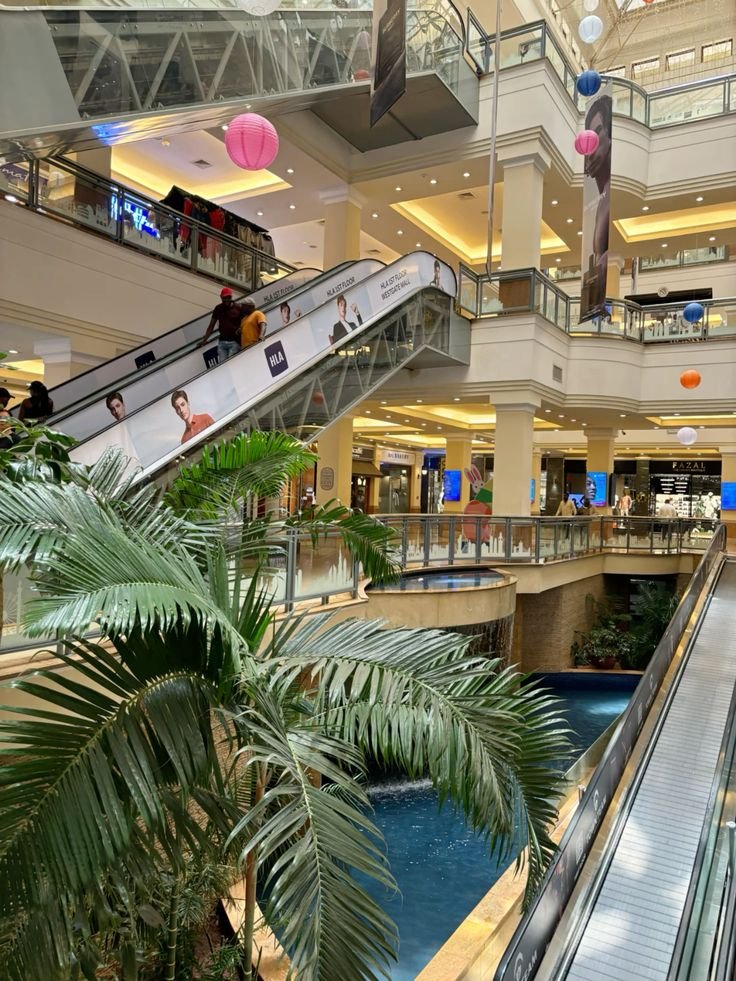
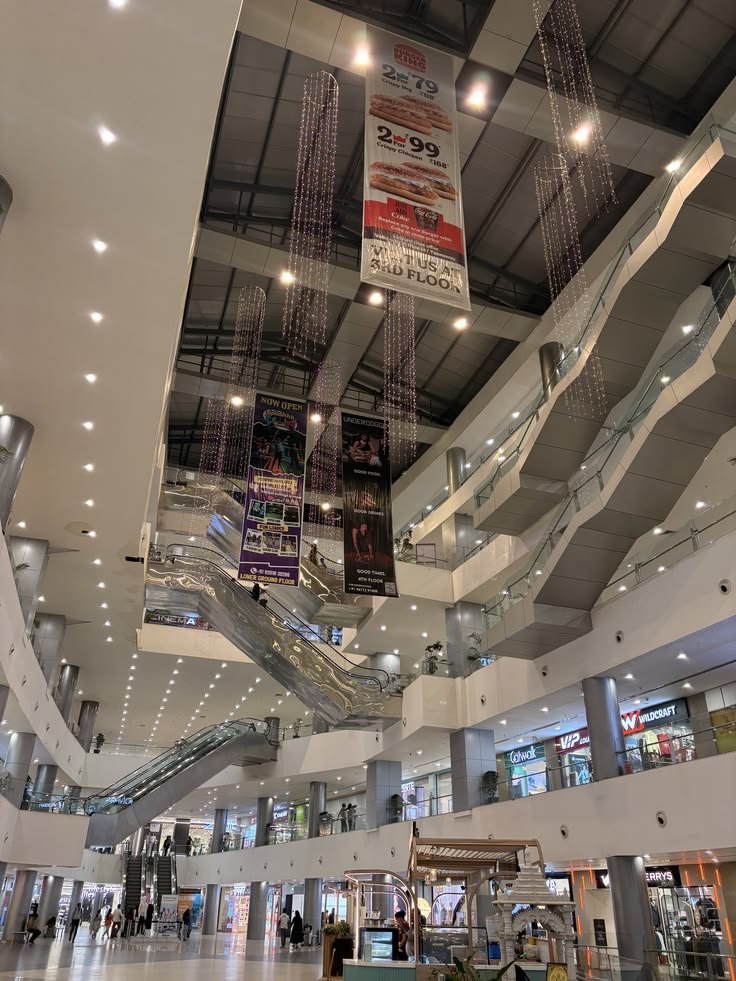
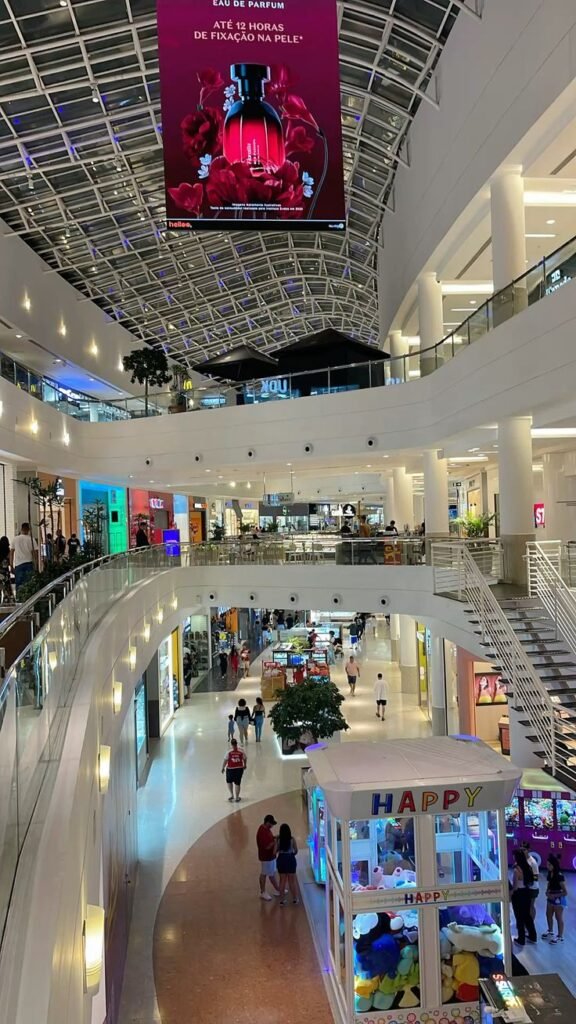
The terms are often used interchangeably in Kenya, but they describe genuinely different developments. Moreover, a shopping mall is typically an enclosed, multi-level, destination retail development with a large anchor mix — supermarkets, cinemas, department stores, entertainment zones — designed to draw shoppers from across a wide catchment for extended visits. Furthermore, a shopping centre is smaller, usually single or double-storey, often open-air or semi-enclosed, anchored by one supermarket or a small cluster of everyday-needs tenants, and designed to serve a tight, walkable or short-drive catchment for quick, frequent visits.
The Four Common Shopping Centre Formats in Kenya
| Format | Typical GLA | Anchor Tenant | Catchment |
|---|---|---|---|
| Convenience centre | 500 – 1,500 m² | Mini-supermarket, pharmacy, or M-Pesa/banking agent | Immediate estate or neighbourhood |
| Neighbourhood strip mall | 1,500 – 3,000 m² | Supermarket (Quickmart, Naivas, Chandarana) | 1–3 km walkable/short-drive radius |
| Community shopping centre | 3,000 – 5,000 m² | Supermarket plus 2–3 secondary anchors (pharmacy, gym, eatery) | Wider estate or small town catchment |
| Strip mall / retail parade | Variable, linear layout | Multiple small to mid-size tenants along a single frontage | Passing traffic and adjacent estates |
Why Shopping Centres Are Booming in Kenya Right Now
Convenience Over Destination Shopping
Kenyan shoppers are increasingly favouring quick, frequent trips over planned excursions to a large mall. Moreover, neighbourhood-based retail developers are explicitly designing for “on your way home from work” shopping rather than a destination you have to plan your day around — and that shift in shopper behaviour is exactly what’s driving demand for the shopping centre format nationwide.
Lower Capital Requirements Than a Full Mall
A shopping centre requires a fraction of the land, construction budget, and approval complexity of a regional mall, which opens the segment to a much broader range of developers — from established real estate firms to first-time commercial investors. Moreover, the Sh400 million Manyanja Mall in Eastlands demonstrates the scale at which this format operates: a three-storey development on roughly half an acre, a fraction of the land and budget a regional mall would require.
Flexible Space for a Wider Range of Tenants
Shopping centres offer more flexible unit configurations and lower cost per square foot than large-format malls. Moreover, this flexibility means a supermarket can take the footprint it actually needs while smaller tenants occupy correspondingly smaller, appropriately priced units — rather than every tenant adapting to oversized spaces designed around a mall’s anchor-driven layout.
Strong Pre-Leasing Potential With the Right Anchor
Supermarket chains such as Quickmart and Naivas are actively expanding into neighbourhood-format developments as part of their own growth strategy, which means a well-located shopping centre with the right anchor commitment can achieve very strong pre-leasing well before completion — Manyanja Mall’s 80% pre-leased position before construction finished is a clear example of this dynamic at work.
The Shopping Centre Construction Process in Kenya
Step 1 — Site Selection
Shopping centre success depends heavily on immediate, walkable or short-drive catchment density rather than city-wide draw. Moreover, sites along estate access roads, near residential gate entrances, or at busy junctions within growing residential corridors consistently outperform sites chosen primarily for land price alone.
Step 2 — Anchor Tenant Engagement
Securing a supermarket or another strong everyday-needs anchor early — ideally before finalizing the design — both validates the site and materially improves financing terms and pre-leasing momentum for the rest of the centre.
Step 3 — Design and Layout
Unlike a large mall, a shopping centre’s design priority is efficient, legible frontage and parking rather than complex internal circulation or atrium design. Moreover, ground-floor visibility from the road, adequate parking directly outside units, and a layout that lets the anchor tenant’s footprint flex to its actual space needs are the design decisions that matter most at this scale.
Step 4 — Approvals
County planning approval, NCA registration, and, depending on scale, NEMA requirements still apply — but the smaller footprint and simpler structural scope of most shopping centres typically means a faster, less complex approval process than a full regional mall.
Step 5 — Construction
Construction follows a familiar but compressed sequence: site works and foundations, single or double-storey concrete or steel frame, envelope and roofing, MEP rough-in, and external works including parking and access. Moreover, single or double-storey shopping centres are significantly faster to build than a multi-level mall, with many neighbourhood-format projects completing in 12–18 months from groundbreaking.
Step 6 — Interior Fit-Out and Tenant Coordination
Even at a smaller scale, interior fit-out — flooring, ceilings, signage, and shopfront design — determines whether a shopping centre feels like a considered retail environment or simply a row of finished shells. Moreover, coordinating anchor and secondary tenant fit-outs, even across a handful of units rather than hundreds, still benefits from dedicated scheduling to avoid one tenant’s works delaying another’s opening.
Step 7 — Opening and Ongoing Management
A shopping centre’s ongoing success depends on the same fundamentals as a mall at a smaller scale — cleanliness, security, reliable parking, and a tenant mix that keeps giving shoppers a reason to stop by regularly rather than only when they need the anchor supermarket.
Shopping Centre Construction Costs in Kenya — 2026
Shell Construction Cost (Same Rate Basis as Larger Malls)
| Development Type | Cost per m² (KES) | Cost per sq ft (KES) |
|---|---|---|
| Convenience/strip centre (single storey) | 85,000 – 92,000 | 7,897 – 8,547 |
| Neighbourhood strip mall (single/double storey) | 89,980 – 98,000 | 8,359 – 9,104 |
| Community shopping centre (with parking structure) | 98,000 – 115,000 | 9,104 – 10,684 |
Interior Fit-Out Cost by Zone
| Zone | Budget (KES/m²) | Mid-Range (KES/m²) | Premium (KES/m²) |
|---|---|---|---|
| Shopfront and frontage | 20,000 – 40,000 | 40,000 – 70,000 | 70,000+ |
| Anchor tenant shell fit-out | 15,000 – 25,000 | 25,000 – 45,000 | 45,000+ |
| Secondary retail unit fit-out | 25,000 – 45,000 | 45,000 – 75,000 | 75,000+ |
| Common walkway / covered parade | 15,000 – 30,000 | 30,000 – 55,000 | 55,000+ |
| Signage and wayfinding (per unit) | 80,000 – 150,000 | 150,000 – 300,000 | 300,000+ |
| Gypsum ceiling (per m²) | 1,500 – 3,500 | 3,500 – 4,500 | 4,500 – 5,500+ |
| Commercial flooring (per m²) | 1,500 – 3,000 | 3,000 – 6,000 | 6,000+ |
Total Project Budget by Format
| Format | GLA (m²) | Shell (KES) | Interior & Fit-Out (KES) | Total Budget |
|---|---|---|---|---|
| Convenience centre | 500–1,500 | 42.5M–138M | 15M–55M | 57.5M–193M |
| Neighbourhood strip mall | 1,500–3,000 | 135M–294M | 50M–120M | 185M–414M |
| Community shopping centre | 3,000–5,000 | 294M–575M | 100M–220M | 394M–795M |
All figures are planning-level estimates. Land cost, professional fees, statutory approvals, and financing costs are additional. Always commission a formal, project-specific BOQ before committing to a budget.
Anchor Tenant Strategy for Kenyan Shopping Centres
The anchor tenant is the single most important commercial decision in a shopping centre project. Moreover, supermarket chains such as Quickmart, Naivas, and Chandarana are actively seeking neighbourhood-format space as part of their own expansion strategy, and securing a signed anchor commitment before finalizing your design gives you both a bankable pre-leasing story and a tenant whose specific space requirements can shape the layout from the start. Furthermore, a strong secondary tenant mix — a pharmacy, a bank or M-Pesa agent, a bakery or eatery, and a service business such as a salon or dry cleaner — rounds out a shopping centre so shoppers have multiple everyday reasons to visit, not just one.
Common Mistakes in Kenyan Shopping Centre Development
🚩 Choosing a site based on land price alone rather than catchment density and visibility 🚩 Designing the building before securing anchor tenant interest 🚩 Underestimating parking needs directly outside units 🚩 Treating interior fit-out and shopfront design as optional at this smaller scale 🚩 Skipping a proper BOQ because the project “feels too small to need one” 🚩 Ignoring signage and street visibility, which matter disproportionately for passing-traffic catchments
Shopping Centre Development Checklist — Kenya 2026
- ✅ Confirm catchment density and road visibility before committing to a site
- ✅ Engage a supermarket or strong anchor tenant before finalizing design
- ✅ Design parking directly accessible to each unit, not as an afterthought
- ✅ Confirm county and NCA approval requirements for your specific scale
- ✅ Commission a formal BOQ even for smaller-format projects
- ✅ Budget interior fit-out and signage as dedicated line items, not residual costs
- ✅ Plan secondary tenant mix (pharmacy, bank agent, eatery, services) alongside the anchor
- ✅ Coordinate tenant fit-out scheduling even across a small number of units
What Suimas Offers for Shopping Centre Construction in Kenya
Suimas delivers interior design and fit-out for retail developments at every scale — from single-anchor neighbourhood centres to large regional malls. Moreover, at the shopping centre scale specifically, we focus on the details that most affect a smaller development’s commercial performance: shopfront visibility, efficient anchor and secondary tenant fit-out, and signage that actually captures passing-traffic attention.
What we deliver for shopping centre projects:
- Commercial Interior Design — right-sized for convenience centres, neighbourhood strip malls, and community centres
- 3D Design and Layout Planning — visualize shopfront, frontage, and unit layouts before construction begins
- Branded Signage — street-visible signage and wayfinding designed to capture passing traffic
- Office Partitioning Design and shopfront fit-out for anchor and secondary retail units
- Gypsum Ceiling Installation — right-sized ceiling solutions for single and double-storey retail formats
- Floor Installation Services — durable, cost-effective commercial flooring for walkways, frontage, and units
- Painting & Special Effects — exterior and interior finishes that give a small centre a considered, professional identity
- Fully itemized BOQ pricing — right-sized for smaller-budget projects, with the same transparency as our large mall work
- In-house execution — one accountable team across design, materials, and installation
- Free initial site consultation — always, without obligation, whatever the scale of your project
👉 View Our Full Commercial Interior Design Services → 📞 Call 0717 044 443 for a Free Shopping Centre Design Consultation 💬 WhatsApp 0717 044 443 →
Contact Our Retail Design and Fit-Out Team Today
Call us at 0717 044 443 / 0739 255 050 / 0725 021 709. Email: info@suimas.co.ke / info@interiordesigners.co.ke
Therefore, if you are planning, designing, or fitting out a shopping centre, neighbourhood strip mall, or larger mall in Kenya, contact us here for a free project consultation and detailed BOQ. We are based at Solar House, Fourth Floor, Nairobi.
Related Retail and Commercial Design Services
- Commercial Interior Design Kenya
- Branded Signage Kenya
- Gypsum Ceiling Installation Kenya
- Floor Installation Services Kenya
- 3D Design & Layout Planning Kenya
- Painting & Special Effects Kenya
Also Read
- Cost of Building a Shopping Mall in Kenya
- Mall Design and Construction in Kenya
- How to Build a Shopping Mall in Kenya
- Mall Construction in Kenya — The Complete Guide
- Shopping Mall Construction Companies in Kenya
Nairobi Areas We Serve
We serve Westlands, Karen, Kilimani, Kileleshwa, Lavington, Runda, Gigiri, Muthaiga, Parklands, Riverside, Upperhill, Hurlingham, Eastleigh, South C, South B, Langata, Embakasi, Donholm, Umoja, Kasarani, Roysambu, Zimmerman, Kahawa West, Ruaka, Rosslyn, Kiambu Town, Kikuyu, Kinoo, Ruiru, Juja, Syokimau, Mlolongo, Kitengela, Athi River, Ngong, and the entire Nairobi CBD.
Shopping Centre Design and Fit-Out Services Across All 47 Counties
Suimas supports shopping centre, strip mall, and mall interior design and fit-out throughout all 47 counties in Kenya, from Nairobi and Mombasa to Kisumu, Nakuru, Eldoret, and every growing estate and satellite town in between.
Frequently Asked Questions
What is the difference between a shopping centre and a shopping mall in Kenya? A shopping mall is typically a large, enclosed, multi-level destination development with a broad anchor mix (supermarkets, cinemas, entertainment) designed to draw shoppers from a wide catchment. A shopping centre is smaller, usually single or double-storey, anchored by one supermarket or a small cluster of everyday-needs tenants, and designed to serve a tight, walkable or short-drive neighbourhood catchment for frequent visits.
How much does it cost to build a shopping centre in Kenya? A convenience centre (500–1,500 m²) typically totals KES 57.5M–193M all-in, a neighbourhood strip mall (1,500–3,000 m²) runs roughly KES 185M–414M, and a community shopping centre (3,000–5,000 m²) totals approximately KES 394M–795M, covering shell construction and interior fit-out. Land, professional fees, and approvals are additional.
Why are neighbourhood strip malls growing so fast in Kenya? Shoppers are increasingly favouring quick, frequent trips close to home over planned excursions to a large mall, driven by congestion, time pressure, and rising transport costs as Nairobi and satellite towns keep expanding. Developers are responding with convenience-focused, supermarket-anchored formats that require far less capital and land than a full regional mall.
How long does it take to build a shopping centre in Kenya? Most single or double-storey neighbourhood shopping centres complete in roughly 12–18 months from groundbreaking to opening — significantly faster than the 18–36+ months typical of a full-scale regional mall.
Which anchor tenants are best for a Kenyan shopping centre? Supermarket chains such as Quickmart, Naivas, and Chandarana are the most common and most bankable anchors for neighbourhood-format shopping centres in Kenya, as they are actively expanding into this format and their commitment strongly improves pre-leasing and financing prospects for the rest of the development.
Areas We Serve
SUIMAS provides commercial construction, building, renovation, commercial interior design and fit-out services across all 47 counties in Kenya.
Nairobi County
We serve all areas of Nairobi, including:
Nairobi CBD, Westlands, Parklands, Gigiri, Muthaiga, Runda, Rosslyn, Kitisuru, Spring Valley, Lavington, Kileleshwa, Kilimani, Hurlingham, Riverside, Kawangware, Dagoretti, Karen, Lang’ata, South C, South B, Nairobi West, Madaraka, Upper Hill, Ngong Road, Adams Arcade, Jamhuri, Woodley, Kibera, Loresho, Mountain View, Kangemi, Pangani, Ngara, Eastleigh, Pumwani, Majengo, Kamukunji, Starehe, Mathare, Kariobangi, Dandora, Umoja, Buruburu, Donholm, Komarock, Kayole, Embakasi, Fedha, Tassia, Imara Daima, Pipeline, Mukuru, Syokimau, Utawala, Mihango, Ruai, Njiru, Ruaraka, Baba Dogo, Kasarani, Roysambu, Zimmerman, Githurai and surrounding areas.
Mombasa County
We serve Mombasa Island, Mombasa CBD, Old Town, Kizingo, Tudor, Tononoka, Ganjoni, Majengo, Makadara, Bondeni, Likoni, Mtongwe, Shelly, Changamwe, Port Reitz, Mikindani, Jomvu, Miritini, Kisauni, Mtopanga, Bamburi, Utange, Shanzu, Nyali, Mkomani, Kongowea, Frere Town, Bombolulu, Mishomoroni, Mwakirunge, Magongo, Dunga and surrounding areas.
All 47 Counties in Kenya
SUIMAS serves:
Mombasa, Kwale, Kilifi, Tana River, Lamu, Taita-Taveta, Garissa, Wajir, Mandera, Marsabit, Isiolo, Meru, Tharaka-Nithi, Embu, Kitui, Machakos, Makueni, Nyandarua, Nyeri, Kirinyaga, Murang’a, Kiambu, Turkana, West Pokot, Samburu, Trans Nzoia, Uasin Gishu, Elgeyo-Marakwet, Nandi, Baringo, Laikipia, Nakuru, Narok, Kajiado, Kericho, Bomet, Kakamega, Vihiga, Bungoma, Busia, Siaya, Kisumu, Homa Bay, Migori, Kisii, Nyamira and Nairobi.