How to Build a Shopping Mall in Kenya
How to Build a Shopping Mall in Kenya — The Complete Step-by-Step Guide
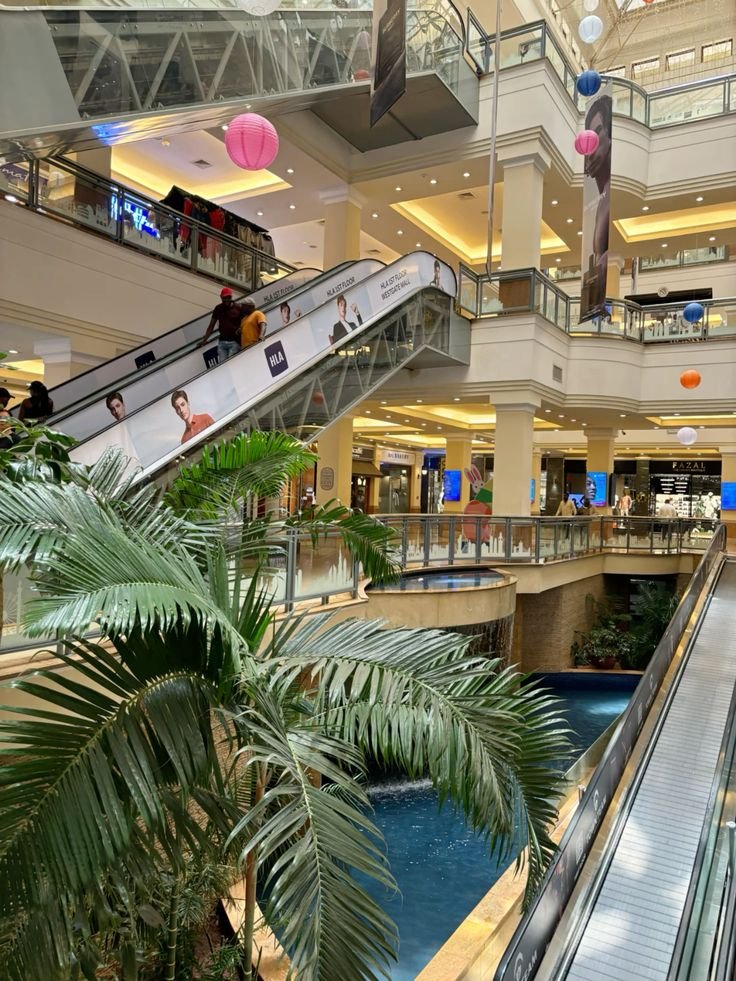
Building a shopping mall in Kenya is one of the most capital-intensive, longest-running, and most commercially rewarding real estate ventures a developer can undertake. Moreover, Kenya’s formal retail sector is expanding faster than at any point in the country’s history, driven by rapid urbanization, a growing middle class, and increasing international retailer demand for quality space. Furthermore, projects like BBS Mall in Eastleigh — now the largest mall in East and Central Africa at over 250,000 square metres — prove that Kenyan developers can execute retail projects at genuinely world-class scale.
Therefore, this guide breaks the entire mall-building journey into a clear, sequential process — from the first feasibility study through to opening day and beyond. Consequently, whether you are a first-time developer, an investor evaluating a site, or a retailer planning your own anchor development, this is the complete roadmap for how to build a shopping mall in Kenya in 2026.
💡 Reality Check Before You Start: Most mall projects in Kenya don’t fail because the building falls down — they fail commercially. A structurally sound mall with the wrong location, the wrong tenant mix, or a rushed interior fit-out can open to empty units and weak footfall. Furthermore, building a mall is really two projects running in parallel — a construction project and a retail business — and both need to be planned from day one.
At Suimas, we work alongside developers at the design and fit-out stage of mall projects across Kenya — turning completed shells into commercially operational retail destinations. Furthermore, this guide draws on how Kenya’s construction cost consultants, quantity surveyors, and mall developers actually sequence a project, so you know exactly what to plan for at every stage.
Before You Build — What a Shopping Mall Actually Requires
Before breaking ground, it helps to understand what separates a mall from any other commercial building. A shopping mall is a mixed-use, multi-tenant retail environment that needs to satisfy three groups at once: shoppers (who need a pleasant, easy, safe place to spend time and money), tenants (who need footfall, visibility, and manageable occupancy costs), and financiers (who need a viable, bankable return). Consequently, every decision in the process below — from site selection to ceiling design — should be tested against all three.
The 12-Step Process — How to Build a Shopping Mall in Kenya
Step 1 — Feasibility Study and Market Research
Every successful mall in Kenya begins with a rigorous feasibility study, not a site purchase. Moreover, this stage should cover catchment area population and spending power, competing retail supply within the catchment, road access and visibility, projected footfall, and a realistic financial model showing construction cost against projected rental income. Furthermore, quantity surveying and cost consultancy firms in Kenya typically price early-stage feasibility and cost-planning work as a percentage of total project value — commonly in the low single digits — which is a worthwhile investment against a project that could run into billions of shillings.
🚩 Red flag: Skipping feasibility and moving straight to architectural design because “the location feels right.”
Step 2 — Site Selection and Land Acquisition
Location is the single biggest driver of a mall’s long-term commercial performance. Moreover, the strongest mall sites in Kenya sit within dense, growing, underserved catchments — Two Rivers (Ruaka), Garden City (Thika Road), and BBS Mall (Eastleigh) all succeeded by identifying real unmet retail demand rather than simply following existing traffic. Furthermore, land acquisition due diligence must confirm title ownership, zoning and land-use designation, ease of access from main roads, availability of grid power and water, and any wayleave or riparian restrictions before any purchase agreement is signed.
🚩 Red flag: Buying land before confirming its zoning permits commercial/retail development.
Step 3 — Financing and Investment Structuring
Mall construction in Kenya is typically financed through a mix of developer equity, bank or institutional debt, and — increasingly — pre-leasing commitments from anchor tenants that de-risk the project for lenders. Moreover, lenders and investors will expect a full financial model, a construction cost plan prepared by a quantity surveyor, and evidence of pre-leasing interest before committing funds. Furthermore, budgeting realistically at this stage — including contingency — prevents the funding gaps that stall many Kenyan commercial projects midway through construction.
🚩 Red flag: Committing to a construction contract before financing is fully secured.
Step 4 — Assemble Your Professional Team
A mall cannot be built by a contractor alone. Moreover, a complete Kenyan mall project team typically includes an architect, a structural engineer, an MEP (mechanical, electrical, plumbing) consultant, a quantity surveyor or cost consultant, an NCA-registered main contractor, a project manager, and an interior designer and fit-out specialist. Furthermore, the earlier the interior designer is engaged — ideally alongside the architect, not after the shell is complete — the better the final structural design accommodates ceiling heights, service risers, column grids, and tenant fit-out requirements.
Suimas service: 3D Design & Layout Planning →
Step 5 — Concept and Architectural Design
At this stage, the commercial concept from Step 1 is translated into architectural drawings, structural schemes, and interior design concepts. Moreover, decisions made here — floor plate shape, atrium height and glazing strategy, column spacing, escalator and elevator placement, and service core locations — are extremely expensive to change once construction starts. Furthermore, 3D visualization at concept stage allows a developer’s leasing team to start pitching anchor tenants and retailers with photorealistic renders long before the first foundation is dug, which materially improves pre-leasing commitment rates.
Suimas service: 3D Rendering Services →
Step 6 — NCA Approvals and Statutory Compliance
Every mall project in Kenya must be registered and approved through the National Construction Authority (NCA), alongside county government approvals, NEMA environmental approval, and fire safety sign-off. Moreover, NCA approval timelines for large commercial developments typically range from 3 to 12 months depending on project scale, county, and how complete the submitted documentation is. Furthermore, running contractor pre-qualification and tendering in parallel with the approvals process — rather than waiting for approval before starting procurement — helps protect the overall project timeline.
🚩 Red flag: Assuming NCA and county approvals will take less than three months.
Step 7 — Tendering and Contractor Procurement
Selecting a main contractor is one of the highest-risk decisions in the entire process. Moreover, a properly run tender process involves preparing a detailed Bill of Quantities (BOQ), pre-qualifying bidders on NCA registration category, financial standing, and relevant project experience, then evaluating bids on both price and technical merit rather than price alone. Furthermore, insisting on performance bonds and a recognized form of contract (such as FIDIC) protects the project if a contractor underperforms or fails to complete.
🚩 Red flag: Awarding the contract to the lowest bidder without checking NCA registration or past project references.
Step 8 — Shell Construction
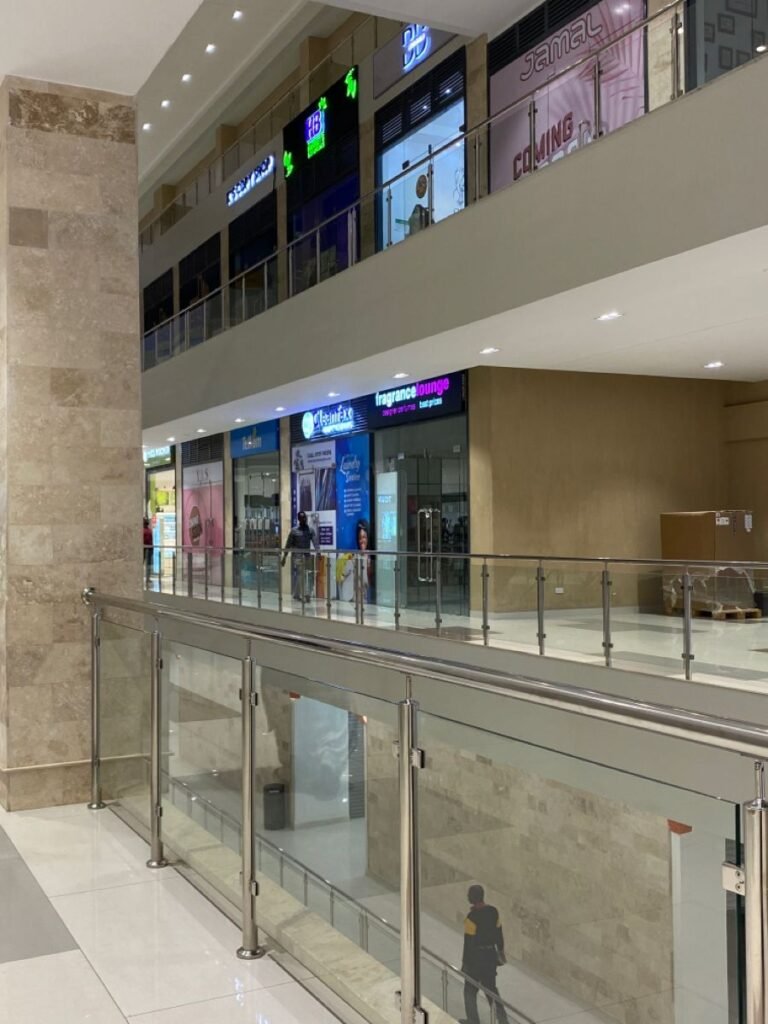
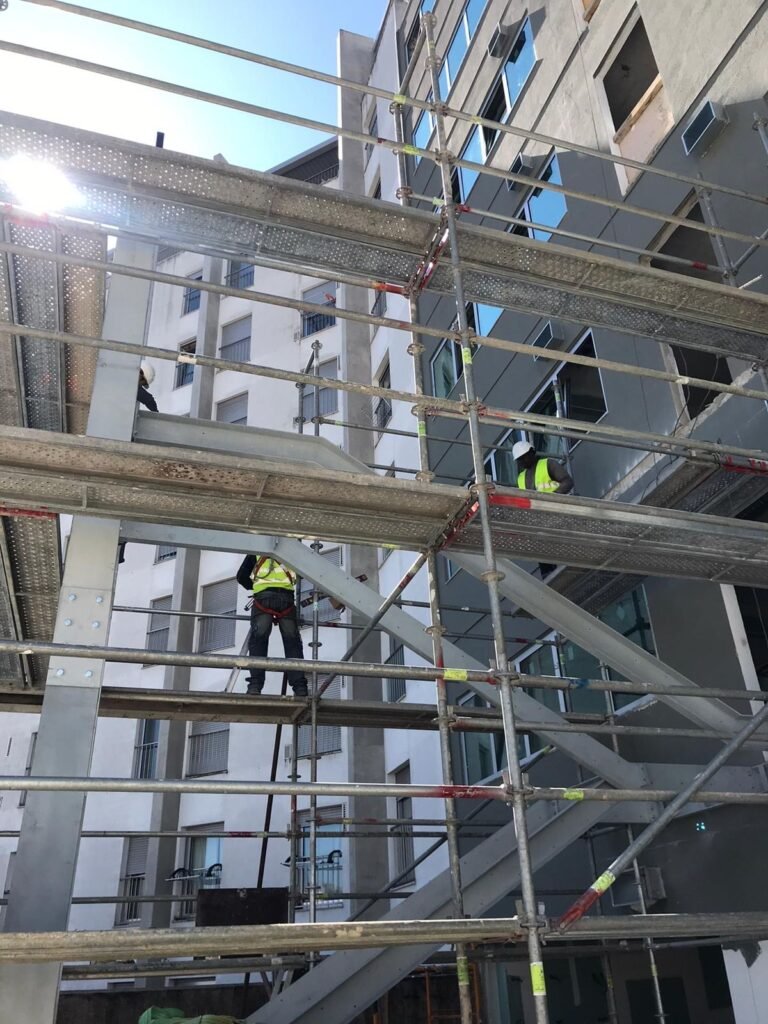
Construction of the mall shell follows a structured sequence: site clearance and earthworks, foundations, basement construction where applicable, concrete frame erection, structural steel work, the external envelope (facade, glazing, roofing), and MEP rough-in for electrical, plumbing, fire suppression, and HVAC. Moreover, professional construction supervision — typically via a resident engineer and regular site progress reporting — is essential to keep quality, cost, and programme under control through this, the longest single phase of the project.
Typical shell construction cost in Kenya (2026): roughly KES 89,980–94,990 per square metre for a standard neighbourhood mall, rising toward KES 140,000–180,000+ per square metre for a larger, multi-level regional or super-regional development with a complex atrium and basement parking.
Step 9 — Interior Design and Fit-Out
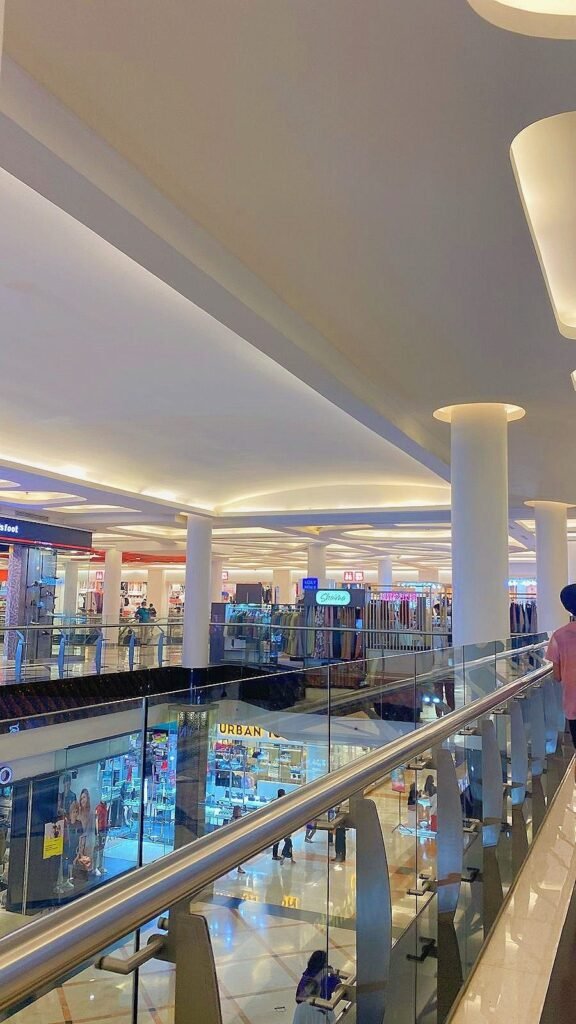
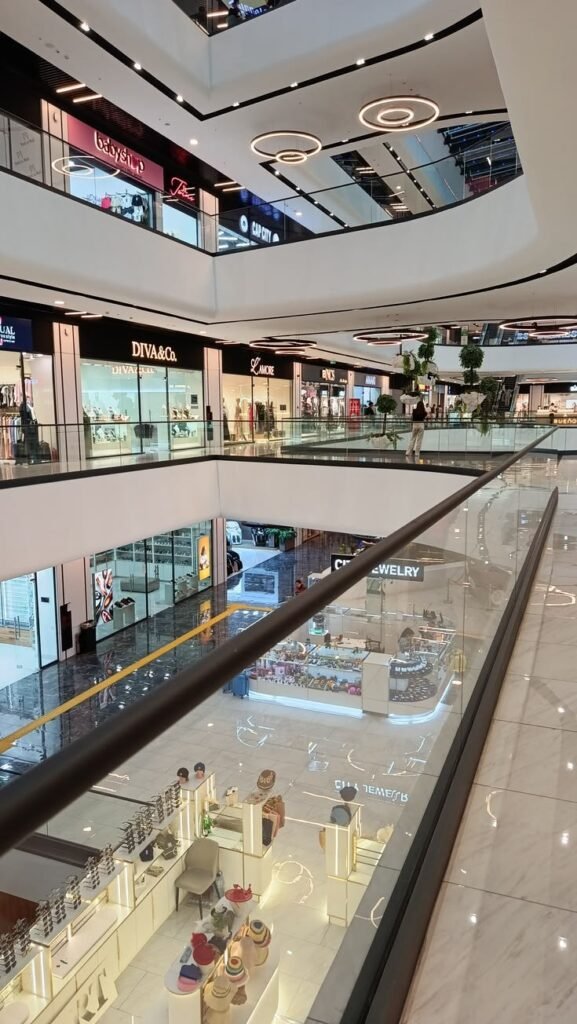
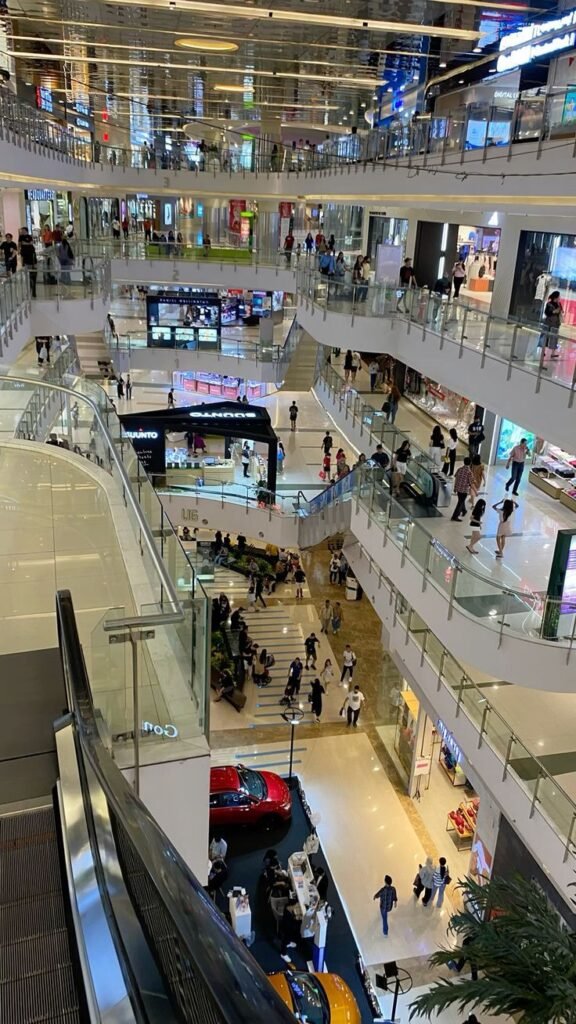
This is the stage that converts a completed concrete shell into a place people actually want to shop in — and it is consistently the most underestimated line item in Kenyan mall budgets. Moreover, interior design and fit-out typically adds a further 40–50% on top of shell construction cost, covering common area and atrium finishes, food court design, retail and anchor tenant fit-out coordination, entertainment zone build-out, gypsum ceilings, commercial flooring, wayfinding and signage, and lighting design across every zone. Furthermore, this is exactly where Suimas’s integrated, in-house design-and-build capability delivers the greatest value for Kenyan mall developers — one team accountable for design, materials, and installation, rather than a shell contractor handing off to a string of disconnected finishing subcontractors.
Suimas services: Commercial Interior Design → | Gypsum Ceiling Installation → | Floor Installation Services →
Step 10 — Tenant Fit-Out Coordination and Leasing
Coordinating dozens or even thousands of individual tenant fit-outs simultaneously is one of the most complex parts of opening a mall. Moreover, anchor tenants (supermarkets, cinemas, department stores) typically need 8–16 weeks for their own fit-out, while standard retail units need 3–6 weeks — and all of it has to be scheduled, serviced, and quality-controlled without one tenant’s works disrupting another’s. Furthermore, securing anchor tenant commitments as early as Step 5 — supported by 3D renders of their unit — gives leasing teams a real head start on filling the mall before opening day.
Step 11 — Practical Completion, Certification, and Opening
Before opening, a mall needs a completed snag list and defects remediation, NCA completion certification, fire safety certification, and environmental health certification. Moreover, opening-day marketing — events, media, and community engagement — should be planned to run in parallel with the final weeks of fit-out, since a well-executed launch generates earned media that drives footfall well into the first months of trading.
Step 12 — Post-Opening Management
A well-built, well-designed mall can still underperform if it is poorly run after opening. Moreover, ongoing cleanliness standards, security, reliable air conditioning, elevator and escalator maintenance, and organised car park management all directly affect repeat visits. Furthermore, the strongest-performing Kenyan malls treat professional mall management as a revenue-protecting function from day one, not an afterthought once problems appear.
How Much Does It Cost to Build a Shopping Mall in Kenya?
Shell Construction Cost — 2026
| Mall Type | Cost per m² (KES) | Cost per sq ft (KES) |
|---|---|---|
| Standard neighbourhood mall | 89,980 – 94,990 | 8,359 – 8,825 |
| Community mall with basement parking | 95,000 – 110,000 | 8,826 – 10,220 |
| Regional mall — multi-level atrium | 110,000 – 140,000 | 10,220 – 13,006 |
| Super-regional mixed-use mall | 140,000 – 180,000+ | 13,006 – 16,723+ |
Interior Design and Fit-Out Cost — 2026
| Mall Zone | Budget (KES/m²) | Mid-Range (KES/m²) | Premium (KES/m²) |
|---|---|---|---|
| Common areas and corridors | 25,000 – 45,000 | 45,000 – 80,000 | 80,000+ |
| Main entrance and atrium | 30,000 – 60,000 | 60,000 – 100,000 | 100,000+ |
| Retail unit full branded fit-out | 35,000 – 60,000 | 60,000 – 100,000 | 100,000+ |
| Food court vendor unit | 40,000 – 70,000 | 70,000 – 120,000 | 120,000+ |
| Entertainment zone | 35,000 – 65,000 | 65,000 – 120,000 | 120,000+ |
| Gypsum ceiling (per m²) | 1,500 – 3,500 | 3,500 – 4,500 | 4,500 – 5,500+ |
| Commercial flooring (per m²) | 1,500 – 3,000 | 3,000 – 6,000 | 6,000+ |
Total Budget by Scale
| Mall Scale | GLA (m²) | Shell (KES) | Interior & Fit-Out (KES) | Total Budget |
|---|---|---|---|---|
| Neighbourhood Mall | 3,000–5,000 | 270M–490M | 90M–200M | 360M–690M |
| Community Mall | 5,000–15,000 | 450M–1.47B | 150M–600M | 600M–2.07B |
| Regional Mall | 15,000–40,000 | 1.35B–3.92B | 450M–1.6B | 1.8B–5.52B |
| Super-Regional Mall | 40,000–250,000+ | 3.6B–22.5B+ | 1.2B–9B+ | 4.8B–31.5B+ |
All figures are planning-level estimates. Always commission a formal, project-specific BOQ from a quantity surveyor and an itemized fit-out quotation before committing to any budget.
Common Mistakes First-Time Mall Developers Make in Kenya
- Buying land before confirming zoning allows retail development
- Skipping a proper feasibility study and catchment analysis
- Engaging an interior designer only after the shell is complete
- Budgeting for shell construction only, with no line item for fit-out
- Awarding contracts on price alone without checking NCA registration or references
- Underestimating NCA and county approval timelines
- Leaving tenant fit-out coordination unplanned until weeks before opening
- Treating mall management as an afterthought rather than a revenue function
Shopping Mall Development Checklist — Kenya
- ✅ Commission a formal feasibility and catchment study before committing to a site
- ✅ Confirm land zoning and title before purchase
- ✅ Secure financing and at least indicative anchor tenant interest before design begins
- ✅ Engage architect, quantity surveyor, and interior designer together at concept stage
- ✅ Budget interior design and fit-out at 40–50% of total project value, not as an afterthought
- ✅ Commission a formal BOQ before signing any construction or fit-out contract
- ✅ Confirm your main contractor’s NCA registration and category before award
- ✅ Plan NCA and county approval timelines as 3–12 months
- ✅ Add 10–15% contingency to every budget component independently
- ✅ Use 3D visualization for pre-leasing presentations to anchor tenants
- ✅ Plan tenant fit-out coordination as its own dedicated workstream
- ✅ Appoint professional mall management before opening day, not after
What Suimas Offers Mall Developers in Kenya
Suimas is not a structural contractor — we are the interior design and fit-out partner that turns a completed mall shell into a commercially operational retail destination. Moreover, we work alongside your architect and main contractor from as early as the concept stage, so that column grids, ceiling heights, and service zones are designed to accommodate the interior vision from day one, rather than fought over after the shell is built.
What we deliver for shopping mall projects:
- Common area and atrium design — statement entrances, feature ceilings, premium flooring, and dramatic lighting
- Food court design and vendor fit-out — cohesive design identity, acoustic management, and efficient service layouts
- Retail and anchor tenant fit-out coordination — commercial interior design delivered to brand standard, on schedule
- Entertainment zone design — cinemas, gaming zones, children’s play areas, and indoor sports facilities
- Gypsum ceiling installation — including fireproof and acoustic soundproof systems across all mall zones
- Floor installation services — porcelain, natural stone, terrazzo, epoxy, and vinyl for high-traffic commercial flooring
- Wayfinding and branded signage — complete system design and installation
- 3D design and layout planning with photorealistic renders for pre-leasing presentations
- Fully itemized BOQ pricing — zone-by-zone transparency with no hidden costs
- In-house execution — one accountable team across design, materials, and installation, rather than a chain of disconnected subcontractors
- Free initial site consultation — always, without obligation
👉 View Our Full Commercial Interior Design Services → 📞 Call 0717 044 443 for a Free Mall Design Consultation 💬 WhatsApp 0717 044 443 →
Contact Our Mall Design and Fit-Out Team Today
Call us at 0717 044 443 / 0739 255 050 / 0725 021 709. Email: info@suimas.co.ke / info@interiordesigners.co.ke
Therefore, if you are planning, designing, or fitting out a shopping mall or retail centre in Kenya, contact us here for a free project consultation, 3D visualization, and detailed BOQ. We are based at Solar House, Fourth Floor, Nairobi.
Related Mall and Commercial Design Services
- Commercial Interior Design Kenya
- Gypsum Ceiling Installation Kenya
- Floor Installation Services Kenya
- 3D Design & Layout Planning Kenya
- Painting & Special Effects Kenya
- Office Partitioning Design Kenya
Also Read
Nairobi Areas We Serve
We serve Westlands, Karen, Kilimani, Kileleshwa, Lavington, Runda, Gigiri, Muthaiga, Parklands, Riverside, Upperhill, Hurlingham, Eastleigh, South C, South B, Langata, Embakasi, Donholm, Umoja, Kasarani, Roysambu, Zimmerman, Kahawa West, Ruaka, Rosslyn, Kiambu Town, Kikuyu, Kinoo, Ruiru, Juja, Syokimau, Mlolongo, Kitengela, Athi River, Ngong, and the entire Nairobi CBD.
Mall Development Services Across All 47 Counties
Suimas supports mall interior design and fit-out projects throughout all 47 counties in Kenya, from Nairobi and Mombasa to Kisumu, Nakuru, Eldoret, and every growing secondary town in between.
Frequently Asked Questions
What are the main steps to build a shopping mall in Kenya?
The core steps are: feasibility study, site selection and land acquisition, financing, assembling your professional team, concept and architectural design, NCA and statutory approvals, tendering and contractor procurement, shell construction, interior design and fit-out, tenant fit-out coordination, practical completion and opening, and ongoing mall management. Each stage above walks through what it involves.
How much does it cost to build a shopping mall in Kenya?
Shell construction costs roughly KES 89,980–94,990 per square metre for a standard neighbourhood mall in 2026, rising for larger regional developments. Interior design and fit-out then adds a further 40–50% of total project value. A full neighbourhood mall (3,000–5,000 m²) typically totals KES 360M–690M all-in; a regional mall can run into billions of shillings.
How long does it take to build a shopping mall in Kenya?
A neighbourhood mall (3,000–5,000 m²) typically takes 18–24 months from feasibility to opening. A community mall (5,000–15,000 m²) generally runs 24–36 months, and a regional or super-regional mall takes 36–60 months. NCA approval alone can take 3–12 months and should be planned for accordingly.
Do I need an interior designer if I already have a construction company?
Yes. A structural construction company builds the shell — the concrete frame, envelope, and MEP infrastructure. An interior designer and fit-out partner builds the spaces shoppers actually experience — the common areas, food court, retail units, and entertainment zones — which is what ultimately drives dwell time, tenant satisfaction, and commercial success. The two roles are complementary, not interchangeable.
What permits and approvals do I need to build a mall in Kenya?
At minimum, you will need National Construction Authority (NCA) registration and approval, relevant county government planning approval, NEMA environmental approval, and fire safety certification before opening. Approval timelines for large commercial developments typically range from 3 to 12 months
Areas We Serve
SUIMAS provides commercial construction, building, renovation, commercial interior design and fit-out services across all 47 counties in Kenya.
Nairobi County
We serve all areas of Nairobi, including:
Nairobi CBD, Westlands, Parklands, Gigiri, Muthaiga, Runda, Rosslyn, Kitisuru, Spring Valley, Lavington, Kileleshwa, Kilimani, Hurlingham, Riverside, Kawangware, Dagoretti, Karen, Lang’ata, South C, South B, Nairobi West, Madaraka, Upper Hill, Ngong Road, Adams Arcade, Jamhuri, Woodley, Kibera, Loresho, Mountain View, Kangemi, Pangani, Ngara, Eastleigh, Pumwani, Majengo, Kamukunji, Starehe, Mathare, Kariobangi, Dandora, Umoja, Buruburu, Donholm, Komarock, Kayole, Embakasi, Fedha, Tassia, Imara Daima, Pipeline, Mukuru, Syokimau, Utawala, Mihango, Ruai, Njiru, Ruaraka, Baba Dogo, Kasarani, Roysambu, Zimmerman, Githurai and surrounding areas.
Mombasa County
We serve Mombasa Island, Mombasa CBD, Old Town, Kizingo, Tudor, Tononoka, Ganjoni, Majengo, Makadara, Bondeni, Likoni, Mtongwe, Shelly, Changamwe, Port Reitz, Mikindani, Jomvu, Miritini, Kisauni, Mtopanga, Bamburi, Utange, Shanzu, Nyali, Mkomani, Kongowea, Frere Town, Bombolulu, Mishomoroni, Mwakirunge, Magongo, Dunga and surrounding areas.
All 47 Counties in Kenya
SUIMAS serves:
Mombasa, Kwale, Kilifi, Tana River, Lamu, Taita-Taveta, Garissa, Wajir, Mandera, Marsabit, Isiolo, Meru, Tharaka-Nithi, Embu, Kitui, Machakos, Makueni, Nyandarua, Nyeri, Kirinyaga, Murang’a, Kiambu, Turkana, West Pokot, Samburu, Trans Nzoia, Uasin Gishu, Elgeyo-Marakwet, Nandi, Baringo, Laikipia, Nakuru, Narok, Kajiado, Kericho, Bomet, Kakamega, Vihiga, Bungoma, Busia, Siaya, Kisumu, Homa Bay, Migori, Kisii, Nyamira and Nairobi.