- Call Us: 0717044443 / 0739255050 / 0725021709
- Email: info@suimas.co.ke / info@interiordesigners.co.ke

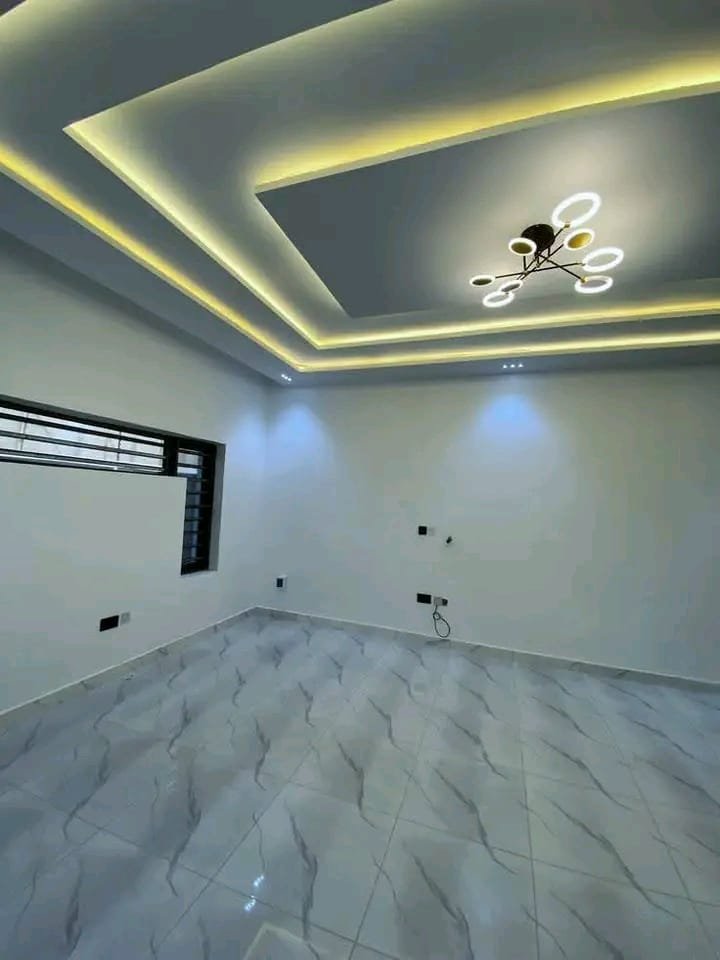
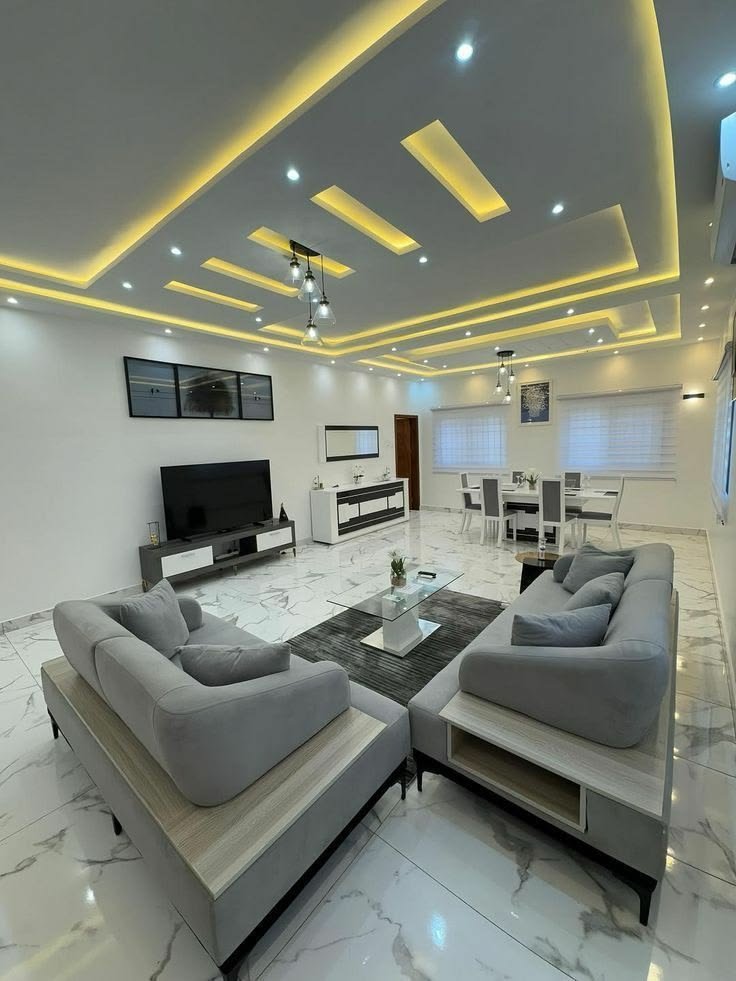
Gypsum ceiling designs with decorative mouldings
- Description
Description
Gypsum Ceiling Designs with Decorative Mouldings
Gypsum ceiling designs with decorative mouldings are an excellent choice for homeowners who want to give their interiors a refined, elegant and professionally finished appearance. Decorative mouldings introduce detail around ceiling edges, recessed panels, light fittings and selected architectural features. When combined with a suitable gypsum ceiling, they can create anything from a simple modern finish to a more elaborate classical design.
At SUIMAS Interior Designers, we help clients plan gypsum ceilings that complement their homes, offices and commercial interiors. Whether you prefer a simple ceiling cornice, an elegant living room ceiling with decorative borders or a layered gypsum ceiling with ornamental details, the right combination can improve the appearance of your space without unnecessary decoration.
This guide explores gypsum ceiling designs with decorative mouldings in Kenya, including popular styles, room-specific ideas, installation costs, material choices, lighting considerations and practical tips for planning your project.
What We Offer
SUIMAS provides gypsum ceiling design and interior finishing solutions for residential and commercial properties.
- Gypsum ceiling designs: Explore flat, modern, tray, layered and decorative ceiling options.
- Gypsum ceiling installation services: Plan ceiling framing, board installation, joint finishing and painting.
- Decorative ceiling features: Incorporate suitable mouldings, cornices, border details and central decorative features into your ceiling design.
- Ceiling lighting coordination: Combine decorative details with recessed spotlights, central fittings and suitable concealed LED lighting.
- 3D design and layout planning: Visualise your planned ceiling and interior before installation begins.
- Interior painting: Coordinate ceiling colours and wall finishes for a consistent appearance.
- Residential and commercial interior design: Plan ceiling details alongside flooring, furniture, partitions and other interior elements.
- Renovation and finishing: Include ceiling improvements in a wider home or commercial property renovation.
Our aim is to help you choose decorative details that suit your room, preferred style and budget.
What Are Decorative Mouldings on a Gypsum Ceiling?
Decorative mouldings are shaped profiles or ornamental details used to finish and enhance ceilings, walls and the transitions between them. Depending on the design, they may run around the perimeter of a room, frame a recessed ceiling section or surround a central light fitting.
Some mouldings are made from gypsum or plaster, while others use materials such as polyurethane. The appropriate choice depends on the intended design, installation method, surface conditions and finishing requirements.
When incorporated into a gypsum ceiling, mouldings can serve several purposes. They create a finished transition between the wall and ceiling, emphasise the ceiling’s shape, introduce decorative patterns and help establish a particular interior style.
However, mouldings do not need to be elaborate to make a difference. A simple cornice around a plain ceiling may provide a more balanced result than multiple decorative profiles competing for attention.
Why Choose Gypsum Ceiling Designs with Decorative Mouldings?
1. Create a refined interior finish
Decorative mouldings give a ceiling more definition by outlining its edges and selected sections. They can make a living room, dining area or master bedroom feel more carefully finished.
Even a simple profile can create a clear transition between the wall and ceiling.
2. Complement different interior styles
Mouldings are available in simple, contemporary profiles as well as more elaborate ornamental patterns.
Plain profiles work well with modern interiors, while floral details, rosettes and traditional cornices may suit classical designs.
3. Improve ceiling proportions
A carefully selected moulding can help frame a ceiling or highlight a recessed central section. Its size should relate to the room’s dimensions and available ceiling height.
4. Work with different lighting arrangements
Decorative mouldings can be used alongside central pendant lights, chandeliers and suitable concealed lighting details.
The design should leave enough room for electrical components and should not obstruct the light distribution.
5. Enhance a plain gypsum ceiling
A flat gypsum ceiling can look attractive on its own. Adding a simple cornice or a restrained decorative border provides another way to introduce character without creating multiple ceiling levels.
6. Support coordinated interior design
Mouldings can complement wall panelling, door trims, furniture details and other finishes. When selected consistently, they help create a coordinated appearance throughout the property.
Popular Gypsum Ceiling Designs with Decorative Mouldings in Kenya
The best moulding depends on the ceiling design, room proportions, available headroom and preferred decorative style. Consider these options when planning your project.
1. Plain Gypsum Ceiling with Simple Cornices
This design combines a smooth gypsum ceiling with a straightforward cornice around the perimeter. It creates a clean transition between the ceiling and walls without adding excessive decoration.
The cornice may have a gently curved profile, a small stepped detail or a simple geometric shape.
Best for: Apartments, bedrooms, living rooms and contemporary homes.
Why choose it: It adds definition while keeping the ceiling relatively simple.
Design tip: Choose the cornice width in proportion to the room. A modest profile may look more balanced in a small sitting room than an oversized decorative one.
2. Decorative Cornice Gypsum Ceiling
Decorative cornices have shaped profiles that introduce more detail along the ceiling perimeter. They may include ridges, repeating patterns, floral motifs or other ornamental elements.
This type of ceiling can complement traditional interiors and formal living spaces.
Best for: Classic living rooms, dining rooms, master bedrooms and selected hospitality interiors.
Why choose it: A decorative cornice can make an otherwise plain ceiling more distinctive.
Design tip: Keep the wall finishes and ceiling decoration coordinated. If the room already has elaborate wallpaper or detailed furniture, a simpler cornice may create a better balance.
3. Gypsum Ceiling with Picture-Frame Mouldings
Picture-frame mouldings create rectangular or square outlines on a ceiling surface. These shapes can frame the main seating area or form a decorative border around a central section.
The arrangement may use one large frame or several smaller ones, depending on the room’s size.
Best for: Spacious living rooms, formal dining areas and classic interiors.
Why choose it: It creates structure and symmetry without requiring an elaborate curved ceiling.
Design tip: Plan the frame positions around the room’s dimensions and furniture layout. Uneven spacing may make the ceiling appear poorly aligned.
4. Tray Gypsum Ceiling with Decorative Mouldings
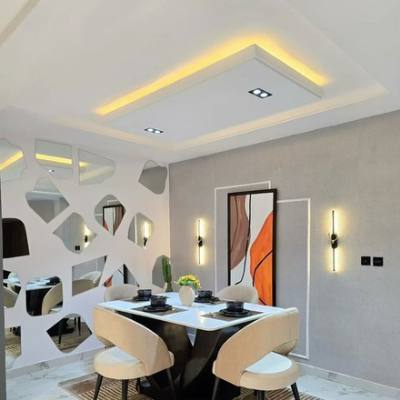
A tray ceiling features a recessed central section surrounded by a raised or dropped border. Decorative mouldings can be added to the perimeter or around the central section to create a more detailed finish.
This combination works well when you want both architectural depth and decorative character.
Best for: Living rooms, dining rooms and master bedrooms.
Why choose it: The tray provides the main structure, while the mouldings emphasise its outline.
Design tip: The mouldings should complement the tray rather than hide its shape. Avoid combining too many competing borders.
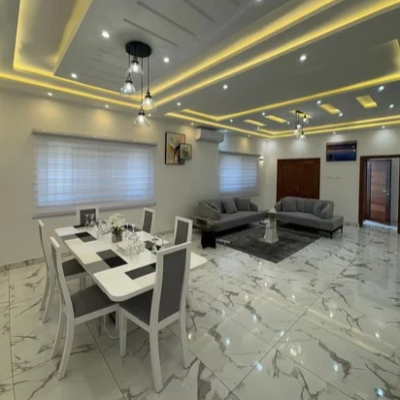
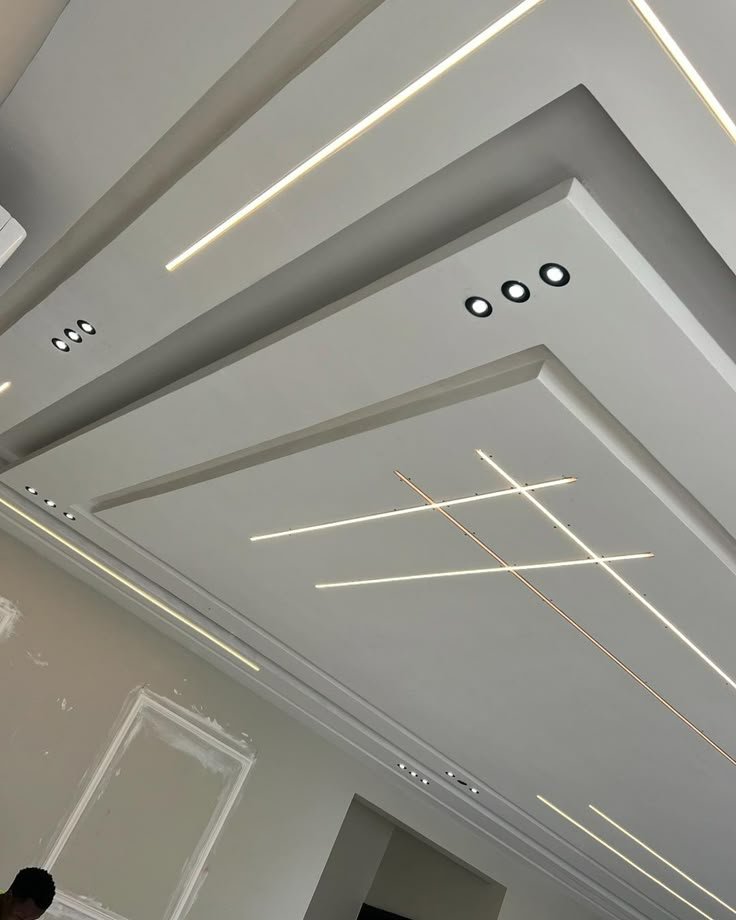
5. Layered Gypsum Ceiling with Decorative Borders
Layered ceilings use two or more levels to create depth. Decorative mouldings can be used along selected edges to give each level a clearer outline.
A restrained design may use a simple border, while a classical interior may benefit from more pronounced profiles.
Best for: Spacious lounges, large bedrooms and formal living areas.
Why choose it: The combination offers more design flexibility than either a plain ceiling or a single decorative border.
Design tip: Consider the room’s height before adding multiple levels. Mouldings and extra layers should not make the ceiling feel unnecessarily low or crowded.
6. Gypsum Ceiling with a Central Decorative Medallion
A ceiling medallion is a decorative feature placed around a central light fitting or chandelier. It may use a circular, oval or ornamental design.
When properly positioned, it creates a focal point and adds symmetry to the ceiling.
Best for: Formal living rooms, dining rooms, traditional interiors and selected large bedrooms.
Why choose it: A medallion can create a decorative centre without covering the entire ceiling in ornamentation.
Design tip: Match the medallion’s size to both the room and the light fitting. Confirm how heavier fittings will be supported independently of the gypsum board.
7. Gypsum Ceiling with Floral Mouldings
Floral mouldings feature leaves, flowers or repeating botanical patterns. They provide a decorative finish that may suit traditional and classical interior styles.
These details are often most effective when used in selected areas rather than across every ceiling edge.
Best for: Classical living rooms, formal dining areas and interiors with ornamental furniture.
Why choose it: Floral patterns introduce detail without requiring an entirely different ceiling structure.
Design tip: Keep the colour scheme and surrounding decoration simple enough for the mouldings to remain visible without overwhelming the room.
8. Geometric Gypsum Ceiling with Modern Mouldings
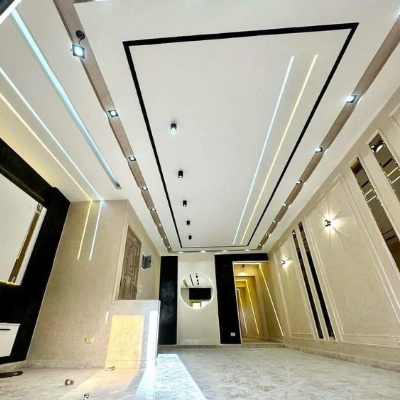
Geometric designs use straight lines, rectangular profiles and clean edges. Mouldings can define the borders of these shapes or emphasise a central ceiling panel.
The resulting ceiling can feel structured and contemporary.
Best for: Modern homes, apartments, office reception areas and contemporary lounges.
Why choose it: It combines the definition of decorative mouldings with the simplicity of geometric design.
Design tip: Use a consistent profile and align the shapes carefully. This is particularly important when the ceiling uses repeated rectangles or squares.
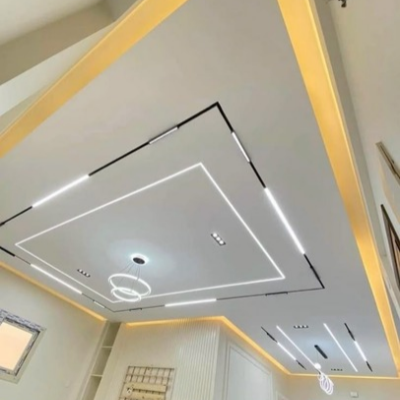
9. Gypsum Ceiling with Concealed LED Lighting and Mouldings
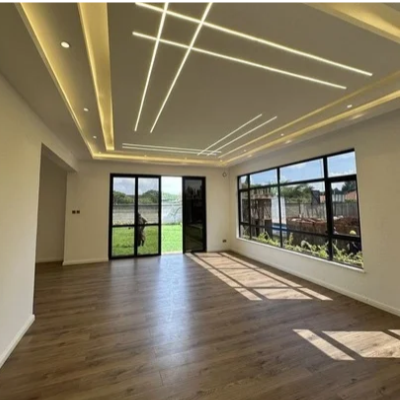
A ceiling can combine decorative mouldings with a suitable recessed lighting channel. The mouldings define the ceiling’s shape while the concealed LED strip creates a soft lighting effect.
This approach can be used with selected tray and layered ceiling designs.
Best for: Modern living rooms, master bedrooms and contemporary lounges.
Why choose it: It combines architectural detail with decorative lighting.
Design tip: Confirm the lighting channel dimensions, position of the LED strip and access to the driver before installation. Mouldings should not obstruct the intended light distribution.
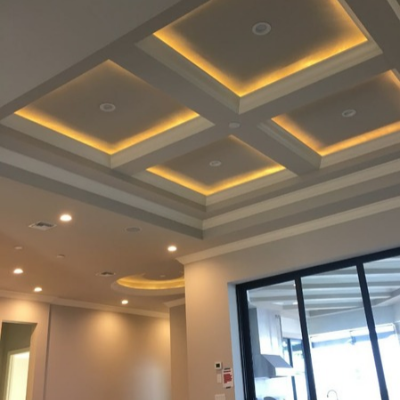
10. Coffered Gypsum Ceiling with Decorative Mouldings
A coffered ceiling uses a repeated grid of recessed panels framed by projecting beams or moulded borders. Decorative mouldings may emphasise the edges of each panel.
This creates a structured, formal appearance and generally requires more detailed planning than a plain ceiling.
Best for: Large living rooms, formal dining areas, villas and selected commercial interiors.
Why choose it: A coffered pattern provides depth and repetition across a larger ceiling.
Design tip: The grid should suit the room’s dimensions. Too many small panels can make the ceiling appear crowded, while oversized panels may feel unbalanced.
11. Curved Gypsum Ceiling with Decorative Mouldings
Curved ceilings introduce rounded transitions or flowing shapes. Suitable mouldings can follow selected curves, creating a softer appearance than a design made entirely from straight lines.
Curved work may require extra setting-out, framing, material preparation and finishing.
Best for: Spacious living rooms, statement areas and selected hospitality interiors.
Why choose it: It creates a distinctive architectural feature.
Design tip: Confirm that the chosen moulding can follow the proposed curve cleanly. A profile intended for straight sections may not suit every curved design.
12. Minimalist Ceiling with a Slim Decorative Border
A minimalist ceiling can use a narrow moulding or simple perimeter profile to introduce definition without elaborate ornamentation.
This option balances a modern appearance with a finished ceiling-to-wall transition.
Best for: Small living rooms, contemporary apartments, bedrooms and offices.
Why choose it: It adds a subtle detail while preserving a simple ceiling design.
Design tip: Choose the profile carefully and focus on accurate installation. Small gaps, uneven joints or inconsistent paint may be noticeable on minimalist designs.
Decorative Mouldings for Different Rooms
The most suitable moulding depends on how the room is used and the style you want to achieve.
Living room gypsum ceilings with decorative mouldings
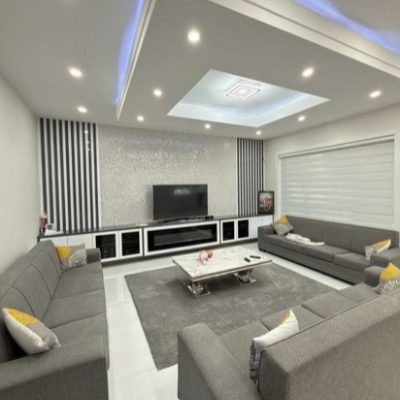
Living rooms provide an opportunity to use decorative mouldings as a central design feature. A simple cornice can finish the ceiling perimeter, while a tray ceiling with decorative borders can frame the main seating area.
For a formal living room, you may consider a central medallion or picture-frame mouldings. In a modern sitting room, a narrow border with restrained lighting may be more appropriate.
The moulding should work with the TV wall, furniture, curtains and flooring rather than compete with them.
Bedroom gypsum ceilings with decorative mouldings
Bedrooms generally benefit from a balanced design that avoids excessive detail. Simple cornices, shallow tray borders or a small central feature may provide enough decoration.
Where a pendant light sits above the bed, consider whether a central medallion would complement the fitting and the room’s proportions.
Dining room ceilings with decorative mouldings
A dining room can use a ceiling frame to draw attention to the table and central light fitting. Decorative borders or a medallion may help establish a formal appearance.
Ensure the ceiling feature aligns with the final table position rather than simply centring it within an empty room.
Office ceilings with decorative mouldings
Commercial spaces may benefit from restrained mouldings that provide a polished appearance without unnecessary ornamentation. Reception areas, meeting rooms and management offices may use different levels of decoration according to their intended style.
Plan lighting, ventilation, cabling and access to services alongside the decorative details.
Hallways and entrance areas
A simple cornice can create a consistent finish along a hallway, while a small decorative panel may work in a larger entrance area.
Because hallways may be narrow, choose profiles that do not make the ceiling appear visually heavy.
Gypsum Ceiling Moulding Materials: What Should You Choose?
Decorative profiles are available in different materials. The correct choice depends on the intended design, installation surface, required finish and budget.
Gypsum and plaster mouldings
Gypsum or plaster mouldings can create a traditional, integrated finish alongside a gypsum ceiling. They are useful for cornices, ornamental details and selected decorative profiles.
The installer should ensure suitable fixing, clean joints and proper finishing.
Polyurethane mouldings
Polyurethane profiles are lightweight decorative alternatives available in different shapes and sizes. They may be suitable where the intended appearance can be achieved with a lightweight moulding rather than a heavier plaster profile.
Check the manufacturer’s instructions for installation, adhesive compatibility and painting.
Other decorative profiles
Other materials may be available depending on the supplier and intended application. Select the material based on the project requirements rather than appearance alone.
Important: Decorative mouldings do not all require the same fixing method. Confirm that the selected profile, adhesive or mechanical fixing is suitable for the ceiling and wall surfaces.
Cost of Gypsum Ceiling Designs with Decorative Mouldings in Kenya
The overall cost depends on the gypsum ceiling design, room area, moulding type, profile dimensions, number of corners, lighting requirements, finishing and labour.
SUIMAS publishes the following indicative gypsum ceiling installation rates in its gypsum ceiling cost guide.
| Ceiling specification | Indicative planning rate |
|---|---|
| Plain gypsum ceiling | KES 1,000–1,500 per m² |
| Simple modern ceiling design | KES 1,500–2,500 per m² |
| Bulkheads and stepped designs | KES 2,000–3,500+ per m² |
| Feature ceiling with cove lighting | KES 2,500–4,500+ per m² |
| Complex premium ceiling design | KES 4,000–6,000+ per m² |
These are planning estimates for ceiling installation, not fixed prices for every moulding design. The cost of decorative profiles may be charged separately, particularly where the design uses multiple mouldings, ornamental corners or a central medallion.
How decorative mouldings affect the cost
Profile type: Plain cornices, ornate floral profiles and custom decorative elements may have different material costs.
Total perimeter: Cornices are often measured by length, so the dimensions of the room can matter as much as its floor area.
Number of decorative sections: Picture frames, multiple borders and repeated coffer details increase the amount of material and installation work.
Corners and joints: Rooms with many corners or complicated shapes may require extra cutting and finishing.
Ceiling levels: Mouldings installed on a layered ceiling may require more detailed coordination than a simple perimeter cornice.
Painting and finishing: Confirm whether the price includes surface preparation, joint treatment, primer and final paint coats.
Lighting: Concealed LEDs and recessed fittings can add material and electrical costs.
Example: Planning the cost for a 20 m² living room
Suppose your living room has a ceiling area of 20 m² and you want a gypsum ceiling with decorative mouldings.
Using the published SUIMAS planning rates:
- A plain ceiling at KES 1,000 per m² gives an illustrative ceiling cost of KES 20,000.
- A simple modern design at KES 2,000 per m² gives an illustrative ceiling cost of KES 40,000.
- A feature ceiling at KES 3,500 per m² gives an illustrative ceiling cost of KES 70,000.
The decorative mouldings may add to these amounts, depending on their type, quantity, supply cost and installation requirements.
These calculations are illustrations, not quotations. Ask for a breakdown that separates ceiling installation, moulding supply, moulding installation, painting and electrical work where applicable.
What should the quotation include?
Before approving the project, confirm whether the quotation covers:
- Gypsum boards and supporting framework.
- Ceiling installation labour and fixings.
- Decorative moulding supply and installation.
- Cutting, joints and finishing at corners.
- Jointing, sanding, preparation and painting.
- Lighting components and electrical work, where required.
- Protection of existing finishes and removal of waste.
- Transport and any applicable taxes.
This breakdown makes it easier to compare contractors fairly and avoid unexpected costs.
How to Choose the Right Decorative Moulding Design
1. Consider the room size
Large ornamental profiles may suit spacious rooms but overwhelm small interiors. Choose a profile that fits the dimensions and ceiling height.
2. Match the moulding to your interior style
Plain profiles work well with contemporary interiors, while elaborate floral mouldings may suit traditional designs. You can also combine a simple cornice with a tray ceiling for a balanced result.
3. Decide which areas need decoration
You do not have to place mouldings everywhere. A ceiling perimeter, central panel or selected feature may provide enough detail.
4. Coordinate the lighting
Mouldings should not obstruct recessed fittings or concealed lighting. Decide on the lighting layout before the ceiling details are finalised.
5. Choose appropriate materials
Consider the profile’s weight, installation method, finish and suitability for the intended surface.
6. Include painting in the plan
Confirm whether the mouldings will be painted to match the ceiling or finished in a contrasting colour. Proper preparation helps create a consistent appearance.
7. Visualise the complete design
If the ceiling has several levels, repeated frames or decorative features, consider creating a drawing or 3D view before installation. This can help identify proportions and avoid expensive changes.
SUIMAS offers 3D design and layout planning for clients planning interior projects.
Common Mistakes to Avoid
Using oversized mouldings in a small room: Large profiles can make the ceiling appear heavy and crowded.
Combining too many patterns: Floral details, several borders and elaborate centrepieces may compete rather than complement one another.
Ignoring ceiling height: Additional layers and decorative elements need enough room to maintain comfortable headroom.
Poor corner finishing: Uneven cuts or visible gaps can spoil the appearance of otherwise attractive mouldings.
Failing to coordinate lighting: A decorative profile should not block light or interfere with the installation of fittings.
Using unsuitable fixing methods: Confirm that the adhesive or fixing system is appropriate for the selected material and surface.
Skipping surface preparation: Uneven joints, rough edges and inconsistent paint can be especially visible on detailed profiles.
Leaving mouldings out of the quotation: Confirm whether the price covers supply, installation, corner detailing and painting.
Gypsum Ceiling and Moulding Installation Process
A professional installation should follow a clear sequence.
Step 1: Site assessment and measurements. The installer measures the room, checks the ceiling height and reviews the existing surfaces.
Step 2: Design selection. You agree on the ceiling layout, moulding profiles, decorative features and lighting arrangement.
Step 3: Quotation and scope approval. Confirm the materials, labour, finishing, exclusions and project schedule.
Step 4: Framework and board installation. The supporting system and gypsum boards are installed according to the approved design.
Step 5: Moulding installation. The profiles are measured, cut and fixed using a suitable method for the selected material and surface.
Step 6: Joint finishing. Corners, joints and fixing points are finished to create a neat appearance.
Step 7: Painting and lighting work. The ceiling and mouldings receive the agreed finish, and compatible lighting fittings are installed.
Step 8: Final inspection. The installer checks alignment, visible joints, paint consistency and the appearance of the decorative details.
The project duration depends on the ceiling area, design complexity, number of mouldings, drying times and other work included.
Why Work with SUIMAS Interior Designers?
A decorative ceiling should complement the complete interior. The right choice requires attention to room proportions, moulding profiles, lighting, paint finishes and the supporting ceiling design.
SUIMAS helps clients plan gypsum ceiling installations and coordinate them with other interior elements. We can discuss suitable designs, the requirements of the property and the scope needed for a project-specific quotation.
Explore our services:
- Gypsum ceiling designs
- Gypsum ceiling installation
- 3D design and layout planning
- Interior design services
- Interior finishes
- Building renovation services
- Aluminium solutions
- Commercial kitchen solutions
- Building and construction services
These related services may be useful when your ceiling forms part of a wider residential or commercial fit-out.
Areas We Serve
SUIMAS welcomes project enquiries across Kenya, subject to project scope, site assessment and availability. Our service coverage includes Nairobi, Kiambu, Nakuru, Mombasa, Kisumu, Uasin Gishu, Machakos, Kajiado, Kilifi, Nyeri, Meru, Kakamega, Bungoma, Kericho, Laikipia, Narok, Nandi, Baringo, Samburu, Turkana, West Pokot, Elgeyo-Marakwet, Trans Nzoia, Busia, Siaya, Homa Bay, Migori, Kisii, Nyamira, Vihiga, Kirinyaga, Murang’a, Nyandarua, Embu, Tharaka-Nithi, Kitui, Makueni, Taita-Taveta, Kwale, Tana River, Lamu, Garissa, Wajir, Mandera, Marsabit and Isiolo.
In Nairobi, enquiries may include Karen, Runda, Lavington, Kileleshwa, Kilimani, Westlands, Parklands, South B, South C, Lang’ata, Ruaka, Ruiru, Thika Road, Syokimau and Kitengela. In Mombasa and the Coast region, enquiries may include Nyali, Bamburi, Shanzu, Diani, Kilifi and Malindi.
Contact our team to confirm project availability, site assessment arrangements and transport requirements for your location.
Request a Gypsum Ceiling Quotation
Ready to upgrade your living room, bedroom, office or commercial property with gypsum ceiling designs and decorative mouldings? SUIMAS Interior Designers can help you plan a ceiling that complements your interior and suits your budget.
When requesting a quotation, share your location, approximate ceiling measurements, preferred moulding style, lighting requirements and whether you need painting or other finishing services included.
Contact SUIMAS Interior Designers:
- Request a quotation: https://suimas.co.ke/contact/
- Website: https://suimas.co.ke/
- Email: info@suimas.co.ke / info@interiordesigners.co.ke
- Phone: 0717 044 443 / 0739 255 050
- Location: Nairobi CBD
Choose decorative mouldings that complement your room rather than overpowering it. With careful planning, suitable materials and precise finishing, a gypsum ceiling can add character and elegance to your interior.
Frequently Asked Questions
1. What are decorative mouldings on gypsum ceilings?
Decorative mouldings are shaped profiles or ornamental details installed around ceiling edges, recessed panels or central light fittings. They may be simple cornices, floral profiles, geometric borders or medallions.
2. How much do gypsum ceilings with decorative mouldings cost in Kenya?
The cost depends on the ceiling design, moulding material, profile length, installation and finishing. SUIMAS’s published ceiling rates range from KES 1,000–1,500 per m² for a plain ceiling to higher rates for feature and complex designs. Decorative mouldings may be charged separately, so request an itemised quotation.
3. What is the difference between a cornice and a ceiling medallion?
A cornice is a decorative profile that usually runs along the junction between the wall and ceiling. A ceiling medallion is a central decorative feature, often placed around a light fitting.
4. Are decorative mouldings suitable for modern homes?
Yes. Simple profiles, narrow borders and geometric mouldings can complement modern interiors without introducing excessive decoration.
5. Which mouldings are best for a living room?
The best option depends on the room size and interior style. A simple cornice works well in many homes, while a tray ceiling with decorative borders may suit a larger sitting room.
6. Can decorative mouldings be installed on an existing gypsum ceiling?
In many cases, yes. The installer should inspect the surface, confirm the moulding’s weight and fixing requirements, and determine whether the existing ceiling can support the proposed installation.
7. Can I combine mouldings with LED lighting?
Yes, provided the design accommodates the lighting channels, wiring and fittings. Plan the details before installing the mouldings or closing the ceiling.
8. Do decorative mouldings need painting?
Many mouldings are designed to receive paint, but the appropriate preparation depends on their material. Confirm the finishing requirements with the installer or manufacturer.
9. What causes gaps or cracks around ceiling mouldings?
Possible causes include poor joint preparation, unsuitable fixing methods, movement or changes in environmental conditions. The cause should be identified before repairing the visible defect.
10. How do I request a quotation from SUIMAS?
Visit the SUIMAS contact page and provide your location, ceiling measurements, preferred moulding style and lighting requirements. Ask for the quotation to separate the ceiling work from moulding supply and installation where appropriate.