- Call Us: 0717044443 / 0739255050 / 0725021709
- Email: info@suimas.co.ke / info@interiordesigners.co.ke

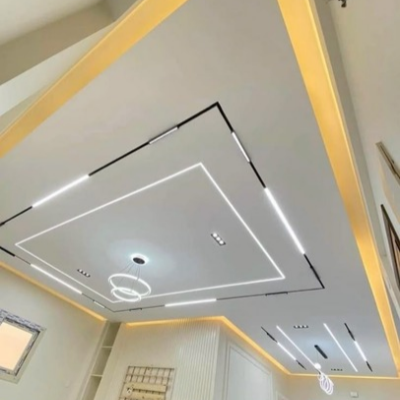
- Description
Description
Decorative Gypsum Ceiling Designs
Decorative gypsum ceiling designs add character, elegance and visual interest to living rooms, bedrooms, dining areas and commercial interiors. They combine gypsum boards with features such as ornamental borders, ceiling mouldings, curved patterns, recessed panels, cornices and decorative lighting to create a distinctive finish.
In Kenya, decorative gypsum ceilings suit different interior styles, from simple homes that need a neat ceiling border to spacious living rooms that can accommodate layered panels and elaborate central features. The right design depends on your room dimensions, ceiling height, preferred style and budget.
At SUIMAS Interior Designers, we help clients plan gypsum ceilings that complement the rest of their interiors. Whether you are finishing a new house or renovating an existing property, a well-planned decorative ceiling can coordinate with your lighting, wall finishes, flooring and furniture.
What We Offer
We provide gypsum ceiling design and installation solutions for residential and commercial spaces.
- Decorative Gypsum Ceiling Designs: Explore ceiling styles for living rooms, bedrooms and other interior spaces.
- Gypsum Ceiling Installation Services: Plan the installation of your selected ceiling design.
- 3D Designs and Layout Planning: Review the proposed ceiling layout before installation begins.
- Decorative ceiling borders, cornices and recessed panels.
- Layered ceilings, geometric details and selected curved features.
- Ceiling designs coordinated with lighting and other interior finishes.
Why Choose Decorative Gypsum Ceilings?
A decorative ceiling can become a focal point in a room. Instead of leaving the ceiling as a plain surface, you can introduce shapes, borders and carefully positioned lighting to complement the interior.
Gypsum boards also allow a range of shapes and finishes, making them suitable for both understated and elaborate designs. The final appearance depends on the design, materials, workmanship and finishing quality.
Decorative ceilings can also accommodate selected lighting features and conceal certain services when planned appropriately. However, the ceiling should not become unnecessarily complicated. A design that suits the room will generally look better than one that overwhelms the available space.
10 Decorative Gypsum Ceiling Designs to Consider
1. Decorative Gypsum Ceiling with Ornamental Cornices
Cornices are decorative mouldings fitted where the ceiling meets the wall. They create a defined edge and can introduce a traditional or elegant finish without requiring a complicated ceiling layout.
You can choose a simple profile for a contemporary home or a more detailed ornamental pattern for a traditional interior. The cornice should complement the wall finish, door frames and other decorative elements.
Best for: Living rooms, bedrooms, dining rooms and homes with classic interior finishes.
2. Decorative Tray Gypsum Ceiling
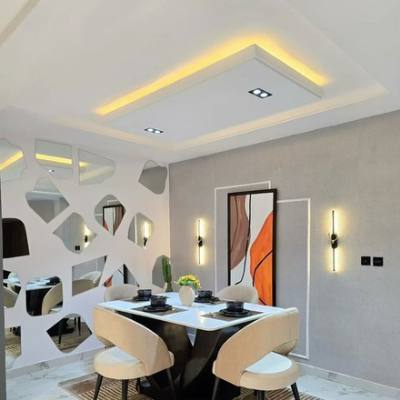
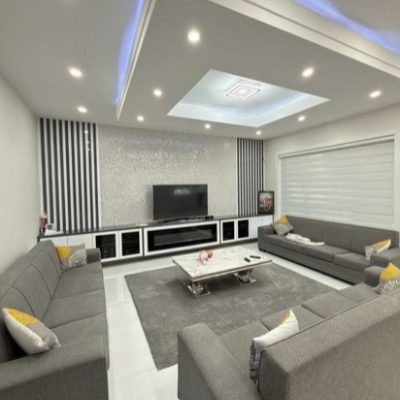
A tray ceiling features a recessed central section surrounded by a defined border. Decorative mouldings can be added around the inner or outer edge to create more detail.
The central panel may remain plain or incorporate a suitable light fitting. Concealed LED lighting can also highlight the recessed section.
Tray ceilings work particularly well when the shape follows the room’s proportions. A rectangular design is often suitable for a long living room, while a square layout may work better in a more compact space.
Best for: Living rooms, master bedrooms and dining areas.
3. Layered Decorative Gypsum Ceiling
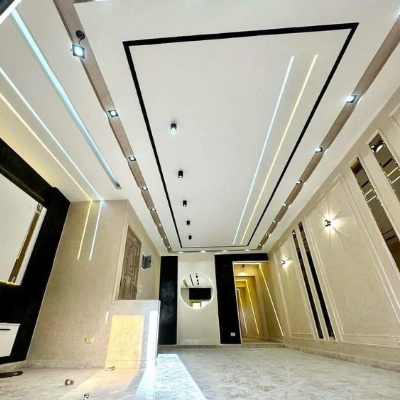
Layered ceilings combine two or more levels to create depth. Decorative borders, recessed lighting channels or contrasting paint finishes can emphasise the different sections.
This design can create a strong focal point in a spacious living room. However, each additional level requires careful planning, framing and finishing.
Before selecting a layered ceiling, check the available ceiling height. Deep or numerous levels may make a low room feel crowded.
Best for: Spacious living rooms, lounges, large bedrooms and selected commercial interiors.
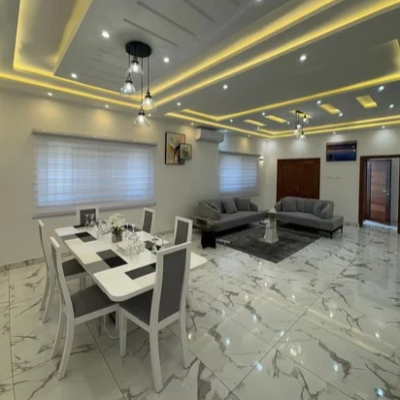
4. Decorative Gypsum Ceiling with Concealed LED Lighting
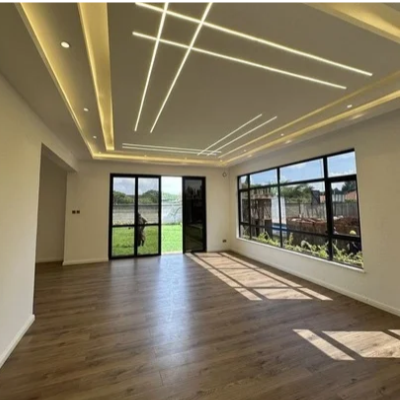
Concealed LED lighting creates a decorative effect by placing LED strips inside a recessed channel. The light reflects off the surrounding surfaces rather than exposing the light source directly.
You can combine this feature with cornices, tray ceilings, floating panels or layered designs. The lighting can highlight the ceiling’s shape while providing ambient illumination.
Plan the LED strip, driver, wiring and access points before the ceiling is closed. Also choose a suitable colour temperature and brightness for the room.
Best for: Living rooms, bedrooms, hotel lounges and reception areas.
5. Coffered Decorative Gypsum Ceiling
Coffered ceilings use a series of recessed or framed panels arranged in a grid. Decorative mouldings can make the panels more elaborate, while a simple grid creates a restrained architectural effect.
The design works best when the panel layout matches the dimensions of the room. It may require more framing and finishing than a plain ceiling, so include these requirements in your budget.
Best for: Large living rooms, dining rooms, boardrooms and formal interiors.
6. Curved Decorative Gypsum Ceiling
Curved gypsum ceilings introduce rounded edges, arches or flowing shapes into the ceiling design. These details can soften an interior dominated by straight walls and rectangular furniture.
A curve may frame a central feature or connect different ceiling sections. The shape should be planned carefully because curved work often requires additional shaping, setting out and finishing.
Use curved details selectively so that they complement rather than compete with other decorative elements.
Best for: Spacious living rooms, reception areas, lounges and selected contemporary homes.
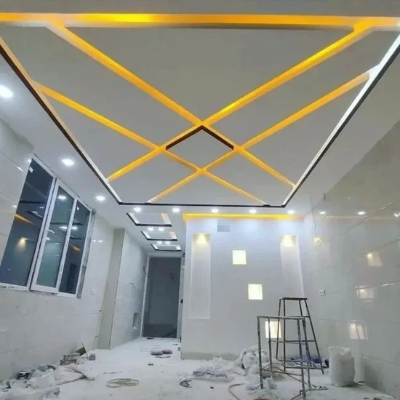
7. Geometric Decorative Gypsum Ceiling
Geometric ceilings use squares, rectangles, circles or angled lines to create decorative patterns. They can be subtle or more pronounced depending on the room’s design.
A single geometric feature may be enough for a small living room. Larger rooms can accommodate more detailed patterns when the ceiling height and interior layout allow.
Geometric designs work particularly well with clean wall finishes and carefully arranged lighting. Avoid combining too many unrelated shapes, as this can make the ceiling appear cluttered.
Best for: Contemporary living rooms, dining areas, offices and reception spaces.
8. Decorative Ceiling with a Central Medallion
A ceiling medallion is a decorative feature positioned around a central light fitting. It can provide a traditional focal point without requiring a full multi-level ceiling.
The medallion may feature a simple circular pattern or more elaborate ornamental detailing. Its size should suit the room and the selected light fitting.
Make sure the fitting has suitable support and that the decorative feature does not obstruct access to electrical components.
Best for: Dining rooms, traditional living rooms, entrance halls and selected bedrooms.
9. Decorative Gypsum Ceiling with a Floating Panel
A floating ceiling panel creates the appearance of a central section separated from the surrounding ceiling. A shadow gap or concealed LED strip can emphasise the effect.
Decorative mouldings may be added around the panel, but the overall layout should remain balanced. A simple floating feature can provide enough detail without requiring numerous ceiling levels.
Best for: Modern living rooms, master bedrooms and reception areas.
10. Decorative Gypsum Ceiling with Recessed Lighting
Recessed lights fit into openings in the ceiling, creating a neat appearance. They can highlight decorative panels or provide general lighting throughout the room.
The lights should be positioned according to the room’s function and the ceiling layout. For example, living rooms may need balanced general lighting, while kitchens need adequate illumination over work surfaces.
Coordinate the lighting plan with the decorative features before installation to avoid poorly placed fittings or unnecessary alterations.
Best for: Living rooms, bedrooms, kitchens, offices and corridors.
Best Decorative Gypsum Ceiling Designs for Living Rooms
The living room is often a central gathering space, so its ceiling should complement the furniture, wall finishes and lighting.
A tray ceiling with decorative mouldings works well when you want a defined central feature. A layered ceiling may suit a spacious room, while ornamental cornices can provide a decorative finish without lowering the entire ceiling.
Concealed LED lighting can highlight the ceiling’s shape, while recessed downlights provide general illumination. You can also consider a central pendant or chandelier where the room and ceiling support it.
For smaller living rooms, choose a shallow border or one decorative feature instead of a complex multi-level design. This helps preserve a sense of space.
Explore our gypsum ceiling design options for more inspiration.
Decorative Gypsum Ceiling Designs for Bedrooms
Bedroom ceilings can use decorative borders, tray panels, central medallions or concealed lighting to create a finished appearance.
A simple ornamental border may be sufficient for a guest bedroom. In a larger master bedroom, a tray ceiling above the bed can provide a focal point without decorating every part of the ceiling.
Choose lighting that supports the room’s intended use. Concealed ambient lighting can complement bedside lights, while a central fitting may provide general illumination.
Avoid excessive mouldings and deep ceiling drops in smaller bedrooms, especially where the ceiling height is limited.
Decorative Gypsum Ceilings for Dining Rooms and Kitchens
In a dining room, a rectangular tray or circular decorative feature can help define the table area. The design should align with the table and its light fitting so that the arrangement looks balanced.
Kitchens usually benefit from practical ceiling layouts that support good lighting, ventilation and maintenance. A simple decorative border or recessed panel can provide visual interest without interfering with kitchen equipment or ventilation systems.
Where moisture exposure is a concern, select suitable materials and address ventilation or leaks before installation. Decorative gypsum should not be used to conceal an unresolved moisture problem.
Decorative Gypsum Ceiling Designs for Offices and Commercial Spaces
Decorative ceilings can also enhance offices, reception areas, hotels, restaurants and other commercial interiors.
A reception area may use a geometric or floating ceiling feature to complement the reception desk and branding. Meeting rooms may benefit from simple decorative borders with a coordinated lighting layout.
For larger commercial projects, consider electrical services, air-conditioning, maintenance access and the activities taking place below the ceiling. The decorative design should support the space rather than interfere with its function.
Decorative Gypsum Ceiling Prices in Kenya
The cost of a decorative gypsum ceiling depends on the design complexity, board specification, framing, finishing, lighting and installation requirements.
The following are indicative planning rates from the SUIMAS gypsum ceiling cost guide. They are estimates rather than fixed quotations.
| Design type | Indicative price per m² |
|---|---|
| Plain gypsum ceiling | KES 1,000–1,500 |
| Simple modern design | KES 1,500–2,500 |
| Bulkhead or stepped ceiling | KES 2,000–3,500+ |
| Feature ceiling with cove lighting | KES 2,500–4,500+ |
| Complex premium design | KES 4,000–6,000+ |
Source: SUIMAS gypsum ceiling installation cost guide.
Decorative cornices, central medallions, complex curves and additional lighting may require separate pricing depending on the selected specification. Confirm whether the quotation includes boards, framing, jointing, skimming, painting, lighting fittings, electrical work and transport.
Example Budget for a 20 m² Ceiling
For a room with a ceiling area of 20 square metres, the initial estimate would be:
- At KES 1,500 per m²: KES 30,000.
- At KES 2,500 per m²: KES 50,000.
- At KES 4,000 per m²: KES 80,000.
These figures are area-based estimates only. The final amount depends on the design and agreed scope of work.
For a more detailed breakdown, read our guide to gypsum ceiling installation costs in Kenya.
Factors That Affect Decorative Gypsum Ceiling Costs
Design complexity: Curved patterns, multiple levels and intricate mouldings generally require more setting out and finishing than a plain ceiling.
Room dimensions: Large or irregular rooms may require additional materials, cutting and planning.
Ceiling height: Higher ceilings can require additional access equipment and installation time.
Materials and framing: Board specification and the framing system affect the project’s overall cost.
Decorative mouldings: The type, length and complexity of the selected cornices or mouldings influence the quotation.
Lighting: LED strips, downlights, drivers, wiring and switches may add to the cost.
Finishing: Joint treatment, sanding, skimming and painting affect the final appearance.
Transport and access: The project location, material delivery and access conditions may influence the total quotation.
How to Choose the Right Decorative Gypsum Ceiling
Start by measuring the room and checking the available ceiling height. This helps determine whether a tray, layered, coffered or simpler decorative design is suitable.
Next, identify the room’s main purpose and choose a design that complements its furniture and other finishes. A dining room may benefit from a central feature, while a bedroom may need only a modest border and comfortable lighting.
Set a clear budget and ask for a written quotation. Confirm the materials, finishing, lighting and any exclusions before approving the work.
If the design is elaborate, consider reviewing a drawing or 3D visualisation before installation. This can help you understand the proposed shapes and lighting positions.
Our 3D design and layout planning service can help you plan the ceiling alongside the rest of your interior.
Common Mistakes to Avoid
- Choosing elaborate mouldings that do not suit the room’s proportions.
- Using too many ceiling levels in a low room.
- Combining several decorative patterns without a consistent design.
- Installing lights without coordinating their positions with the ceiling features.
- Ignoring moisture problems before installing gypsum boards.
- Failing to plan access to concealed electrical components.
- Comparing quotations without checking the materials and finishing included.
- Attaching heavy light fittings without suitable support.
Gypsum Ceiling Design and Installation Process
A successful decorative ceiling project begins with a clear plan.
- Consultation: Discuss your preferred style, room use and budget.
- Measurement: Confirm the room dimensions and existing conditions.
- Design selection: Choose the decorative details and lighting layout.
- Quotation: Agree on materials, installation, finishing and exclusions.
- Preparation: Coordinate electrical work and other services before closing the ceiling.
- Installation: Install the framework and boards according to the approved specification.
- Finishing: Complete joint treatment, surface preparation and agreed painting.
- Inspection: Review the completed work against the agreed scope.
The timeline depends on the room size, design complexity, site conditions and material availability.
Related Interior Design and Finishing Services
A decorative gypsum ceiling often forms part of a wider interior project. Explore these specialist websites for related services:
- Interior Design Services in Kenya: Explore residential and commercial interior design and fit-out services.
- Aluminium Products and Services: Explore aluminium solutions for suitable windows, doors and partitions.
- Commercial Kitchen Solutions: Consider kitchen layout and equipment planning for hospitality and commercial projects.
- Interior Finishing Services: Explore finishing options that complement ceilings, walls, flooring and partitions.
- Renovation Services in Kenya: Plan improvements to existing homes, apartments and commercial properties.
You can also explore SUIMAS gypsum ceiling designs, gypsum ceiling installation services and 3D design and layout planning.
Areas We Serve
SUIMAS Interior Designers serves residential and commercial clients across all 47 counties of Kenya, subject to project assessment and logistics.
Our coverage includes Mombasa, Kwale, Kilifi, Tana River, Lamu, Taita-Taveta, Garissa, Wajir, Mandera, Marsabit, Isiolo, Meru, Tharaka-Nithi, Embu, Kitui, Machakos, Makueni, Nyandarua, Nyeri, Kirinyaga, Murang’a, Kiambu, Turkana, West Pokot, Samburu, Trans Nzoia, Uasin Gishu, Elgeyo-Marakwet, Nandi, Baringo, Laikipia, Nakuru, Narok, Kajiado, Kericho, Bomet, Kakamega, Vihiga, Bungoma, Busia, Siaya, Kisumu, Homa Bay, Migori, Kisii, Nyamira and Nairobi.
In Nairobi, our service areas include Nairobi CBD, Westlands, Parklands, Riverside, Lavington, Kileleshwa, Kilimani, Karen, Runda, Gigiri, Muthaiga, Kitisuru, Lang’ata, South C, South B, Nairobi West, Madaraka, Embakasi, Donholm, Buruburu, Kasarani, Roysambu, Ruaraka, Ridgeways, Ruai, Utawala and surrounding neighbourhoods.
In Mombasa, we serve areas including Mombasa Island, Nyali, Bamburi, Shanzu, Kisauni, Tudor, Likoni, Changamwe, Miritini and nearby coastal locations such as Mtwapa, Kilifi, Malindi, Diani and Ukunda. Contact us to confirm project arrangements for your location.
Request a Decorative Gypsum Ceiling Quotation
Are you planning a decorative gypsum ceiling for your living room, bedroom, office or commercial property? SUIMAS Interior Designers can help you explore suitable designs and coordinate the ceiling with your preferred lighting and interior finishes.
When requesting a quotation, share your location, approximate ceiling measurements, preferred design and budget. Also indicate whether you need ceiling installation only or a wider package that includes painting, lighting and other finishing work.
Contact SUIMAS Interior Designers
- Website: Visit SUIMAS.co.ke
- Gypsum ceiling designs: Explore design options
- Installation services: View gypsum ceiling installation services
- 3D planning: Explore 3D design and layout planning
- Contact page: Contact SUIMAS Interior Designers
- Phone: 0717 044 443 / 0739 255 050
- Email: info@suimas.co.ke / info@interiordesigners.co.ke
- Address: Nairobi CBD
Visit SUIMAS.co.ke to discuss your project and choose a decorative ceiling that suits your space and budget.
Frequently Asked Questions
What are decorative gypsum ceiling designs?
Decorative gypsum ceiling designs use gypsum boards with features such as cornices, mouldings, recessed panels, curves, geometric patterns or lighting details to improve the appearance of a ceiling.
Which decorative gypsum ceiling design is best for a living room?
Tray ceilings, layered designs, decorative cornices and concealed LED features are suitable options. The best choice depends on the room dimensions, ceiling height and preferred interior style.
Are decorative gypsum ceilings suitable for bedrooms?
Yes. Decorative borders, tray panels and central features can complement bedroom interiors. Smaller bedrooms usually benefit from simpler details.
How much do decorative gypsum ceilings cost in Kenya?
Indicative rates vary by design. A plain ceiling may cost around KES 1,000–1,500 per square metre, while more complex designs can cost several thousand shillings per square metre. Request a quotation based on the actual specification.
Can decorative gypsum ceilings include LED lighting?
Yes. Concealed LED strips and recessed downlights can be incorporated when the design and electrical layout are planned appropriately.
Are decorative gypsum ceilings suitable for low ceilings?
Some designs are suitable, particularly flat ceilings, shallow borders and modest decorative panels. Deep drops and elaborate layered designs may not suit rooms with limited ceiling height.
How do I maintain a decorative gypsum ceiling?
Keep the ceiling dry, address leaks promptly and clean painted surfaces according to the paint manufacturer’s guidance. Arrange an inspection if you notice staining, cracking or sagging.
Can I see the design before installation?
A drawing or 3D visualisation can help you review the shapes, lighting positions and overall appearance before approving the work.