- Call Us: 0717044443 / 0739255050 / 0725021709
- Email: info@suimas.co.ke / info@interiordesigners.co.ke

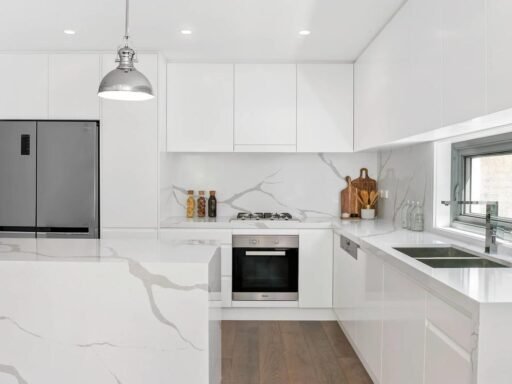
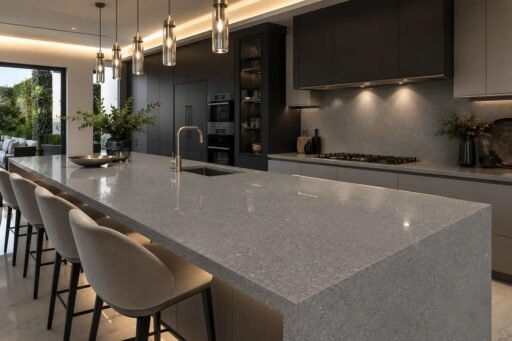
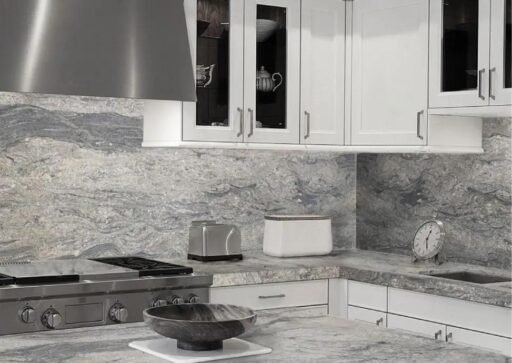
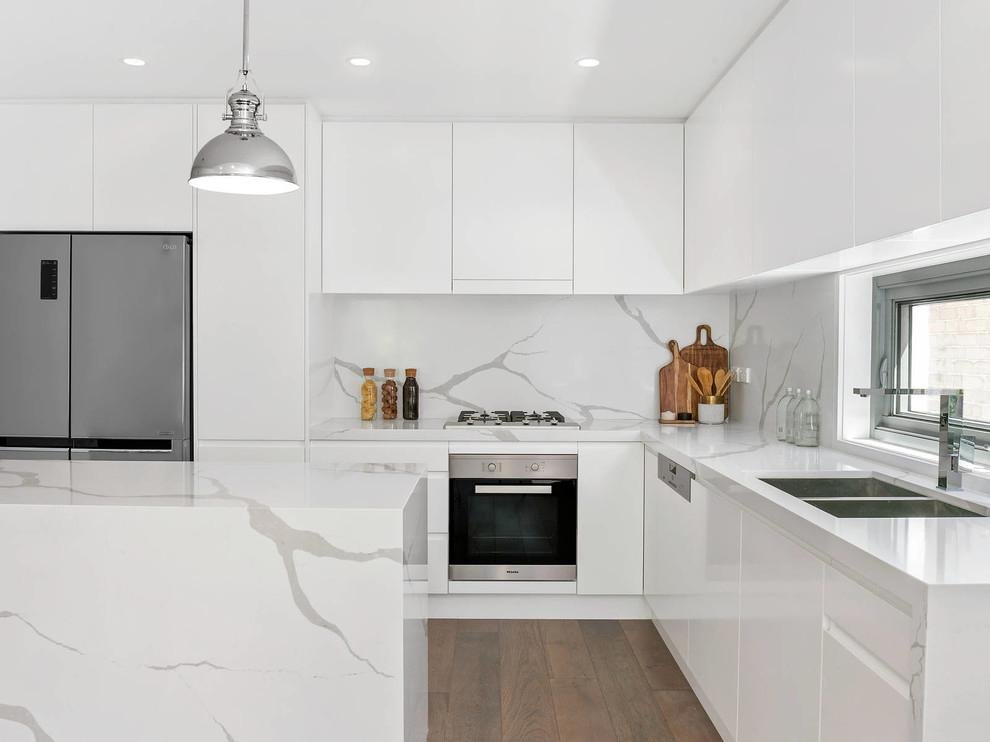

- Description
Description
Quartz Countertop Advantages and Disadvantages in Kenya
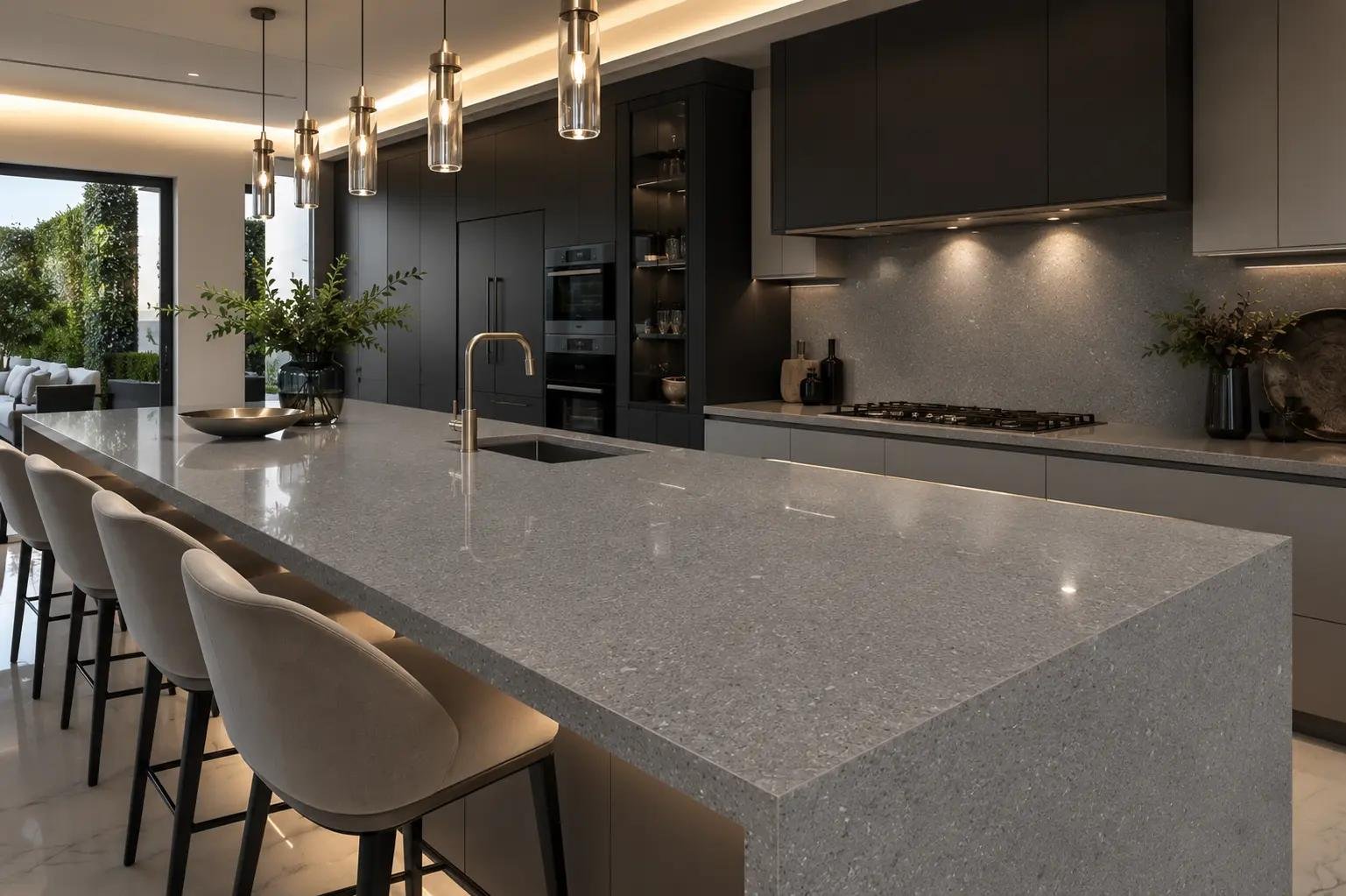
Quartz countertops are among the most popular choices for modern kitchens because they combine an attractive appearance with durability and relatively easy maintenance. Unlike granite and marble, quartz countertops are engineered using natural quartz crystals mixed with resins, pigments and other materials. This manufacturing process creates a consistent surface available in various colours, patterns and finishes.
However, quartz also has limitations, particularly when exposed to excessive heat or direct sunlight. Understanding the advantages and disadvantages can help you decide whether quartz is the right countertop material for your kitchen in Kenya.
Advantages of Quartz Countertops
1. Non-Porous Surface
One of the biggest advantages of quartz countertops is their non-porous surface. Unlike natural granite, engineered quartz does not readily absorb liquids.
This makes it more resistant to common kitchen stains from:
- Coffee and tea
- Cooking oils
- Juice and soft drinks
- Sauces and food spills
As a result, quartz is a practical option for busy kitchens where cleanliness matters.
2. Easy to Clean and Maintain
Quartz countertops require relatively little maintenance. Their non-porous surface makes everyday cleaning straightforward.
You can usually maintain the surface using:
- A soft cloth or sponge
- Mild dishwashing soap
- Warm water
- Non-abrasive cleaning products
Unlike many natural granite surfaces, quartz does not normally require periodic sealing.
3. Wide Range of Colours and Designs
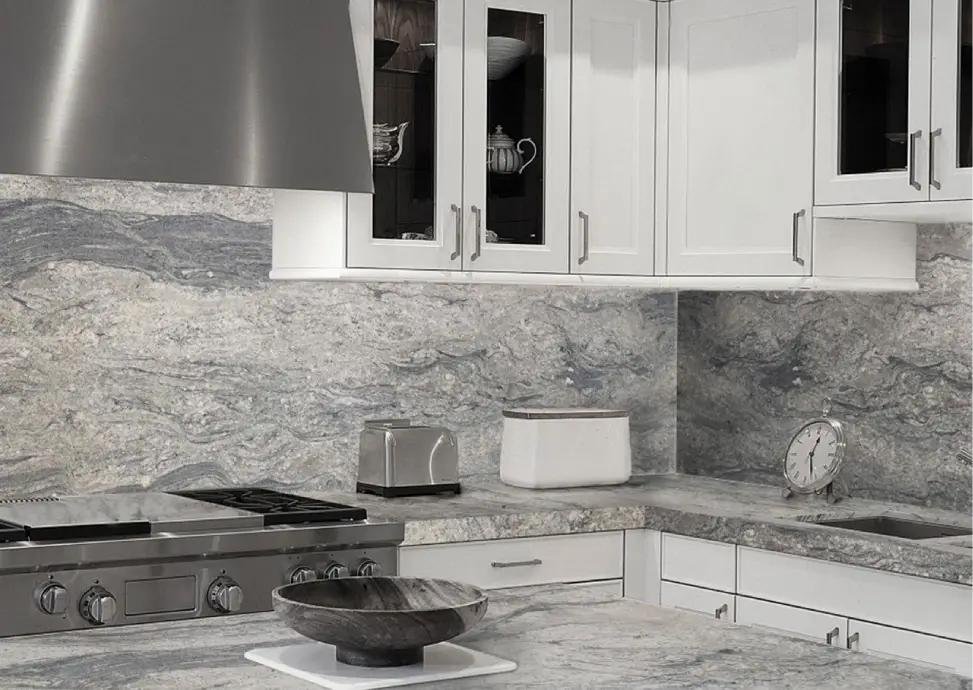
Quartz countertops are available in different colours, patterns and finishes, making them suitable for various kitchen styles.
Popular options include:
- White quartz countertops
- Black quartz countertops
- Grey quartz worktops
- Calacatta-style quartz
- Beige and cream quartz
- Marble-effect quartz
This variety makes it easier to coordinate countertops with kitchen cabinets, backsplashes, flooring and wall finishes.
4. Good Resistance to Scratches
Quartz is a hard engineered surface that offers good resistance to everyday scratches. This makes it suitable for frequently used kitchen worktops.
However, it is not completely scratch-proof. Using chopping boards helps protect the surface and keeps it looking attractive for longer.
5. Consistent Appearance
Because quartz is manufactured under controlled conditions, its colour and pattern are generally more consistent than natural stone.
This is particularly useful when installing countertops across large kitchen areas, islands or multiple work surfaces where a coordinated appearance is important.
6. Hygienic Kitchen Surface
The low-porosity surface makes it harder for liquids and food residues to penetrate the countertop. This supports easier cleaning and everyday kitchen hygiene.
7. Long-Term Durability
Quality quartz countertops can provide many years of service when properly installed and maintained.
They are suitable for:
- Residential kitchens
- Kitchen islands
- Bathroom vanity tops
- Kitchen breakfast counters
- Selected commercial interior applications
Disadvantages of Quartz Countertops
1. Limited Heat Resistance
Quartz countertops are not as heat-resistant as natural granite. This is because the resins used during manufacturing can be affected by high temperatures.
Placing hot cooking pots, pans or baking trays directly on the surface may cause permanent damage, including discolouration or cracking.
Solution: Always use heat-resistant mats or trivets when placing hot cookware on quartz countertops.
2. Higher Initial Cost
Quartz countertops can be more expensive than some locally available granite options in Kenya.
The final price depends on:
- Quartz quality and brand
- Slab thickness
- Colour and design
- Kitchen dimensions
- Edge profiles
- Sink and cooker cut-outs
- Transportation and installation
Although the initial investment may be higher, the low maintenance requirements can make quartz attractive over the long term.
3. Not Ideal for Outdoor Kitchens
Quartz is generally better suited to indoor applications. Prolonged exposure to direct sunlight and ultraviolet rays can cause some quartz surfaces to fade or discolour.
For outdoor kitchens and exposed countertops, granite or another UV-resistant material may be more suitable.
4. Can Chip or Crack
Although quartz is durable, it is not indestructible. Heavy impacts, particularly around exposed edges and corners, can cause chips or cracks.
Professional fabrication and installation help minimise these risks.
5. Seams May Be Visible
Large kitchen countertops may require more than one quartz slab. Where two sections meet, installers create joints or seams.
The visibility depends on the colour, pattern, slab dimensions and quality of installation.
6. Difficult to Repair
Minor surface damage may sometimes be repaired by a qualified specialist. However, deep scratches, cracks, burns and significant discolouration can be difficult to restore completely.
In some cases, replacing the affected section may be necessary.
Quartz Countertops: Advantages vs Disadvantages
| Advantages | Disadvantages |
|---|---|
| Non-porous surface | Limited heat resistance |
| Easy to clean | Can cost more than local granite |
| Wide range of colours | Not ideal for prolonged outdoor exposure |
| Good scratch resistance | Can chip or crack |
| Consistent patterns | Seams may be visible |
| Does not normally require sealing | Difficult to repair significant damage |
| Durable for everyday use | Quality varies between manufacturers |
Are Quartz Countertops Worth It in Kenya?
Yes. Quartz countertops are worth considering if you want a modern kitchen surface that is attractive, easy to maintain and resistant to everyday stains.
They are particularly suitable for homeowners in Nairobi, Mombasa, Kisumu, Eldoret and other Kenyan towns who prefer contemporary kitchen designs.
However, granite may be a better option if your main priorities are higher heat tolerance, natural stone patterns or a lower initial purchase price.
Choose quartz if:
- You prefer modern, consistent designs.
- You want a low-maintenance countertop.
- You need good resistance to everyday kitchen stains.
- You want white, black, grey or marble-effect finishes.
Consider granite if:
- You frequently place hot cookware on countertops.
- You prefer natural stone patterns.
- You need a surface for an outdoor kitchen.
- Your budget favours locally available granite.
Related Interior Design Services We Offer
A beautiful kitchen requires more than a quality countertop. Cabinetry, lighting, flooring, wall finishes and the overall kitchen layout all contribute to the final result.
Explore related services from our team:
- Interior Design Services in Kenya – Professional interior design for residential and commercial spaces.
- Kitchen and Interior Finishes – Interior finishing solutions for modern spaces.
- Kitchen Renovation Services – Kitchen improvement, remodelling and renovation solutions.
- Office Interior Design – Modern office planning, design and fit-out services.
Contact Suimas for Quartz Countertop Solutions in Kenya
Are you planning to install quartz countertops in your kitchen or renovate your existing kitchen? Suimas Interior Designers can help you plan a functional kitchen design that complements your cabinets, layout and overall interior finishes.
Our team provides interior design and fit-out solutions for residential and commercial spaces, with services available across Kenya.
Contact us to discuss your kitchen requirements, explore suitable countertop designs and request a quotation.
Suimas Interior Designers
- Phone: 0717 044 443 / 0739 255 050 / 0725 021 709
- Email: info@suimas.co.ke
- Location: Nairobi CBD
- Website: https://suimas.co.ke/
- Contact Page: https://suimas.co.ke/contact/
Areas We Serve Across Kenya
Suimas Interior Designers serves clients across all 47 counties in Kenya. Whether you are planning a new kitchen, upgrading your countertops or undertaking a complete interior renovation, our team can discuss your project requirements and service arrangements.
Our service coverage includes:
Areas We Serve Across Kenya
Suimas Interior Designers provides interior design, kitchen renovation and countertop solutions across all 47 counties in Kenya. Our service coverage includes Mombasa, Kwale, Kilifi, Tana River, Lamu, Taita-Taveta, Garissa, Wajir, Mandera, Marsabit, Isiolo, Meru, Tharaka-Nithi, Embu, Kitui, Machakos, Makueni, Nyandarua, Nyeri, Kirinyaga, Murang’a, Kiambu, Turkana, West Pokot, Samburu, Trans Nzoia, Uasin Gishu, Elgeyo-Marakwet, Nandi, Baringo, Laikipia, Nakuru, Narok, Kajiado, Kericho, Bomet, Kakamega, Vihiga, Bungoma, Busia, Siaya, Kisumu, Homa Bay, Migori, Kisii, Nyamira and Nairobi City County.
In Nairobi, we serve Nairobi CBD, Westlands, Kilimani, Kileleshwa, Lavington, Karen, Runda, Parklands, Riverside, Upper Hill, Ngara, South C, South B, Lang’ata, Embakasi, Donholm, Buruburu, Kasarani, Roysambu, Umoja and Eastleigh, among other neighbourhoods.
In Mombasa, our service areas include Mombasa Island, Nyali, Bamburi, Shanzu, Kizingo, Tudor, Likoni, Changamwe, Miritini, Mishomoroni and Kisauni. For projects outside Nairobi, site visits, transportation and service arrangements can be discussed according to the project location and scope.
Frequently Asked Questions
1. Do quartz countertops stain easily?
No. Quartz has a non-porous surface that provides good resistance to everyday stains. However, spills should still be cleaned promptly, especially substances that may affect the resin or surface finish.
2. Can you place hot pots on quartz countertops?
It is not recommended. High temperatures can damage the resin in quartz countertops. Always use trivets or heat-resistant mats.
3. Does quartz need sealing?
No. Most engineered quartz countertops do not require periodic sealing because their surfaces are non-porous.
4. Is quartz better than granite for kitchen countertops?
Neither material is universally better. Quartz offers easier maintenance and consistent designs, while granite provides better heat resistance and natural stone patterns. Your choice depends on your kitchen needs and budget.
5. How long do quartz countertops last?
Quality quartz countertops can last for many years when properly fabricated, installed and maintained. Their lifespan depends on material quality, installation and everyday use.
6. Are quartz countertops suitable for Kenyan kitchens?
Yes. Quartz is suitable for indoor kitchens in Kenya because it is easy to maintain, resistant to everyday stains and available in designs that complement modern kitchen interiors. However, it should be protected from excessive heat and prolonged direct sunlight.


