Best Curtains and Blinds for Privacy, Light Control and Style
Curtains and blinds control daylight, improve privacy, reduce glare, soften acoustics and help an interior feel complete. The right window treatment can make a bedroom more restful, a living room more welcoming and an office more comfortable to work in.
The best option depends on the room, window size, direction of sunlight, desired privacy, maintenance needs and interior design style. In many homes, combining curtains and blinds offers greater flexibility than relying on one window treatment.
1. Blackout Curtains for Bedrooms and Home Cinemas
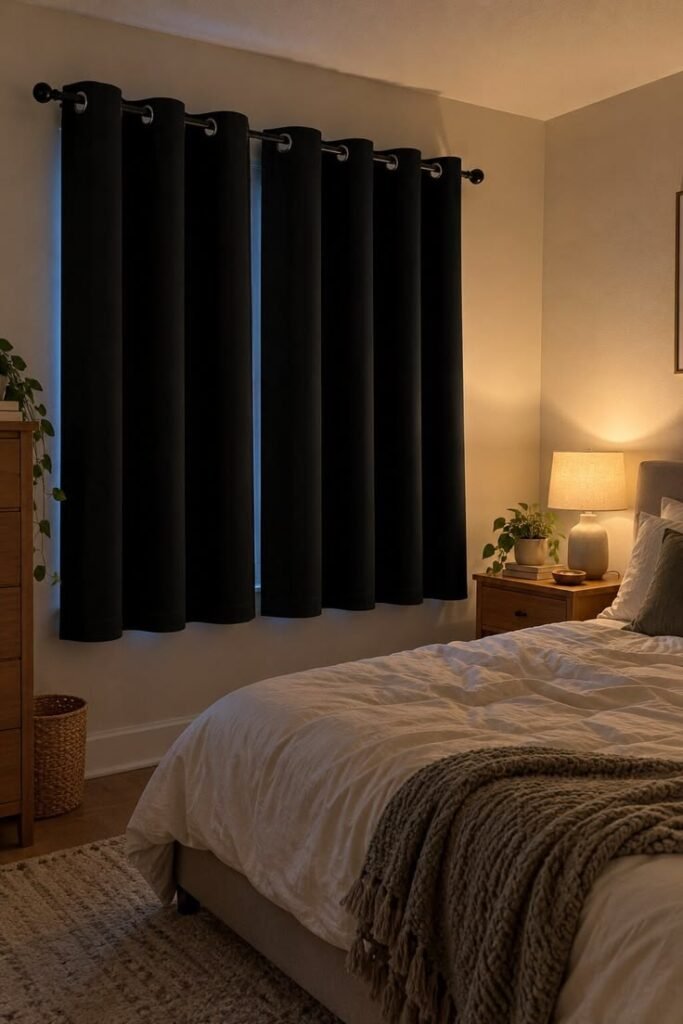
Blackout curtains are designed to block a substantial amount of incoming light. They are particularly useful in bedrooms, nurseries, media rooms and spaces exposed to strong morning or afternoon sunlight.
Benefits include:
- Reducing daylight when sleeping or resting.
- Improving privacy, especially at night.
- Limiting glare on televisions and screens.
- Helping create a darker environment for home cinema use.
For better coverage, choose curtains wider and longer than the window opening. Position the track or rod beyond the window frame and consider a ceiling-mounted track to reduce light gaps.
Blackout performance depends on fabric construction, lining, track design and how well the curtain covers the opening. If you are planning a family entertainment room, blackout window treatments can complement the lighting and seating choices discussed in a family home design context.
2. Sheer Curtains for Soft Daylight
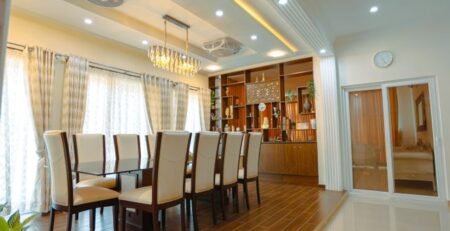
Sheer curtains filter incoming daylight while maintaining a bright, airy appearance. They are suitable for living rooms, dining rooms and spaces where you want softness without making the interior feel heavy.
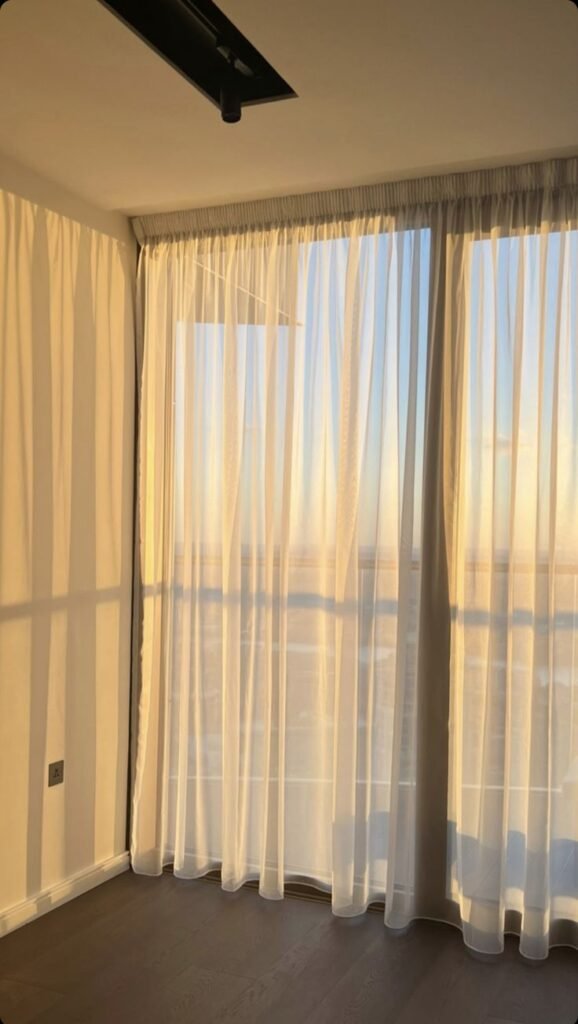
They can:
- Diffuse harsh sunlight.
- Provide some daytime privacy, depending on outside light.
- Add a light decorative layer.
- Soften the appearance of large windows.
Sheers do not provide full privacy at night when interior lights are on. For this reason, they are often paired with blackout or heavier curtains on a double track.
A layered window treatment also allows occupants to adjust the room throughout the day without sacrificing the decorative effect.
3. Linen Curtains for Natural, Relaxed Interiors
Linen curtains bring a relaxed texture that works well in contemporary, coastal, warm minimalist and natural-inspired interiors.
They allow soft light into a room and can complement timber furniture, neutral walls, woven rugs and natural finishes. Depending on the weave and lining, linen may provide limited light control, so it is not the best standalone choice where full blackout is required.
Linen can crease more easily than some synthetic fabrics. Consider whether the relaxed texture is part of the desired look and check the care instructions before purchasing.
For more inspiration on combining natural materials and warm colours, see SUIMAS’ modern home design trends in Nairobi.
4. Velvet Curtains for a Richer, Softer Finish
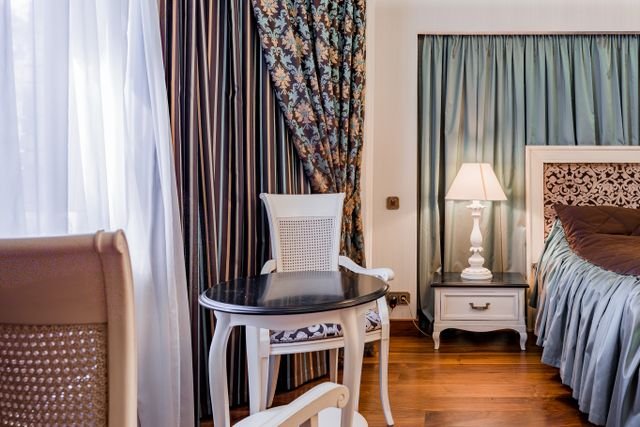
Velvet curtains add visual depth and a premium feel. Their weight and texture make them suitable for bedrooms, formal lounges and selected living spaces.
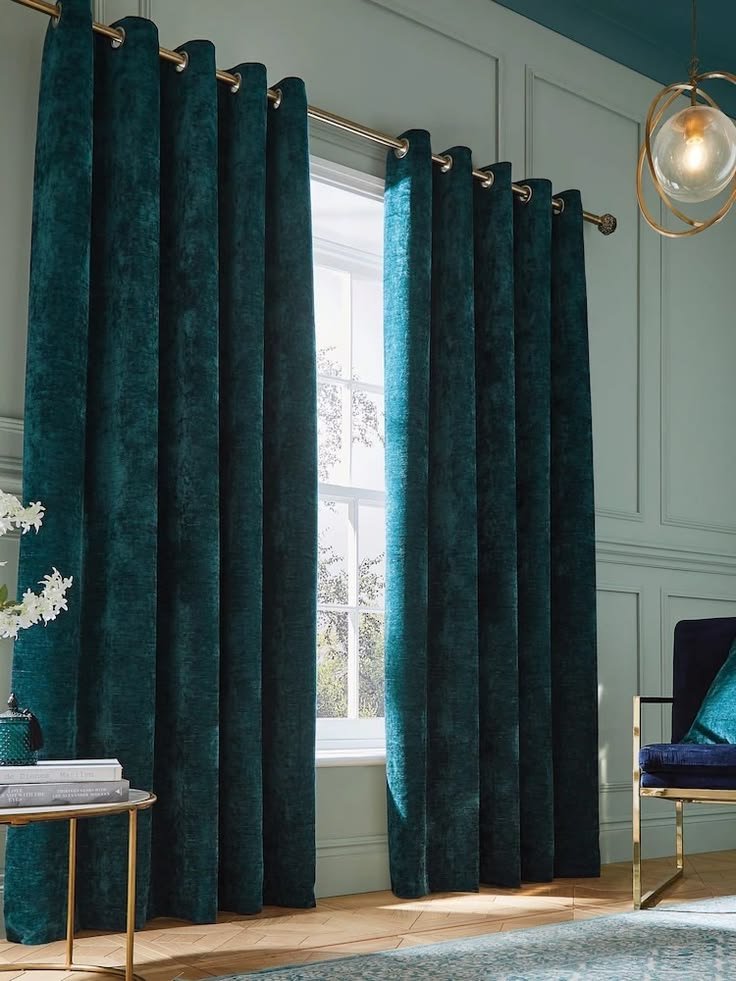
Velvet can help soften sound reflections, although it should not be treated as a substitute for specialist acoustic treatment. It can also help reduce incoming light when properly lined and fitted.
Deep green, navy, charcoal, taupe and warm neutral velvet shades can work well with contemporary and classic interiors. Because velvet is visually substantial, balance it with simpler wall finishes and furniture.
5. Roller Blinds for Practical Light Control
Roller blinds use a single fabric panel that rolls up and down. They are versatile and can be made using blackout, light-filtering or sunscreen fabrics.
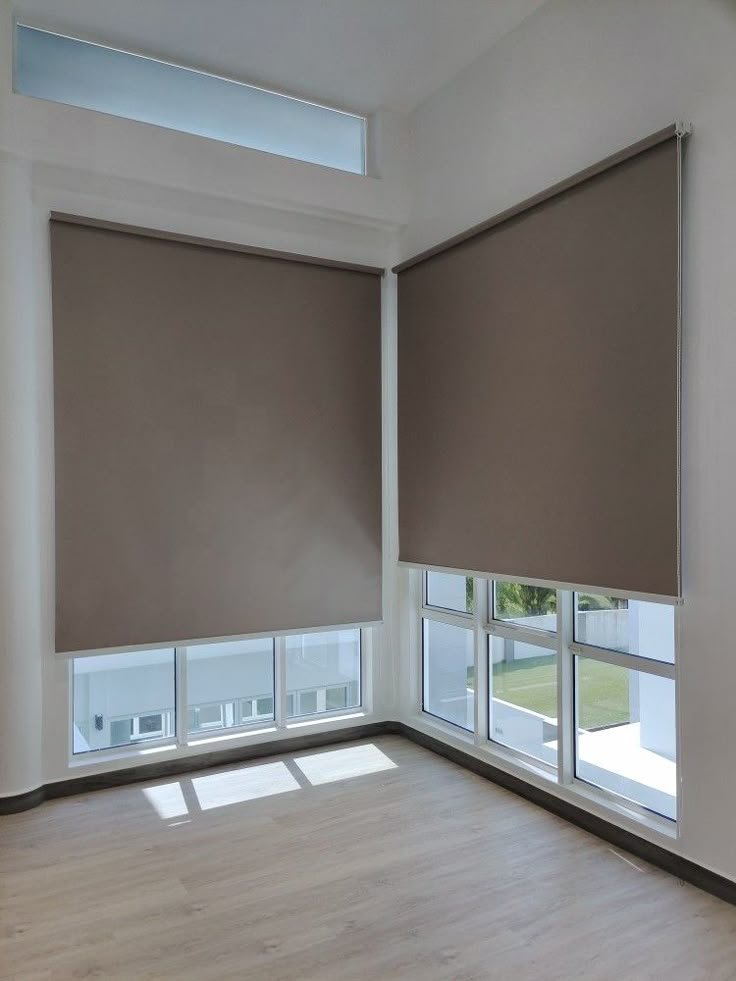
They are useful in:
- Bedrooms.
- Kitchens.
- Offices.
- Modern living rooms.
- Study areas and home workspaces.
Sunscreen roller blinds reduce glare while allowing some daylight and outward visibility, depending on the fabric openness. Blackout versions are more suitable where darkness and privacy are priorities.
Roller blinds have a neat appearance and are generally straightforward to operate and maintain. For a tailored finish, measure each window accurately and select a suitable control system.
6. Roman Blinds for a Decorative Window Treatment
Roman blinds fold into horizontal sections when raised. They create a softer, more tailored appearance than standard roller blinds and can complement both modern and traditional interiors.
They work well in bedrooms, dining rooms and living rooms where fabric texture is part of the design concept.
Roman blinds can be made in different fabrics and linings, but the fabric and operating mechanism should be selected according to window size and weight. They may require more careful cleaning than some simpler blind systems.
7. Venetian Blinds for Adjustable Privacy
Venetian blinds use horizontal slats that tilt to control incoming light and visibility. They are available in aluminium, timber and timber-look finishes.
They are practical for:
- Kitchens.
- Offices.
- Bathrooms, where moisture-suitable materials are selected.
- Study rooms.
- Windows that require adjustable daylight.
Aluminium Venetian blinds are lightweight and easy to wipe clean. Timber and timber-look versions add warmth, but natural timber should be specified carefully in humid or wet locations.
8. Vertical Blinds for Wide Windows and Sliding Doors
Vertical blinds use hanging slats that rotate and move along a track. They are suitable for wide windows, sliding doors and some office environments.
Their main advantages are flexible light control and the ability to cover broad openings. They can also be drawn to one side to provide access to a balcony or patio door.
Choose a material that suits the level of sunlight, cleaning requirements and desired appearance. Ensure the track and installation are appropriate for the width and weight of the blind.
9. Zebra Blinds for Modern Interiors
Zebra blinds combine alternating sheer and opaque horizontal bands. Adjusting the alignment changes how much light enters the room and how much privacy is provided.
They are popular in modern living rooms, bedrooms and offices because they offer a contemporary appearance and flexible light control.
However, they do not always provide the same level of darkness as a well-fitted blackout blind. If complete darkness is essential, check the fabric specification and consider a dedicated blackout option.
Compare Curtain Fabrics Before Choosing
Different fabrics perform differently. Use the room’s requirements rather than appearance alone to guide your selection.
| Fabric type | Best use | Light control | Maintenance |
|---|---|---|---|
| Sheer fabric | Living rooms, dining rooms | Low | Moderate |
| Linen | Casual, warm interiors | Low to medium | Moderate |
| Cotton | Bedrooms and lounges | Medium | Easy, depending on weave |
| Velvet | Bedrooms, lounges, formal spaces | Medium to high | Moderate |
| Blackout fabric | Bedrooms, nurseries, cinemas | High | Easy |
| Sunscreen fabric | Offices, sun-exposed rooms | Medium | Easy |
| PVC or moisture-resistant fabric | Kitchens and bathrooms | Medium | Very easy |
The actual performance will depend on fabric weight, weave, lining, colour and installation. Ask for product samples where possible and view them in the room’s natural light before making a final decision.
Coordinate Window Treatments with the Rest of the Interior
Curtains and blinds should relate to the room’s colour palette, furniture, flooring and lighting. They do not have to match every item exactly, but they should feel intentional.
In a living room, full-length curtains can make the ceiling appear taller when the track is installed close to the ceiling. For a bedroom, blackout lining may be more important than decorative detail. In a kitchen, moisture-resistant and easy-to-clean options may be more practical.
When coordinating a complete home, consider how window treatments relate to wall finishes, timber tones and flooring. SUIMAS’ modern interior design ideas for a three-bedroom house explores how colours, feature walls and window treatments can work together.
For a larger project, the full house interiors cost guide gives an overview of how curtains and blinds fit into the wider interior finishing budget. Our five-bedroom house interior design cost guide also illustrates how window treatments can form part of a room-by-room specification.
Measure and Install Curtains and Blinds Correctly
Even high-quality curtains or blinds can look poorly finished if they are incorrectly measured or installed.
Before ordering:
- Measure the width and height of each window.
- Decide whether the treatment will sit inside or outside the frame.
- Check the position of handles, vents and window openings.
- Confirm whether the track or blind can be fixed securely.
- Consider how the window will be cleaned and operated.
- Check whether children or pets require safer control mechanisms.
For full-height curtains, measure from the intended track position rather than assuming the window frame is the correct starting point. For blinds, accurate measurements are essential for a neat fit and effective light control.
Get Custom Curtains and Blinds with SUIMAS Interiors
The right window treatment balances privacy, daylight, comfort and style. SUIMAS Interiors provides residential interior design solutions that include curtains, blinds and sheers, alongside flooring, wall finishes, lighting and other finishing work.
Need curtains or blinds for a home, office or commercial space? Contact SUIMAS Interiors to discuss your window sizes, preferred fabrics and installation requirements.
Areas We Serve
SUIMAS Interiors provides professional interior design, office partitioning, soundproofing, gypsum and acoustic ceiling installation, flooring, renovation, building and complete interior fit-out services across Nairobi, Kenya and East Africa. Our integrated approach brings construction and interior design under one roof, helping clients manage projects from planning and structural works to finishing and furnishing.
In Nairobi and its surrounding areas, we serve clients in Lavington, Loresho, Lang’ata, Westlands, Karen, Runda, Muthaiga, Utawala, Spring Valley, Gigiri, Lower Kabete, Ruaka, Kilimani, Kileleshwa, Parklands, Upper Hill and Kiambu.
We also undertake projects in Eldoret, Kisumu, Nakuru, Naivasha, Meru and Mombasa, providing interior design, office fit-outs, renovations, flooring, ceilings, partitioning and other finishing solutions suited to each project.
Beyond these major towns, SUIMAS Interiors works with clients across Kenya and East Africa, delivering residential, commercial, healthcare, hospitality and other interior and construction projects.
Planning a project in your area? Contact SUIMAS Interiors to discuss your requirements and arrange a consultation.
Call/WhatsApp: 0717 044 443 / 0739 255 050 / 0725 021 709