Quartz Countertop Installation in Kenya
Quartz Countertop Installation in Kenya: Process, Costs and What to Expect
Quartz countertops are a popular choice for modern kitchens in Kenya because they combine an elegant appearance with practical everyday performance. However, achieving a durable and attractive finish depends on more than choosing the right quartz slab. Accurate measurements, proper fabrication, suitable cabinet support and professional installation all play an important role.
Whether you are installing quartz in a new kitchen, upgrading an existing worktop or fitting a countertop on a kitchen island, understanding the installation process helps you plan your project and budget.
This guide explains quartz countertop installation in Kenya, including the preparation process, installation stages, estimated costs, design options, maintenance requirements and common mistakes to avoid.
What Is Included in Quartz Countertop Installation?
Quartz countertop installation involves several stages, from selecting the slab to fitting and finishing it on the kitchen cabinets.
A professional installation project will generally cover:
- Selecting the quartz colour, pattern and thickness.
- Inspecting the kitchen cabinets and supporting surfaces.
- Taking accurate measurements.
- Preparing a cutting and fabrication plan.
- Cutting the slab to the required dimensions.
- Creating sink, tap and cooker hob openings where needed.
- Finishing and polishing exposed edges.
- Transporting the fabricated countertop.
- Positioning and securing the countertop.
- Finishing joints and checking the completed surface.
The exact scope depends on the installer and the project quotation.
Confirm whether transportation, cut-outs, edge finishing and installation labour are included before approving the work.
Step-by-Step Quartz Countertop Installation Process in Kenya
1. Kitchen Assessment and Site Inspection
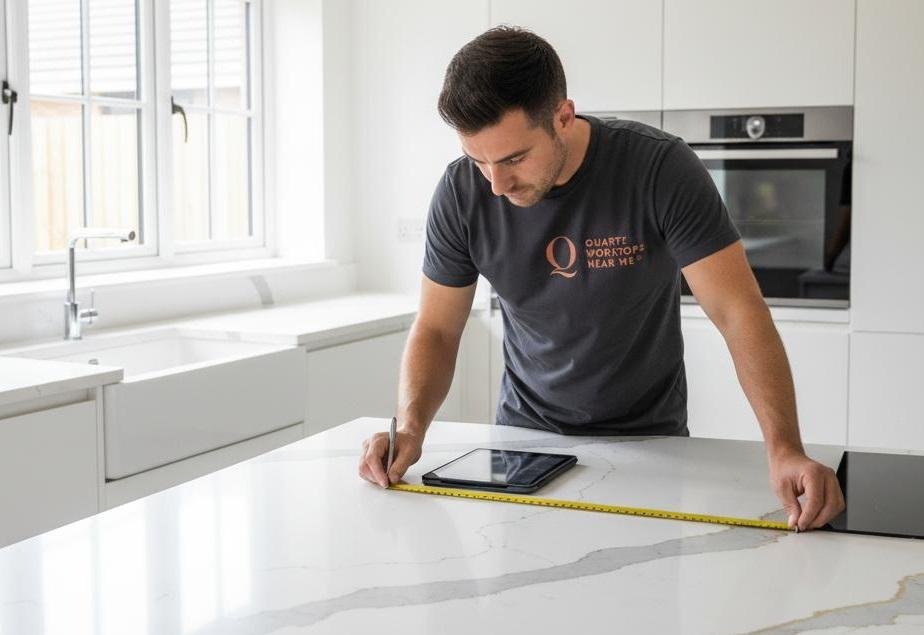
The first stage is assessing the kitchen where the quartz countertop will be installed.
The installer checks the kitchen layout, cabinet dimensions, wall alignment, sink position and available working space. This helps identify potential problems before the slab is fabricated.
For a new kitchen, the base cabinets should generally be installed and properly levelled before final countertop measurements are taken.
Important checks include:
- Cabinet alignment and stability.
- Wall dimensions and corners.
- Sink and tap positions.
- Cooker or hob location.
- Kitchen island dimensions.
- Appliance clearances.
- Access routes for transporting the slab.
This assessment helps establish the material requirements and installation plan.
2. Selecting the Right Quartz Slab
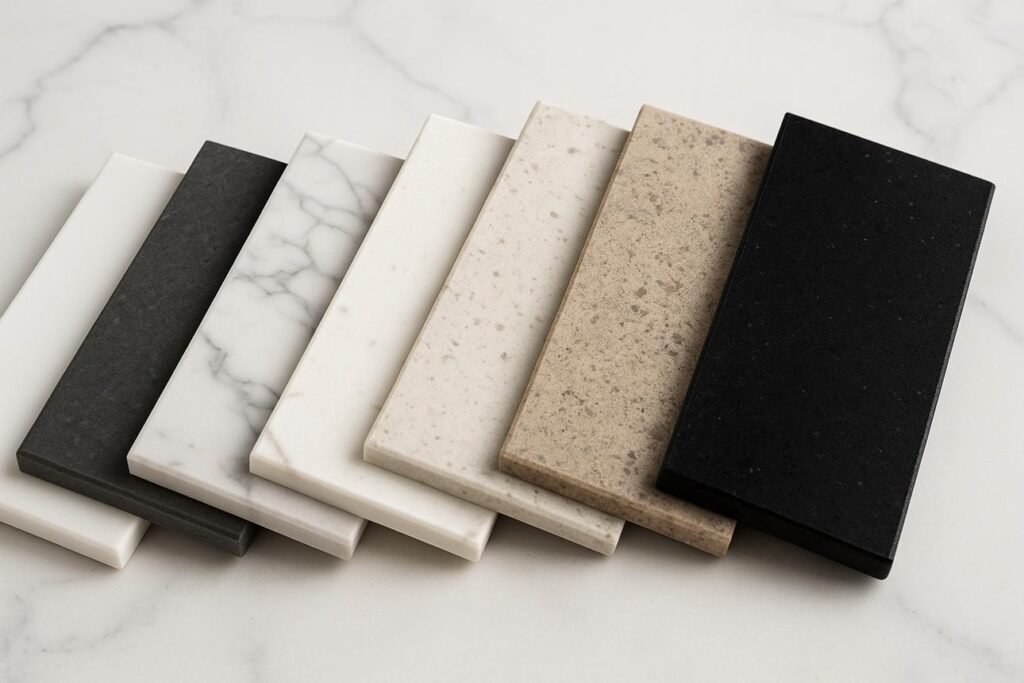
After assessing the kitchen, select a quartz slab that suits the design and intended use.
Quartz is available in several colours and patterns, including:
- White quartz.
- Black quartz.
- Light grey quartz.
- Beige quartz.
- Marble-effect quartz.
- Quartz with subtle or prominent veining.
Consider the cabinet colour, flooring, backsplash and lighting when selecting the slab.
It is also important to inspect the actual slab or a representative sample. Photographs may not accurately show the final colour, texture or pattern.
For product options and design guidance, explore Quartz Worktops in Kenya.
3. Taking Accurate Measurements and Preparing Templates
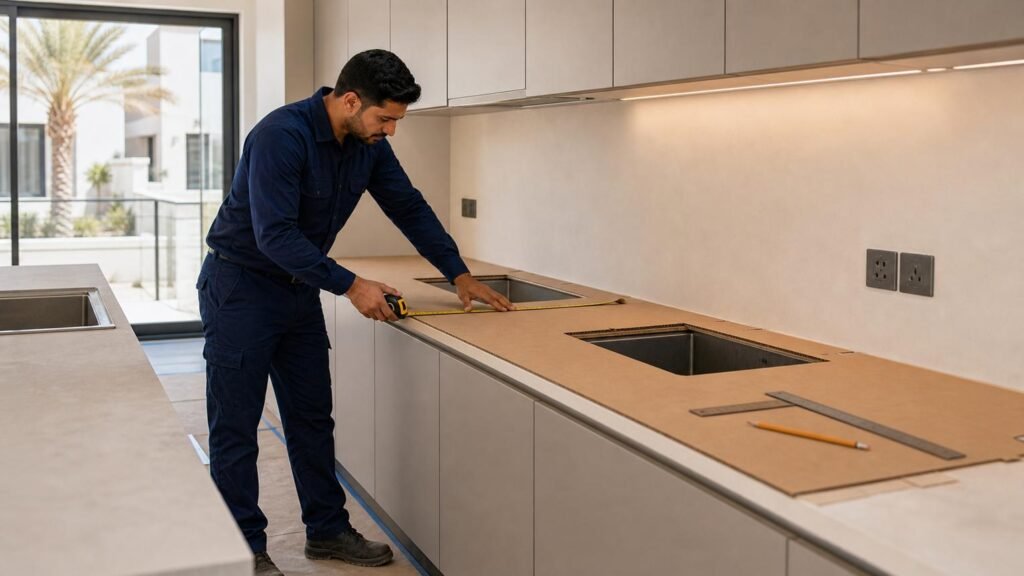
Accurate measurements are essential because quartz slabs are fabricated to fit the kitchen’s specific dimensions.
The installer measures each countertop section, including corners, wall edges, overhangs and island surfaces. Sink and hob openings are also recorded.
Depending on the project, a physical template or digital measuring system may be used to capture the required dimensions.
The template helps determine:
- The length and depth of each countertop section.
- The position of joints.
- Sink and hob cut-out dimensions.
- Edge profiles.
- Waterfall panels.
- Areas requiring additional support.
Measurements should be confirmed before cutting because errors can lead to material wastage, visible gaps or costly adjustments.
4. Cutting and Fabricating the Quartz Slab
Once measurements are approved, the quartz slab is prepared for fabrication.
Fabrication involves cutting the slab into the required sections and creating the openings and edges specified in the design.
Common fabrication activities include:
- Cutting the countertop to size.
- Creating sink and hob openings.
- Shaping exposed edges.
- Preparing joints.
- Polishing visible surfaces and edges.
- Preparing waterfall side panels where required.
The fabricator should follow the quartz manufacturer’s specifications, particularly around cut-outs and unsupported sections. Poorly executed openings and inadequate support can increase the risk of cracking.
5. Preparing the Kitchen Cabinets
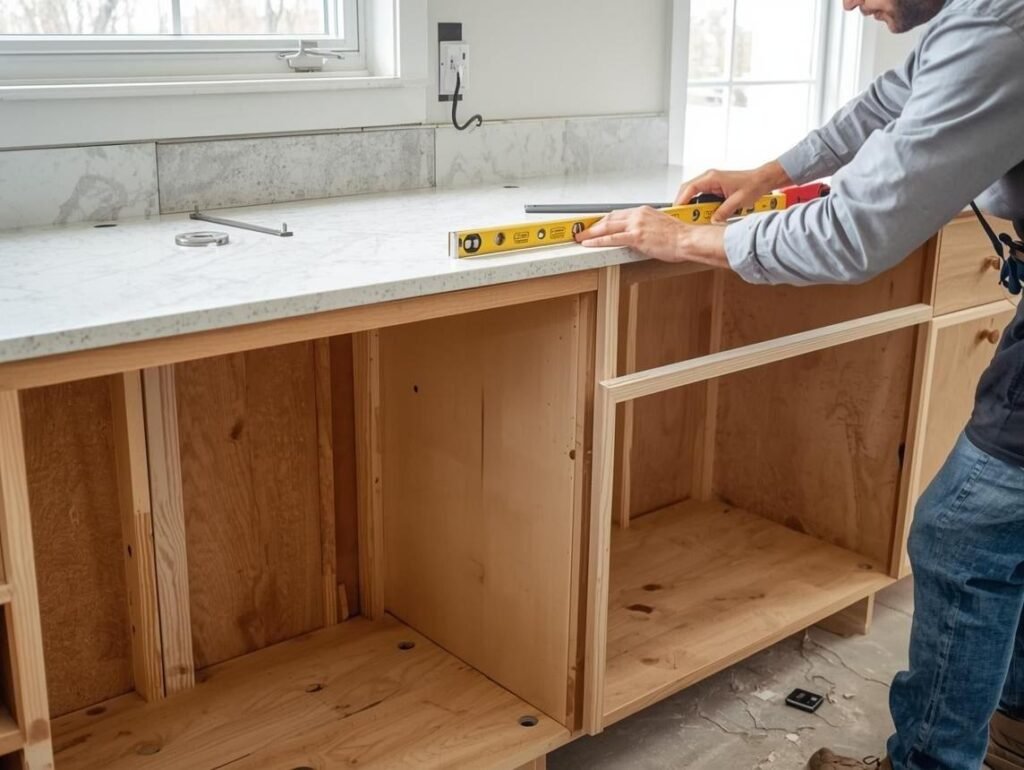
Before installing the quartz, the kitchen cabinets must be ready to receive the countertop.
The installer checks that the cabinets are level, properly secured and capable of supporting the weight of the slab.
This stage may involve correcting uneven cabinet sections, strengthening support points and confirming that the sink and appliance positions match the fabrication plan.
For kitchen islands, additional attention may be needed around extended overhangs and waterfall panels.
6. Transporting and Positioning the Quartz
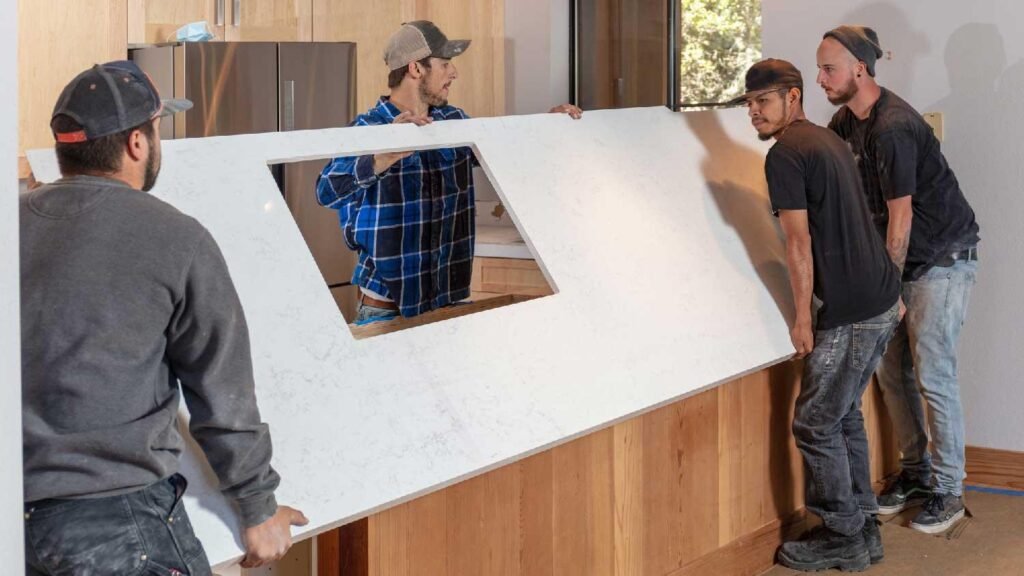
Quartz slabs are heavy and can be damaged if handled incorrectly. Transportation and positioning should therefore be planned carefully.
The installation team should check access through doors, staircases, corridors and other restricted spaces before delivery.
The slab is then positioned according to the approved layout. Installers check its alignment against the cabinets and walls before completing the fitting.
7. Fitting the Countertop and Finishing Joints
After positioning, the countertop sections are fitted and joined where necessary.
Visible joints should be planned carefully to create a neat finish. Their placement depends on the slab dimensions, kitchen layout, pattern and available material.
The installer also checks that the countertop sits correctly on its support structure and that exposed edges are properly finished.
Where the design includes a waterfall edge, the vertical quartz panel is aligned with the top surface to create a continuous appearance.
8. Final Inspection and Handover
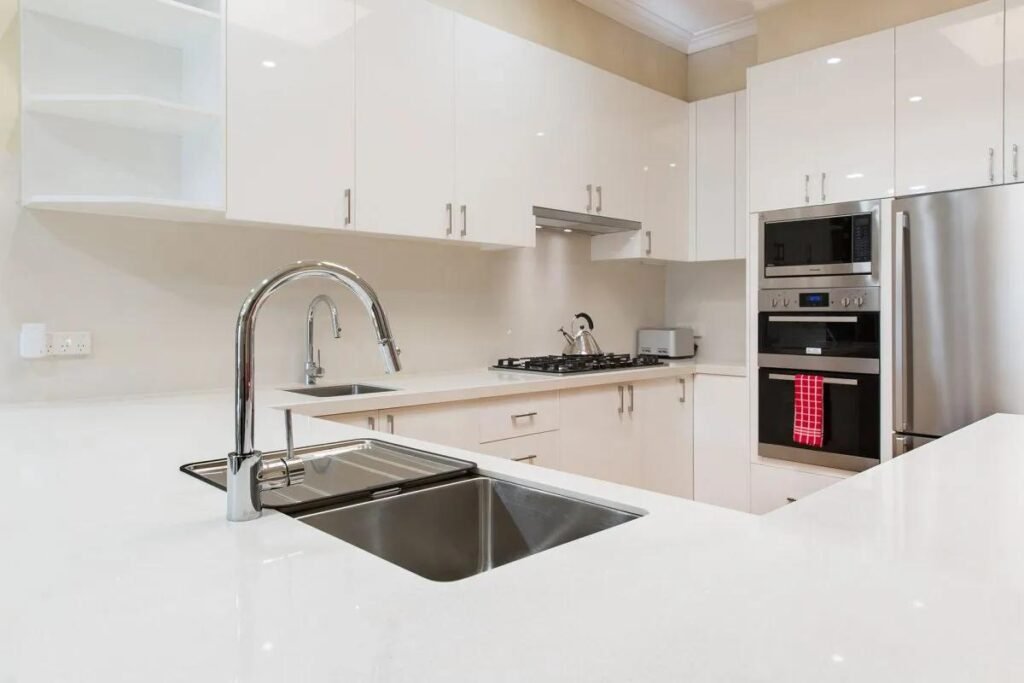
The final stage involves checking the installed countertop and confirming that the agreed work has been completed.
The inspection should cover:
- Countertop alignment and level.
- Joint appearance and finishing.
- Sink and hob cut-outs.
- Edge polishing.
- Cabinet support.
- Water and plumbing connections where applicable.
- Surface cleanliness.
- Manufacturer care instructions.
The homeowner should also receive guidance on cleaning, heat protection and product warranty conditions.
Quartz Countertop Installation Costs in Kenya
The cost of quartz countertop installation in Kenya depends on the quartz grade, slab thickness, colour, kitchen dimensions, fabrication requirements and installation location.
For initial budgeting, the following indicative material and supply-and-install planning ranges can be used.
| Quartz countertop category | Estimated price per m² |
|---|---|
| Standard quartz | KES 18,000–24,000 |
| Mid-range quartz | KES 24,000–30,000 |
| Premium quartz | KES 30,000–35,000+ |
| Special imported or branded quartz | Quotation based on specification |
These are indicative planning estimates, not confirmed quotations from every supplier. Some fabricators quote per running foot or linear metre instead of per square metre. Confirm the measurement basis before comparing prices. SUIMAS INTERIORS+1
What Is Included in the Installation Price?
A complete quotation may include:
| Installation item | What it covers |
|---|---|
| Quartz material | Selected slab and required quantity |
| Site measurement | Measuring the kitchen and preparing templates |
| Fabrication | Cutting and shaping the slab |
| Edge finishing | Polishing and profiling exposed edges |
| Sink cut-out | Opening for the kitchen sink |
| Hob cut-out | Opening for the cooking hob |
| Transportation | Moving the slab to the project site |
| Installation labour | Positioning and fitting the countertop |
| Joint finishing | Completing connections between sections |
Not every supplier includes all these items in the initial price. Request an itemised quotation to understand what you are paying for.
Factors That Affect Quartz Countertop Installation Costs
1. Quartz quality and brand
Different manufacturers offer different colours, designs, thicknesses and product specifications. Premium and imported quartz may cost more than standard options.
2. Countertop dimensions
A larger kitchen requires more material and may involve additional joints, fabrication and handling.
3. Slab thickness
The selected thickness influences the material requirement, appearance and fabrication details.
4. Edge profile
Straight, bevelled, rounded and decorative edge profiles may have different fabrication costs.
5. Sink and hob openings
Cut-outs require careful fabrication. The number, size and position of the openings can affect the quotation.
6. Waterfall edges and islands
Kitchen islands with waterfall sides require additional quartz and more detailed fabrication than standard worktops.
7. Transportation and location
Delivery costs can vary depending on the project location, site access and handling requirements.
8. Cabinet preparation
Uneven or weak cabinets may need adjustments or additional support before the countertop can be installed.
For more information about the overall kitchen budget, read Cost of Doing a Kitchen in Kenya.
How Long Does Quartz Countertop Installation Take?
The installation timeline depends on the kitchen size, slab availability, fabrication requirements and site conditions.
A straightforward project may take several working days from final measurement to installation, while complex kitchens with islands, multiple joints or special finishes may take longer.
| Installation stage | Typical planning duration |
|---|---|
| Site assessment and measurements | 1 day |
| Material selection and approval | 1–3 days |
| Fabrication and edge finishing | 3–7 working days |
| Transportation and installation | 1–2 days |
| Final inspection | Same day as installation or as agreed |
These are indicative planning periods, not guaranteed supplier lead times. Confirm the schedule with your fabricator, especially where a particular quartz colour or imported slab must be ordered.
Different Quartz Countertop Designs You Can Install in Kenya
The installation method and material requirements can vary depending on the countertop design. Here are popular options for residential kitchens.
1. Straight Quartz Kitchen Countertops
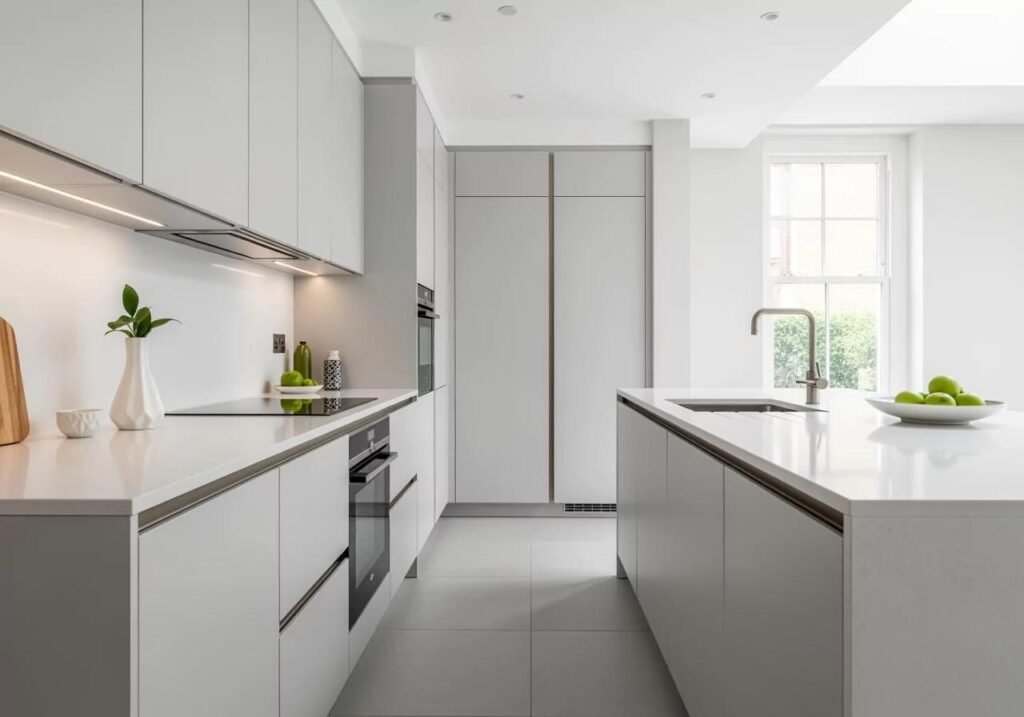
Straight countertops are suitable for compact kitchens and simple cabinet layouts. They provide a continuous preparation surface along one wall.
2. L-Shaped Quartz Countertops
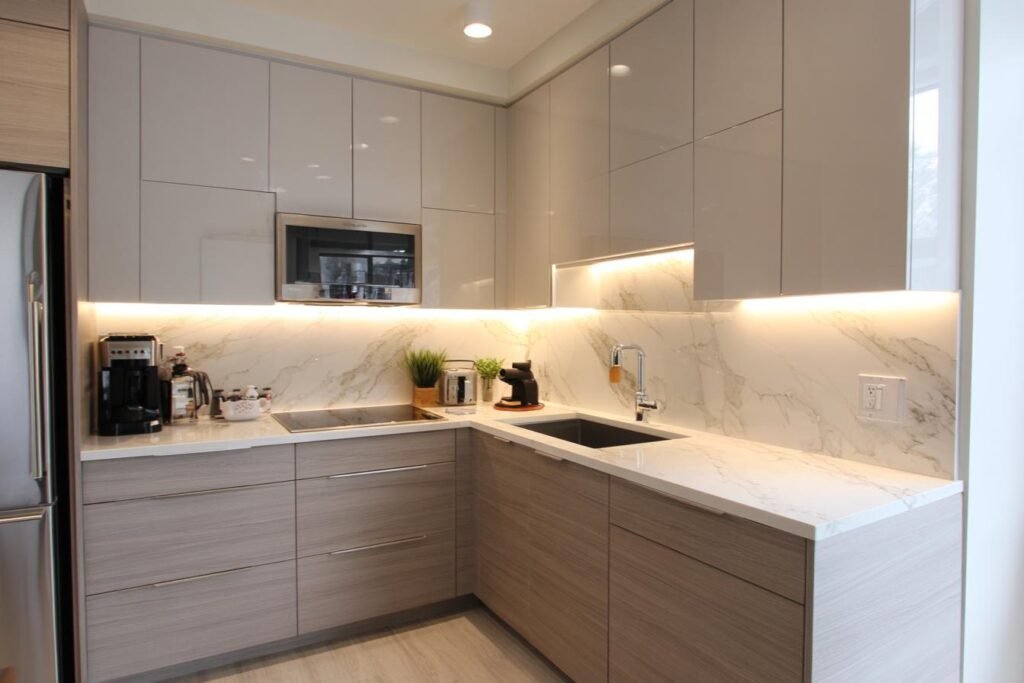
L-shaped countertops fit kitchens with two adjoining cabinet runs. Accurate corner measurements are important to achieve neat joints and proper alignment.
3. U-Shaped Quartz Countertops
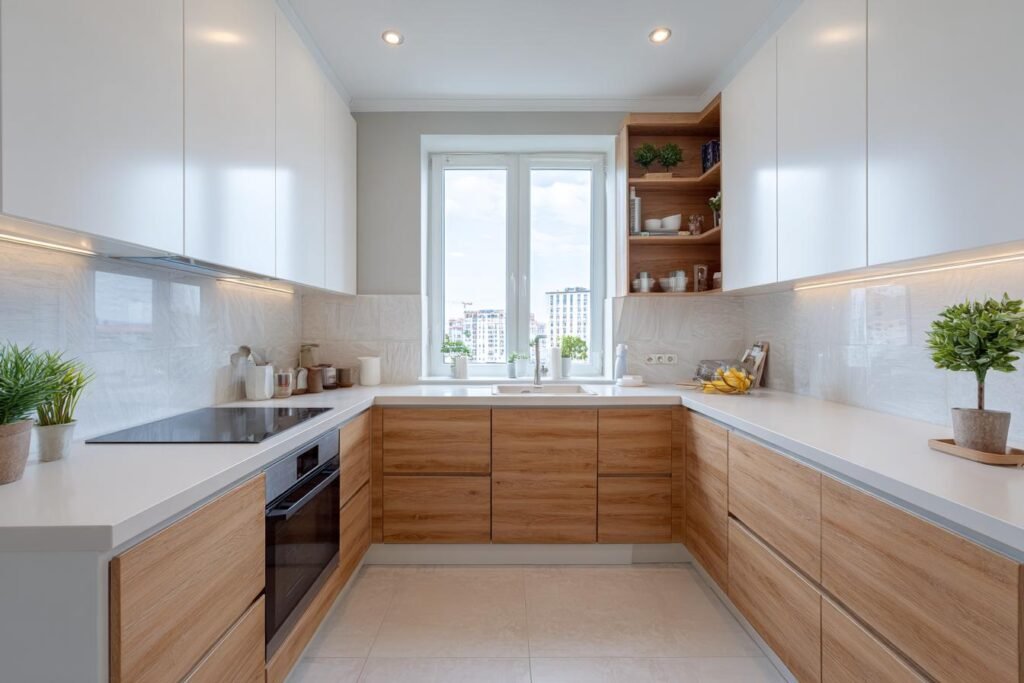
U-shaped countertops provide work surfaces along three sides of the kitchen. Their installation requires careful measurement of corners, joints and cabinet positions.
4. Quartz Kitchen Island Countertops
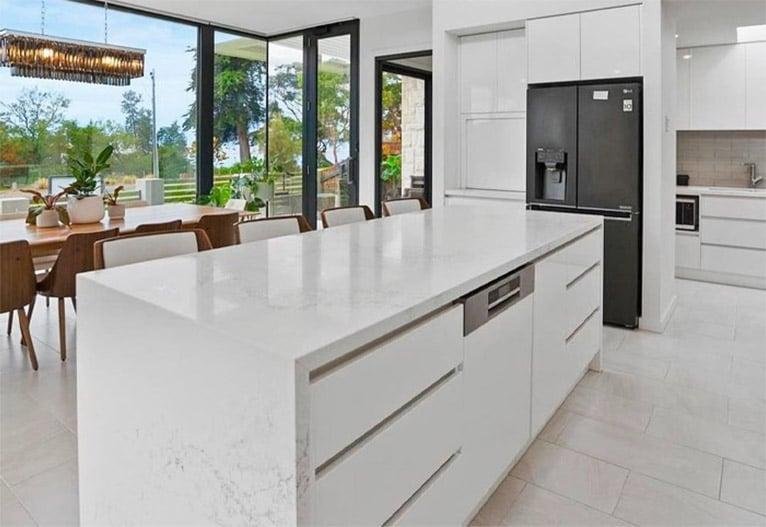
Quartz islands can provide additional preparation space, seating and storage. The island base must be properly constructed to support the countertop.
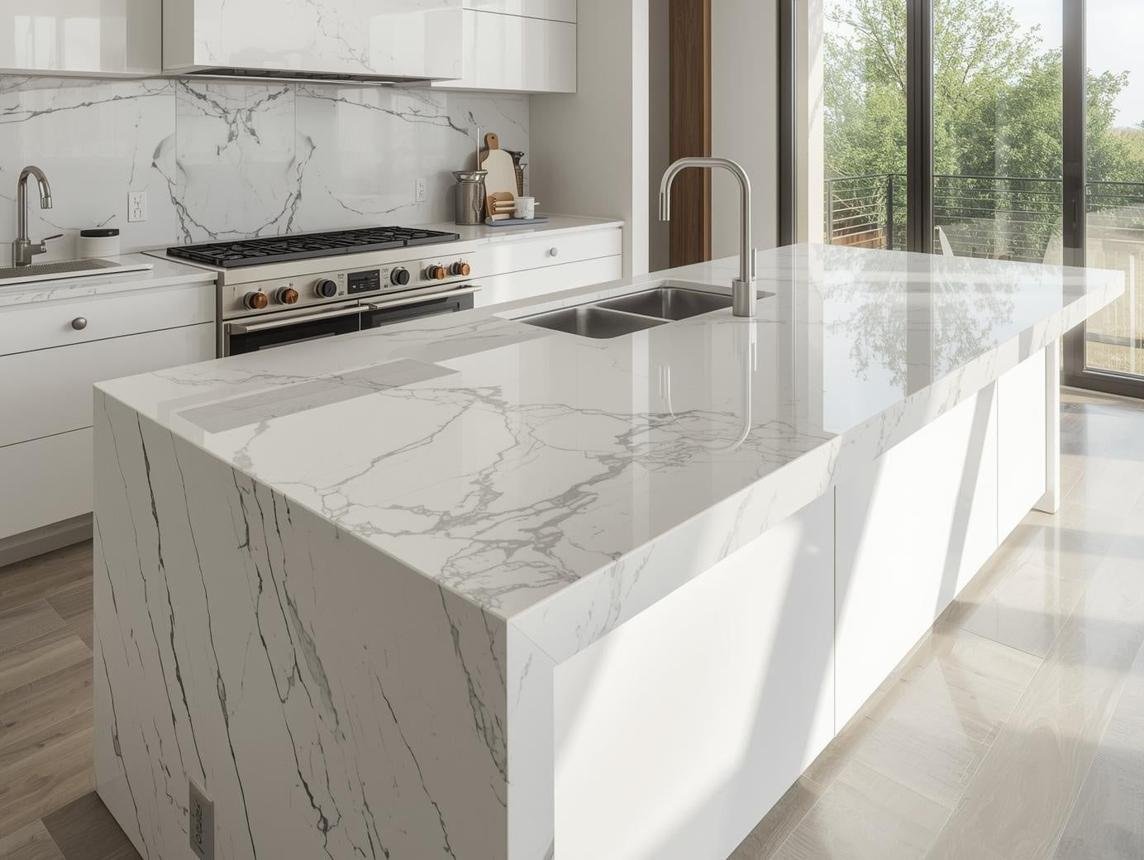
5. Waterfall Quartz Countertops
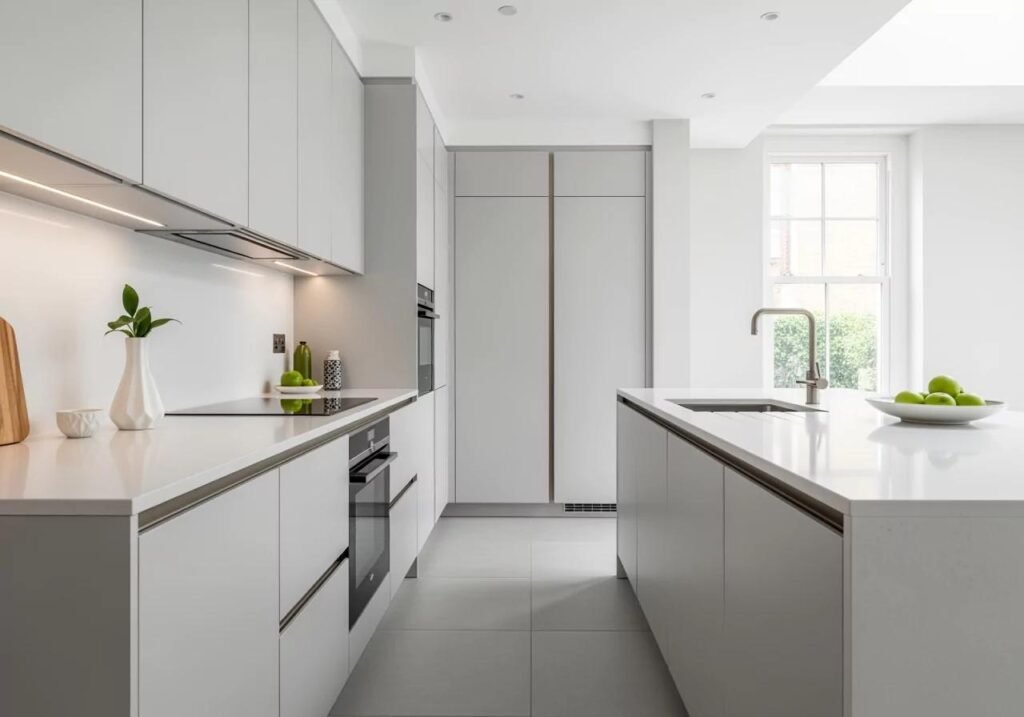
Waterfall designs extend the countertop material down the sides of an island or cabinet structure. They create a continuous finish but require additional material and fabrication.
Choosing the Right Quartz Colour for Your Kitchen
Quartz colour selection should consider your cabinets, floor, backsplash, lighting and overall interior theme.
| Quartz colour | Suitable kitchen design |
|---|---|
| White quartz | Minimalist and bright kitchens |
| Black quartz | Contemporary and high-contrast kitchens |
| Grey quartz | Modern and neutral interiors |
| Beige quartz | Warm and natural-looking kitchens |
| Marble-effect quartz | Luxury-inspired kitchens |
White quartz is popular for bright kitchens, while black and dark grey surfaces create stronger contrast. Marble-effect designs are suitable when you want the countertop to become a major visual feature.
Before approving a colour, inspect the actual slab or a representative sample under lighting similar to that in your kitchen.
Common Quartz Countertop Installation Mistakes to Avoid
Even a high-quality quartz slab can produce disappointing results if measurements, fabrication or installation are poorly handled.
Avoid these common mistakes:
- Taking measurements before cabinets are ready: Final measurements should be confirmed after the supporting cabinets have been installed and levelled.
- Choosing a slab without inspecting it: Check the actual product to confirm its colour, pattern and finish.
- Poor joint placement: Plan joints carefully so they do not unnecessarily interrupt prominent sections of the countertop.
- Incorrect sink and hob openings: Confirm appliance specifications and cut-out dimensions before fabrication.
- Inadequate cabinet support: Quartz is heavy and requires a suitable supporting structure.
- Ignoring transportation access: Check doorways, stairs and corridors before arranging slab delivery.
- Choosing an unsuitable edge profile: Consider the kitchen design, safety and fabrication requirements.
- Failing to confirm the quotation: Establish whether material, fabrication, delivery, cut-outs and installation are included.
- Ignoring manufacturer instructions: Different quartz products may have specific installation and maintenance requirements.
How to Maintain Quartz Countertops After Installation
Quartz countertops are relatively easy to maintain, but proper care helps preserve their finish.
- Clean everyday spills using a soft cloth and mild detergent.
- Wipe away cooking oil, coffee, sauces and other spills promptly.
- Use chopping boards instead of cutting directly on the surface.
- Place hot pots and pans on heat-resistant trivets.
- Avoid abrasive cleaning pads and unsuitable chemicals.
- Follow the manufacturer’s recommendations for stubborn marks.
- Avoid heavy impacts around exposed edges and corners.
Quartz is generally non-porous and does not normally require periodic sealing. However, it is not completely resistant to heat, scratches or impact damage.
Quartz vs Granite Countertop Installation in Kenya
Quartz and granite can both be professionally fabricated and installed in Kenyan kitchens. However, their material properties and maintenance requirements differ.
| Feature | Quartz | Granite |
|---|---|---|
| Material | Engineered stone | Natural stone |
| Appearance | Consistent manufactured patterns | Unique natural patterns |
| Stain resistance | Generally very good | Depends on porosity and sealing |
| Heat resistance | Requires protection | Generally better |
| Sealing | Generally not required | May require periodic sealing |
| Fabrication | Requires specialist cutting and finishing | Requires specialist stone fabrication |
| Maintenance | Relatively low | Moderate |
Quartz is a suitable choice if you prefer consistent designs and relatively simple maintenance. Granite may be more appropriate if heat resistance and natural stone patterns are your priorities.
Read our detailed guide: Quartz vs Granite Countertops in Kenya.
Why Choose Professional Quartz Countertop Installation?
Professional installation helps ensure that the countertop fits the kitchen correctly and works with the surrounding cabinetry.
A properly planned project considers the material, measurements, fabrication, cabinet support, joints, cut-outs and finishing before installation begins.
Suimas Interior Designers provides kitchen design and interior fit-out solutions that can help coordinate the different elements of a kitchen project. This includes planning the countertop alongside cabinetry, storage, lighting and other interior finishes.
With the right planning, you can achieve a kitchen that is attractive, practical and suited to your household’s requirements.
Other Kitchen and Interior Design Services We Offer
Quartz countertop installation is one part of a complete kitchen project. Explore these related services:
- Kitchen Design and Installation Services – Kitchen planning and installation solutions for functional spaces.
- 3D Designs and Layout Planning – Visualise your kitchen layout, cabinetry and countertop finishes before implementation.
- Kitchen Equipment Suppliers in Nairobi – Explore kitchen equipment options for your project.
- Commercial Kitchen Experts in Nairobi – Commercial kitchen design and fit-out solutions.
- Interior Finishes Kenya – Interior finishing solutions for residential and commercial spaces.
- Renovation Services Kenya – Upgrade existing kitchens and other interior spaces.
- Office Interiors Kenya – Interior design and fit-out solutions for workplaces.
Contact Suimas Interior Designers for Quartz Countertop Installation in Kenya
Planning to install quartz countertops in your home, apartment or commercial kitchen? Suimas Interior Designers can help you plan your kitchen layout, coordinate suitable finishes and organise the wider interior design and fit-out requirements.
Contact our team to discuss your project and request a quotation based on your kitchen measurements and preferred design.
- Call Us: 0717044443 / 0739255050 / 0725021709
- Email: info@suimas.co.ke / info@interiordesigners.co.ke
- Location: Nairobi CBD
- Website: https://suimas.co.ke/
Visit our contact page to make an enquiry.
Frequently Asked Questions About Quartz Countertop Installation in Kenya
1. How much does quartz countertop installation cost in Kenya?
Indicative quartz countertop planning prices range from approximately KES 18,000 to KES 35,000+ per square metre, depending on the product grade and specification. Confirm whether the quotation includes measurements, fabrication, edge finishing, cut-outs, transportation and installation.
2. How long does it take to install quartz countertops?
A straightforward installation may take several working days from final measurement to fitting. Larger kitchens, imported slabs and complex designs may require additional time for fabrication and delivery.
3. Can quartz countertops be installed on existing kitchen cabinets?
Yes, provided the existing cabinets are stable, level and strong enough to support the countertop. The installer should inspect the cabinets before taking final measurements.
4. Do quartz countertops need sealing after installation?
Most engineered quartz countertops do not require sealing because they have a generally non-porous surface. Follow the care instructions provided by the manufacturer.
5. Can quartz countertops be installed around a kitchen sink?
Yes. Quartz can be fabricated with openings for kitchen sinks and taps. The measurements must match the selected sink and tap specifications before cutting.
6. Can quartz countertops be used for kitchen islands?
Yes. Quartz is suitable for indoor kitchen islands, including breakfast bars and waterfall designs. The supporting cabinets must be properly designed to carry the countertop weight.
7. What thickness is best for quartz kitchen countertops?
The appropriate thickness depends on the product, cabinet support and intended design. Ask the supplier or fabricator to recommend a suitable thickness for your particular kitchen.
8. Can quartz countertops crack during installation?
Quartz can crack if it is poorly handled, inadequately supported or incorrectly fabricated. Professional measurement, cutting, transportation and installation help reduce these risks.
9. Are quartz countertops better than granite?
Quartz generally offers more consistent designs and easier maintenance, while granite generally has better heat resistance and natural pattern variations. The right choice depends on your priorities.
10. Can quartz countertops be repaired if damaged?
Some minor surface damage may be repairable by a specialist, but the result depends on the type and extent of the damage. Severe cracks or chips may require more extensive repair or replacement.
Areas We Serve Across Kenya
Suimas Interior Designers provides kitchen design and interior fit-out services across all 47 counties in Kenya. Our service coverage includes Nairobi areas such as Westlands, Kilimani, Kileleshwa, Lavington, Karen, Runda, Muthaiga, Gigiri, Parklands, South B, South C, Lang’ata, Kasarani, Ruaka, Ruiru, Thika Road, Embakasi and Nairobi CBD. In Mombasa, we serve Nyali, Bamburi, Kizingo, Tudor, Shanzu, Mtwapa and Diani. We also serve clients in Eldoret, Nakuru, Kisumu, Thika, Kiambu, Machakos, Meru, Nyeri, Kakamega, Kitale, Naivasha and other towns across Kenya. Installation arrangements and delivery costs are confirmed according to the project location and scope.