Pros and Cons of Quartz Countertops in Kenya
Pros and Cons of Quartz Countertops for Kenyan Kitchens
Quartz countertops are a popular choice for modern kitchens in Kenya because they offer a clean, elegant appearance, a wide range of colours and patterns, and relatively easy maintenance. They are especially suitable for homeowners who want a stylish kitchen surface without the frequent sealing associated with some natural stones.
However, quartz is not perfect for every kitchen. Its cost, heat sensitivity, installation requirements and dependence on engineered materials are important factors to consider before making a decision.
This guide examines the main pros and cons of quartz countertops for Kenyan kitchens, including durability, maintenance, design options, pricing considerations and how quartz compares with granite. It also explains what to consider when choosing and installing quartz for a kitchen in Nairobi or elsewhere in Kenya.
What Are Quartz Countertops?
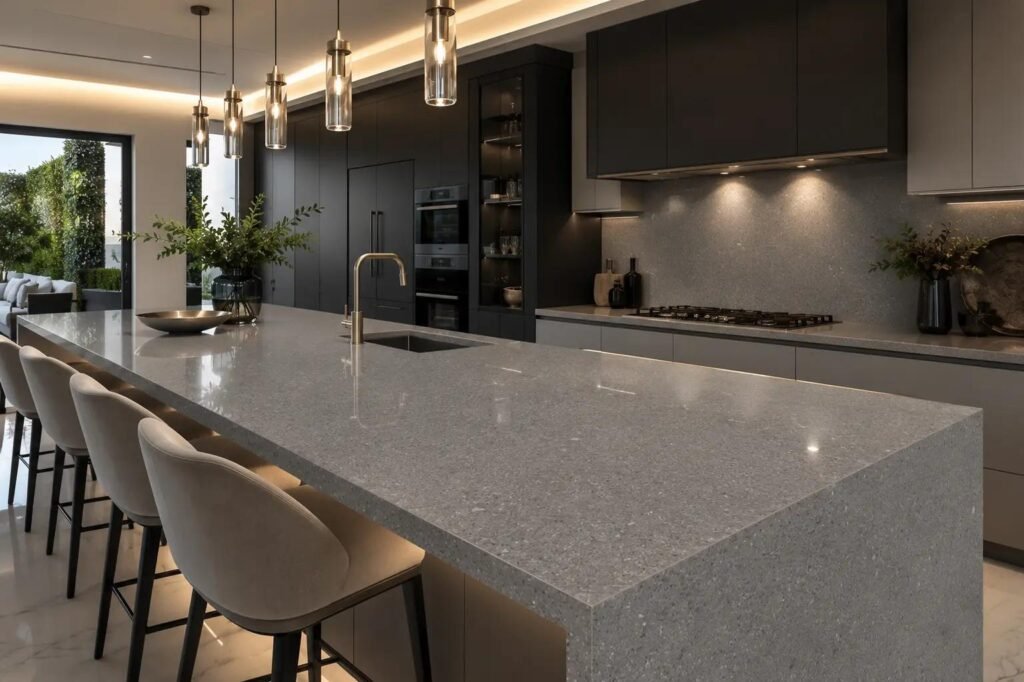
Quartz countertops are engineered stone surfaces made by combining natural quartz particles with resin, pigments and other materials. The mixture is manufactured into slabs that are cut and finished to fit kitchen worktops, islands and other surfaces.
Unlike granite, which is quarried as a natural stone, engineered quartz is manufactured under controlled conditions. This allows manufacturers to produce more consistent colours, patterns and finishes.
In Kenyan kitchens, quartz is commonly considered for:
- Kitchen worktops and preparation areas.
- Kitchen islands and breakfast counters.
- Modern apartment kitchens.
- Contemporary family homes.
- Open-plan kitchens where the countertop is a major design feature.
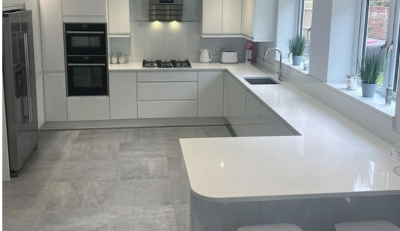
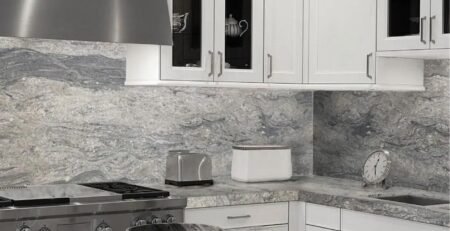
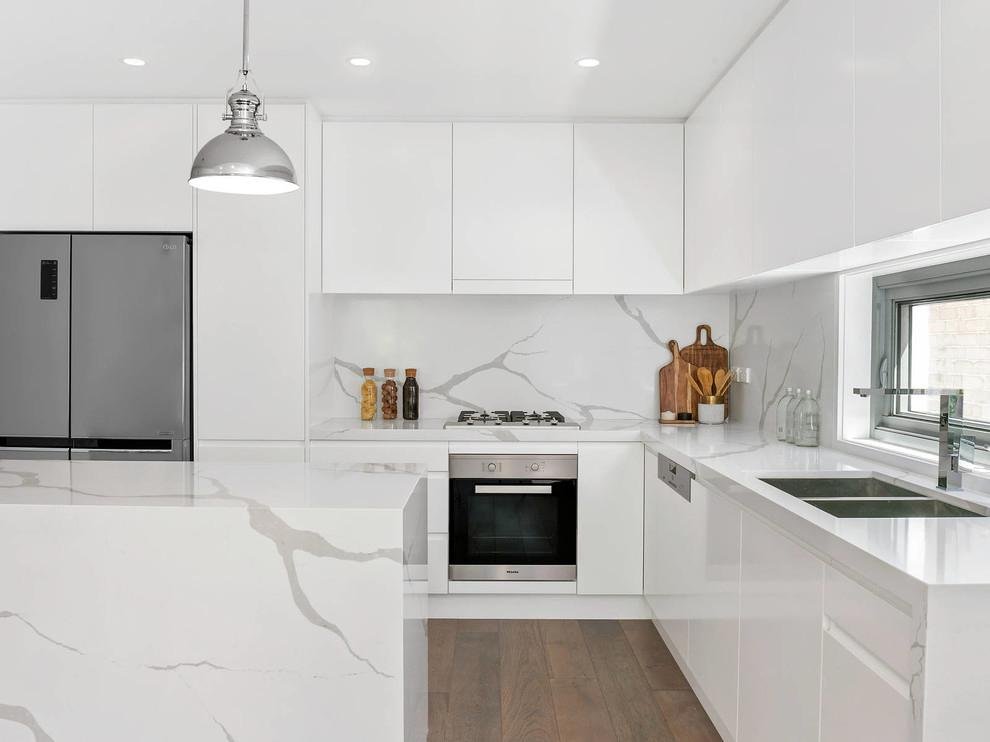
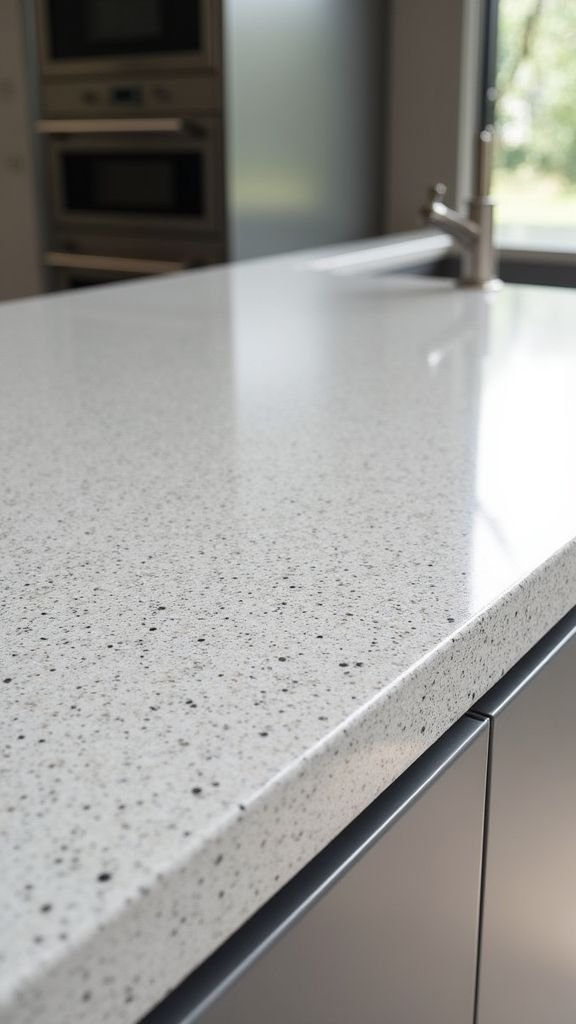
Quartz is available in white, grey, beige, black and marble-effect designs. Some finishes have subtle patterns, while others imitate the appearance of natural marble.
Advantages of Quartz Countertops for Kenyan Kitchens
1. Low Maintenance Requirements
One of the biggest advantages of quartz countertops is that they are relatively easy to maintain. Most engineered quartz surfaces are non-porous, meaning they do not readily absorb liquids.
Unlike many natural stone surfaces, quartz generally does not require periodic sealing. This makes it a convenient option for busy households that want an attractive kitchen without a demanding maintenance routine.
For everyday cleaning, use a soft cloth, mild detergent and clean water. Follow the manufacturer’s care instructions for stubborn marks or specific finishes.
2. Good Resistance to Everyday Stains
Kitchen worktops are regularly exposed to cooking oil, sauces, coffee, tea and other food substances. These can leave marks on porous surfaces if spills are not cleaned promptly.
Quartz has a non-porous structure that helps reduce liquid absorption and makes it more resistant to everyday staining than many unsealed natural stones.
This is useful in Kenyan homes where the kitchen is used frequently for food preparation. However, spills should still be wiped away rather than left on the surface for long periods.
3. Attractive and Consistent Designs
Quartz is manufactured using pigments and controlled production processes. As a result, it is available in a wide selection of colours and patterns.
Popular options include:
- Plain white quartz for bright, minimalist kitchens.
- Grey quartz for contemporary kitchen designs.
- Black quartz for bold, modern interiors.
- Beige quartz for warm and neutral spaces.
- Marble-effect quartz for a luxurious appearance without using natural marble.
The consistency of engineered quartz also makes it easier to coordinate worktops across larger kitchen layouts.
4. Suitable for Modern Kitchen Designs
Quartz works particularly well in contemporary kitchens because it offers clean lines and a refined appearance.
It can complement handleless cabinets, modern kitchen islands, neutral colour schemes and minimalist finishes. Homeowners can also match the countertop with kitchen backsplashes, cabinet finishes and flooring.
For a coordinated kitchen, the countertop should be selected alongside the cabinetry and other finishes rather than as an isolated feature.
5. Good Durability for Everyday Use
Quartz is a durable countertop material when properly manufactured, fabricated and installed. It offers good resistance to everyday scratches, stains and general kitchen use.
It is suitable for preparation areas, breakfast counters and kitchen islands. Nevertheless, it is not indestructible. Heavy impacts can chip edges and corners, while abrasive tools can damage some finishes.
Using chopping boards and taking care around exposed edges can help preserve the surface.
6. Does Not Normally Require Sealing
Many natural stones, including granite and marble, may require sealing depending on their porosity and the manufacturer’s recommendations.
Engineered quartz generally does not need sealing because its resin content and manufacturing process produce a low-porosity surface.
This reduces routine maintenance and makes quartz attractive to homeowners who prefer a straightforward countertop care routine.
7. Wide Range of Price and Design Options
Quartz is available in different product grades, colours, thicknesses and finishes. This gives homeowners some flexibility when planning a kitchen renovation or a new kitchen installation.
However, not all quartz products are priced equally. Imported brands, premium designs, specialised finishes and thicker slabs can increase the overall project cost.
Disadvantages of Quartz Countertops
Although quartz has several benefits, there are limitations that homeowners should understand before purchasing it.
1. Limited Resistance to Direct Heat
Heat sensitivity is one of the most important disadvantages of engineered quartz.
Quartz contains resin, which can be affected by excessive heat. Placing a hot cooking pot or pan directly on the countertop may cause discolouration, surface damage or cracking.
This is particularly important in kitchens where cooking is frequent.
How to manage this limitation:
- Use heat-resistant trivets or pot stands.
- Avoid placing hot cookware directly on the worktop.
- Keep hot appliances on suitable protective mats.
- Follow the manufacturer’s heat-resistance recommendations.
Granite generally performs better when exposed to high temperatures, making it worth considering for homeowners who prioritise heat resistance.
2. Higher Initial Cost Compared with Some Alternatives
Quartz can cost more than locally available granite and budget countertop materials.
The final cost depends on the product’s quality, thickness, colour, manufacturer, fabrication and installation requirements.
For homeowners working with a limited renovation budget, the initial investment may be a disadvantage. However, the lower routine maintenance requirements can make quartz attractive over the longer term.
3. Not Ideal for Outdoor Kitchens
Standard engineered quartz is generally designed for indoor applications.
Prolonged exposure to direct sunlight and ultraviolet radiation can affect some products, potentially causing colour changes or deterioration over time. Outdoor conditions also expose countertops to weather and temperature changes.
If you are designing an outdoor kitchen, ask the supplier about materials specifically rated for exterior use. Granite or suitable sintered stone may be more appropriate depending on the product specifications.
4. Edges and Corners Can Chip
Quartz is strong, but its edges and corners can be vulnerable to damage from heavy impacts.
This may happen when heavy cookware or other objects strike exposed sections of the countertop. Repairs can require professional attention, particularly where the damage affects a visible edge.
Rounded or softened edge profiles may help reduce the risk of chipping in busy kitchen areas.
5. Quality Varies Between Manufacturers
Not all quartz countertops have the same manufacturing quality, finish or performance.
Lower-quality products may have inconsistent patterns, weaker finishes or less reliable product information. This makes it important to select a reputable supplier and inspect the actual slab or sample before making a purchase.
Ask about the manufacturer’s specifications, warranty, care instructions and suitability for kitchen use.
6. Professional Installation Is Important
Quartz slabs are heavy and require accurate measurement, cutting, handling and installation.
Poor installation can result in visible joints, uneven surfaces, weak support or damaged edges. Kitchen cabinets must also be sufficiently strong and level to support the countertop.
For this reason, professional fabrication and installation are important parts of the project budget.
Quartz Countertop Prices in Kenya
Quartz countertop prices in Kenya vary depending on the brand, colour, thickness, finish, slab size and installation requirements.
The following figures are indicative planning estimates, not fixed supplier quotations.
| Quartz countertop category | Estimated price per m² |
|---|---|
| Standard quartz | KES 18,000–24,000 |
| Mid-range quartz | KES 24,000–30,000 |
| Premium quartz | KES 30,000–35,000+ |
The final quotation may also include:
- Site measurement and templating.
- Cutting and fabrication.
- Sink and hob cut-outs.
- Edge profiling.
- Transportation and handling.
- Installation and finishing.
- Special joints or additional support.
When comparing quotations, confirm whether the price covers supply only or both supply and installation. Also check whether VAT and transportation are included.
For a wider kitchen budgeting guide, see Cost of Doing a Kitchen in Kenya.
Quartz vs Granite Countertops: Which Is Better for Kenyan Kitchens?
Quartz and granite are both popular choices for kitchen countertops in Kenya. However, they differ in composition, maintenance, heat resistance, appearance and cost.
Granite is a natural stone, while quartz countertops are engineered using natural quartz particles and resin. The right choice depends on how you use your kitchen, your preferred design and your budget.
| Feature | Quartz | Granite |
|---|---|---|
| Material | Engineered stone | Natural stone |
| Appearance | Consistent colours and patterns | Unique natural patterns |
| Porosity | Generally non-porous | Porosity varies |
| Sealing | Generally not required | May require periodic sealing |
| Stain resistance | Generally very good | Depends on stone and sealing |
| Heat resistance | Requires protection from hot cookware | Generally excellent |
| Maintenance | Low | Moderate |
| Design options | Wide range of manufactured colours | Natural colour variations |
| Cost | Generally higher than local granite | Varies by variety and origin |
Choose quartz if: You prefer consistent colours, contemporary designs, easy cleaning and minimal maintenance.
Choose granite if: You prioritise natural stone patterns, excellent heat resistance and potentially lower initial costs.
For a more detailed comparison, read Quartz vs Granite Countertops in Kenya.
Factors to Consider Before Buying Quartz Countertops
Before choosing quartz for your kitchen, consider the following factors to avoid unnecessary costs and installation problems.
1. Kitchen Size and Layout
The size and layout of your kitchen affect the amount of quartz required. A straight kitchen worktop may need less material than a U-shaped kitchen or a layout with a large island.
Accurate measurements help determine the slab requirements and minimise unnecessary wastage.
2. Colour and Cabinet Combination
Choose a quartz colour that complements your kitchen cabinets, flooring, backsplash and wall finishes.
Some popular combinations include:
- White quartz with grey kitchen cabinets.
- Grey quartz with white or cream cabinets.
- Black quartz with light-coloured cabinets.
- Beige quartz with natural wood finishes.
- Marble-effect quartz with modern handleless cabinets.
For smaller kitchens, lighter colours can help create a brighter and more open appearance.
3. Slab Thickness
Quartz countertops are available in different thicknesses. The appropriate option depends on the intended design, cabinet support and manufacturer’s specifications.
Thicker-looking countertops can create a bold appearance, particularly on kitchen islands. However, the final design should consider the additional material and fabrication costs.
4. Edge Profile
The edge profile influences the overall appearance of the countertop.
Common options include:
- Straight edge for a minimalist finish.
- Bevelled edge for a subtle decorative detail.
- Bullnose edge for a rounded appearance.
- Waterfall edge for contemporary kitchen islands.
Discuss the available profiles with your fabricator before confirming the order.
5. Supplier and Product Quality
Always establish the origin and specifications of the quartz product before purchasing.
Ask the supplier to explain the product’s warranty, recommended cleaning methods, heat limitations and installation requirements. Where possible, inspect the actual slab because small samples may not show the full pattern or colour variation.
6. Installation and Cabinet Support
Quartz countertops are heavy. Your kitchen cabinets must be properly installed, level and strong enough to support the slab.
The installer should also check the sink position, cooker cut-outs, joints, overhangs and wall alignment before fabrication.
How to Maintain Quartz Countertops
Quartz is relatively easy to maintain, but proper care helps preserve its appearance.
Clean spills promptly: Wipe cooking oil, sauces, coffee and other spills using a soft cloth and mild detergent.
Use chopping boards: Avoid cutting food directly on the countertop. Chopping boards protect the surface and your kitchen knives.
Protect against heat: Always use trivets or heat-resistant mats when placing hot cookware on the worktop.
Avoid abrasive cleaning materials: Rough scouring pads and unsuitable cleaning products can affect the surface finish.
Use recommended cleaning products: Follow the manufacturer’s instructions when removing stubborn marks.
Avoid unnecessary heavy impacts: Take care when handling heavy cookware around exposed corners and edges.
Regular cleaning and sensible use are generally sufficient for maintaining a quartz countertop.
Common Mistakes to Avoid When Choosing Quartz Countertops
Even a high-quality quartz countertop may disappoint if the wrong product is selected or installation is poorly planned.
Avoid these common mistakes:
- Choosing based on appearance alone: Consider heat resistance, maintenance, product quality and suitability for your cooking habits.
- Ignoring the total installation cost: Include fabrication, transportation, cut-outs and installation when planning your budget.
- Not inspecting the actual product: Check the slab or a representative sample before confirming the purchase.
- Ignoring cabinet strength: Ensure the supporting cabinets are level and suitable for the countertop’s weight.
- Placing hot cookware directly on quartz: Use protective mats to prevent heat-related damage.
- Using harsh cleaning products: Follow the manufacturer’s care recommendations.
- Selecting unsuitable outdoor applications: Confirm that the material is designed for the intended environment.
Are Quartz Countertops Worth It for Kenyan Kitchens?
Quartz countertops are worth considering for homeowners who want a modern kitchen with a stylish, consistent and relatively low-maintenance surface.
Their non-porous construction, good everyday stain resistance and wide range of designs make them suitable for many residential kitchens. They also work well with contemporary cabinetry, kitchen islands and open-plan layouts.
However, quartz may not be the best option for every household. Its initial cost can be higher than local granite, and it needs protection from direct heat and prolonged sunlight.
If your priority is low maintenance and modern design, quartz is a strong option. If your kitchen experiences frequent exposure to hot cookware and you prefer natural stone, granite may be more suitable.
The best decision comes from comparing the materials against your kitchen layout, cooking habits, budget and preferred interior finish.
Related Kitchen Design and Interior Design Services We Offer
Choosing a countertop is only one part of creating a functional and attractive kitchen. The cabinets, storage, lighting, flooring, backsplash and overall layout should work together.
Explore these related services:
- Kitchen Design and Installation Services – Professional kitchen planning and installation for functional and attractive spaces.
- 3D Designs and Layout Planning – Visualise your kitchen layout, finishes, cabinetry and countertop combinations before implementation.
- Commercial Kitchen Experts in Nairobi – Explore commercial kitchen design and fit-out solutions.
- Kitchen Equipment Suppliers in Nairobi – Explore kitchen equipment options for suitable kitchen projects.
- Interior Finishes Kenya – Explore interior finishing solutions for residential and commercial spaces.
- Renovation Services Kenya – Get support with kitchen upgrades and wider property renovation projects.
- Office Interiors Kenya – Explore professional interior design and fit-out solutions for workplaces.
Contact Suimas Interior Designers for Kitchen Design in Kenya
Planning a new kitchen or upgrading your existing one? Suimas Interior Designers can help you plan your kitchen layout, select suitable finishes and coordinate the design and installation process.
Whether you prefer quartz, granite or another countertop material, choosing the right surface should consider your budget, kitchen use and overall interior design.
Contact us for kitchen design and interior fit-out enquiries.
- Call Us: 0717044443 / 0739255050 / 0725021709
- Email: info@suimas.co.ke / info@interiordesigners.co.ke
- Location: Nairobi CBD
- Website: https://suimas.co.ke/
You can also visit our contact page to discuss your kitchen project.
Frequently Asked Questions About Quartz Countertops in Kenya
1. What are the main advantages of quartz countertops?
The main advantages include low maintenance, good resistance to everyday stains, consistent colours, a wide range of designs and no routine sealing requirement for most engineered quartz products.
2. What are the disadvantages of quartz countertops?
Quartz can be more expensive than some granite options, is sensitive to excessive heat and may be affected by prolonged direct sunlight. Its edges can also chip following heavy impacts.
3. Are quartz countertops suitable for Kenyan kitchens?
Yes. Quartz is suitable for many indoor residential kitchens in Kenya. It offers good stain resistance and relatively simple maintenance. However, homeowners should protect it from hot cookware and follow the manufacturer’s care instructions.
4. How much do quartz countertops cost in Kenya?
Indicative quartz countertop prices range from approximately KES 18,000 to KES 35,000+ per square metre. The final cost depends on product quality, colour, thickness, fabrication and installation requirements.
5. Do quartz countertops require sealing?
Most engineered quartz countertops do not require sealing because they have a generally non-porous surface. Always confirm the care requirements of the specific product you purchase.
6. Can hot pots damage quartz countertops?
Yes. Excessive heat from hot pots and pans can damage the resin in engineered quartz. Always use heat-resistant mats or trivets instead of placing hot cookware directly on the countertop.
7. Can quartz countertops get scratched?
Quartz has good resistance to everyday scratches, but it is not completely scratch-proof. Avoid cutting directly on the surface and use chopping boards during food preparation.
8. Is quartz better than granite for kitchen countertops?
Quartz is generally easier to maintain and offers more consistent designs. Granite provides better heat resistance and distinctive natural patterns. The better option depends on your kitchen requirements and preferences.
9. Can quartz countertops be used for kitchen islands?
Yes. Quartz is suitable for kitchen islands and breakfast counters. Its range of colours and finishes makes it easy to coordinate with modern kitchen cabinetry and other interior finishes.
10. Are all quartz countertops the same quality?
No. Quality varies depending on the manufacturer, raw materials, resin composition, production process and finishing. Check product specifications and warranty information before purchasing.
Areas We Serve Across Kenya
Suimas Interior Designers provides interior design and fit-out services across all 47 counties in Kenya. We serve clients in Nairobi, including Westlands, Kilimani, Kileleshwa, Lavington, Karen, Runda, Muthaiga, Parklands, South B, South C, Lang’ata, Kasarani, Ruiru, Ruaka, Thika Road, Embakasi and the Nairobi CBD. Our service coverage also includes Mombasa areas such as Nyali, Bamburi, Kizingo, Tudor, Shanzu, Mtwapa and Diani, as well as towns and urban centres across Kiambu, Nakuru, Uasin Gishu, Kisumu, Machakos, Kajiado, Nyeri, Meru, Kakamega, Eldoret and other parts of the country.