Quartz vs Granite Countertops in Kenya
Quartz vs Granite Countertops in Kenya: Which Is Better?
Choosing between quartz and granite countertops in Kenya is an important decision when designing a new kitchen or renovating an existing one. Both materials offer attractive finishes, durability and long-term value. However, they differ in composition, heat resistance, stain resistance, maintenance requirements, appearance and installation costs.
Granite is a natural stone known for its distinctive patterns, strength and ability to withstand high temperatures. Quartz, on the other hand, is an engineered stone valued for its consistent designs, low maintenance requirements and resistance to everyday stains.
So, which is better for your kitchen? Should you choose quartz for its modern appearance and easy maintenance, or granite for its natural beauty and heat resistance?
The answer depends on your cooking habits, preferred kitchen design, budget and maintenance expectations. This guide compares quartz vs granite countertops in Kenya, including their advantages, disadvantages, estimated prices, popular designs and installation considerations.
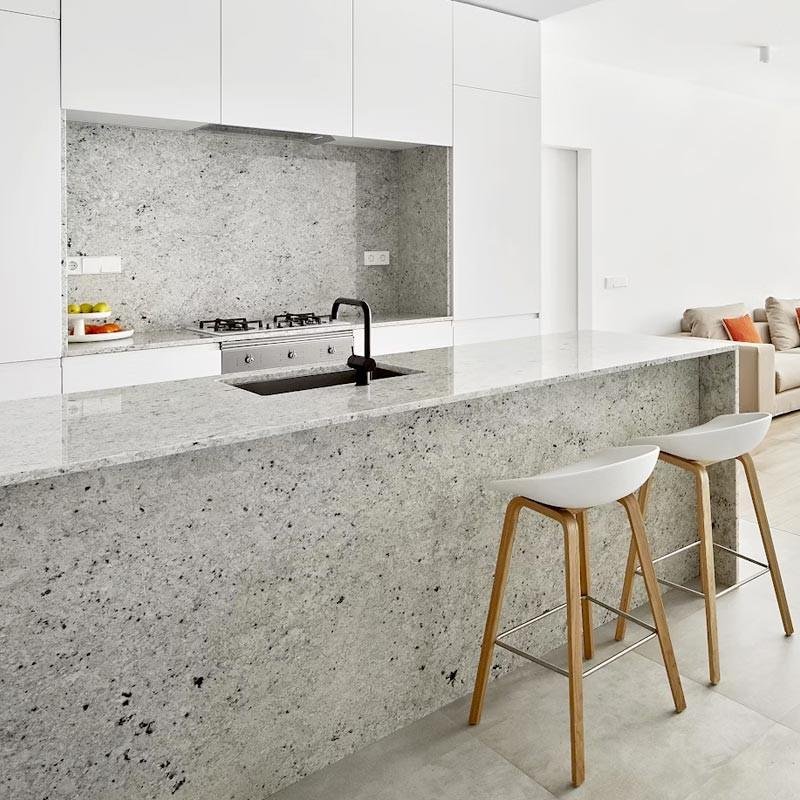
Why the Right Kitchen Countertop Matters
Kitchen countertops are among the most frequently used surfaces in a home. They provide working space for food preparation, appliance placement and other everyday kitchen activities.
Choosing the right material affects several aspects of your kitchen:
- Durability: The surface should withstand regular kitchen activities.
- Appearance: The countertop should complement your cabinets, flooring and backsplash.
- Maintenance: Different materials have different cleaning and maintenance requirements.
- Heat resistance: Consider how the material responds to hot cookware.
- Stain resistance: Kitchen surfaces should withstand common spills.
- Cost: The purchase, fabrication and installation expenses should fit your budget.
- Long-term value: A suitable countertop can serve your household for many years.
Quartz and granite can both deliver excellent results when selected and installed correctly. However, their differences make each material suitable for particular kitchen requirements.
Estimated Quartz and Granite Countertop Prices in Kenya
Cost is one of the first considerations when comparing quartz vs granite countertops in Kenya. The final price depends on the material’s quality, origin, thickness, colour, slab size, fabrication and installation requirements.
The following figures are indicative budgeting estimates. Actual supplier prices may vary depending on the selected material and project specifications.
| Countertop material | Indicative price per m² |
|---|---|
| Local Kenyan granite | KES 8,000–18,000 |
| Imported granite | KES 18,000–30,000 |
| Standard quartz | KES 18,000–24,000 |
| Mid-range quartz | KES 24,000–30,000 |
| Premium quartz | KES 30,000–35,000 |
These figures should not be treated as fixed market quotations. Request current prices from suppliers before preparing your final budget.
Additional Installation Costs
Besides purchasing the countertop material, budget for:
- Site measurements and material estimation.
- Transportation and delivery.
- Slab cutting and fabrication.
- Edge profiling and polishing.
- Sink and tap cut-outs.
- Cooker or hob openings.
- Installation labour.
- Joint finishing and sealing where required.
For an accurate budget, request a quotation based on your kitchen measurements and preferred countertop material.
What Is a Quartz Countertop?
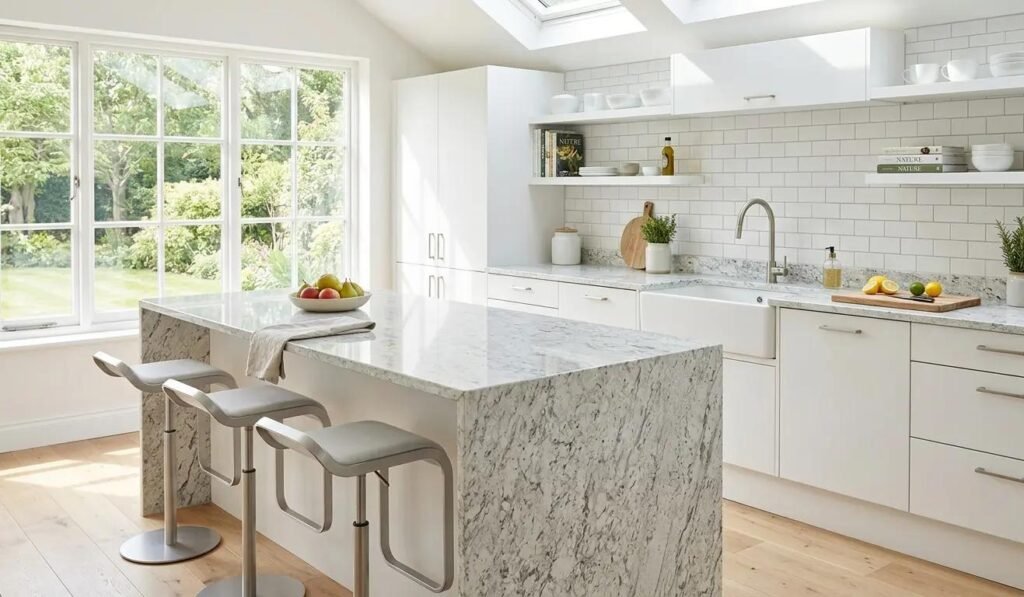
Quartz countertops are engineered stone surfaces manufactured using natural quartz crystals combined with resin, pigments and other materials.
The manufacturing process creates slabs with controlled colours, patterns and finishes. Unlike natural granite, which has variations formed by geological processes, quartz can offer a more consistent appearance across different slabs.
Quartz is popular in modern Kenyan kitchens because it provides an elegant finish while requiring relatively little routine maintenance.
Popular Quartz Countertop Designs in Kenya
1. White Quartz Countertops
White quartz creates a bright, clean appearance. It works well with white, grey, black and wooden kitchen cabinets. Some designs feature subtle grey veins that create a marble-inspired appearance.
2. Grey Quartz Countertops
Grey quartz offers a contemporary appearance and complements neutral kitchen colours. It is suitable for minimalist kitchens and modern apartment interiors.
3. Black Quartz Countertops
Black quartz creates a bold appearance, particularly when paired with white cabinetry, metallic accessories or lighter flooring.
4. Calacatta-Style Quartz
This design features a light background with prominent grey or gold veining. It is popular among homeowners who want a marble-inspired appearance with the practical characteristics of engineered quartz.
5. Beige and Cream Quartz
Beige and cream quartz introduce warmth into kitchen interiors. They work particularly well with wooden cabinetry, warm lighting and neutral finishes.
Advantages of Quartz Countertops
- Low maintenance: Quartz does not normally require periodic sealing.
- Stain resistance: Its non-porous surface helps prevent liquids from penetrating.
- Consistent appearance: Engineered production allows more uniform colours and patterns.
- Easy cleaning: Routine cleaning generally requires a soft cloth and suitable mild cleaner.
- Design flexibility: Available in a wide selection of colours and patterns.
- Suitable for modern kitchens: Works well with contemporary cabinetry and minimalist interiors.
Disadvantages of Quartz Countertops
Despite its benefits, quartz has some limitations.
- Heat sensitivity: Resin components can be damaged by excessive heat.
- Higher initial cost: Some quartz varieties cost more than locally sourced granite.
- UV sensitivity: Certain products may discolour after prolonged direct sunlight exposure.
- Professional fabrication: Accurate measurements and specialised cutting are important.
- Repair limitations: Significant chips or damage may be difficult to repair invisibly.
Always use heat-resistant mats or trivets instead of placing hot cookware directly on quartz.
What Is a Granite Countertop?
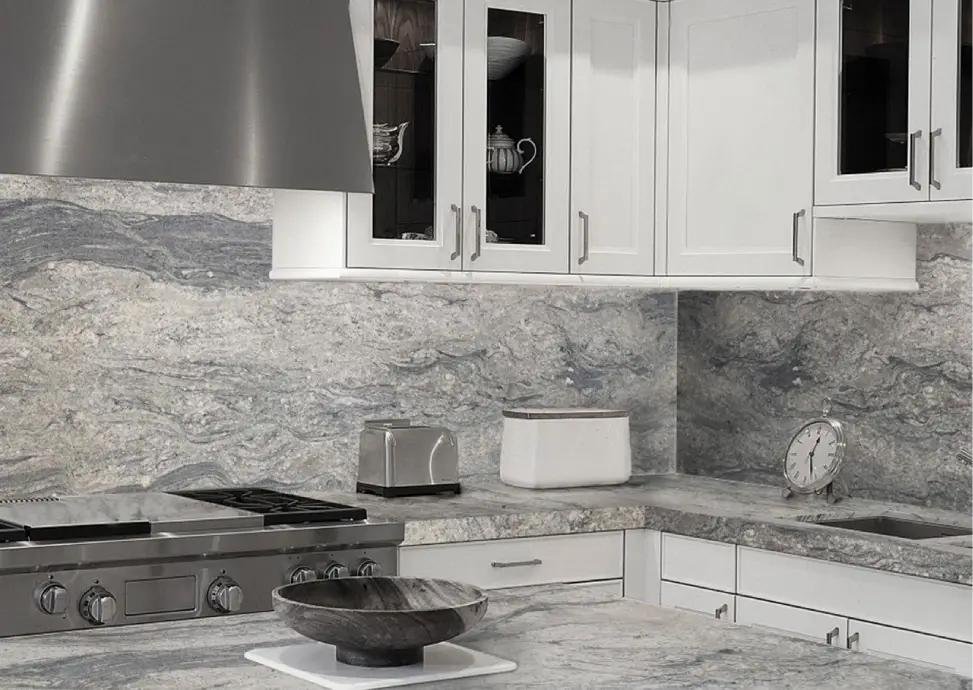
Granite is a natural igneous stone formed through the cooling and solidification of molten material beneath the Earth’s surface. It is extracted from quarries, processed into slabs and fabricated into countertops.
Granite is valued for its natural appearance, strength and ability to withstand everyday kitchen activities. Each slab has distinctive mineral patterns and colour variations, making every countertop unique.
It is available in different colours, including black, grey, white, brown and other natural shades.
Popular Granite Countertop Designs in Kenya
1. Black Granite
Black granite creates an elegant finish and works well with white kitchen cabinets, wooden finishes and modern accessories.
2. White Granite
White granite gives kitchens a bright appearance. Its natural mineral patterns add character while maintaining a relatively neutral design.
3. Grey Granite
Grey granite is versatile and complements different cabinet colours, flooring materials and kitchen styles.
4. Brown Granite
Brown granite introduces warmth into kitchen interiors. It works particularly well with wooden cabinetry and traditional or modern-classic designs.
5. Galaxy Black Granite
Galaxy Black is known for its dark background and reflective mineral patterns. It is often selected for statement countertops and kitchen islands.
Advantages of Granite Countertops
- Natural beauty: Every slab has unique patterns and mineral variations.
- Heat resistance: Granite generally tolerates heat better than engineered quartz.
- Durability: Its hardness makes it suitable for regular kitchen use.
- Scratch resistance: Quality granite is resistant to many everyday scratches.
- Long lifespan: Properly fabricated and maintained granite can last for many years.
- Design versatility: Available in different natural colours and patterns.
- Outdoor applications: Suitable varieties can also be considered for certain outdoor kitchen installations.
Disadvantages of Granite Countertops
Granite also has some limitations.
- Periodic sealing: Depending on its porosity, granite may need periodic sealing.
- Stain susceptibility: Unsealed or poorly maintained granite can absorb liquids.
- Natural variations: Matching separate slabs may be challenging.
- Heavy weight: Kitchen cabinets must provide adequate structural support.
- Professional installation: Cutting, transportation and fitting require appropriate expertise.
Regular cleaning and suitable stone-care products help maintain granite’s appearance.
Quartz vs Granite Countertops: Key Differences
Both materials are suitable for residential kitchens, but their performance differs in several important areas.
| Comparison | Quartz | Granite |
|---|---|---|
| Material | Engineered stone | Natural stone |
| Appearance | Consistent colours and patterns | Unique natural patterns |
| Heat resistance | Moderate; protect from direct heat | Generally excellent |
| Stain resistance | High | Depends on porosity and sealing |
| Maintenance | Low maintenance | May require periodic sealing |
| Scratch resistance | Good | Very good |
| Colour options | Wide range of manufactured designs | Natural colour variations |
| Initial cost | Often higher than local granite | Local options can be more affordable |
| Outdoor suitability | Some varieties may be UV-sensitive | Suitable varieties can perform well outdoors |
The main difference is that quartz prioritises consistency and convenience, while granite offers natural variation and stronger heat tolerance.
1. Durability: Which Countertop Lasts Longer?
Durability is important because kitchen countertops experience regular food preparation, cleaning, appliance placement and occasional impacts.
Quartz durability
Quartz is a hard engineered surface designed for everyday kitchen use. It offers good resistance to scratches and stains under normal conditions.
However, excessive heat and heavy impacts can damage the surface. Avoid cutting directly on quartz and use chopping boards to protect it.
Granite durability
Granite is a strong natural stone that performs well in demanding kitchen environments. Its natural hardness makes it resistant to many everyday scratches, while its heat tolerance is generally higher than that of quartz.
However, granite can chip or crack under severe impact, particularly around edges and unsupported sections.
Which is better? Both are durable. Granite has an advantage where heat exposure is a major consideration, while quartz offers a practical surface for households that prioritise stain resistance and consistent appearance.
2. Heat Resistance: Quartz or Granite?
Heat resistance is one of the most important differences between the two materials.
Granite generally handles high temperatures better than quartz. This makes it a practical option for kitchens where cooking is frequent and hot cookware is regularly moved around.
Quartz contains resin, which can be affected by excessive heat. Direct contact with hot pots, pans or cooking appliances may cause discolouration or surface damage.
| Kitchen activity | Quartz | Granite |
|---|---|---|
| Placing warm dishes | Generally suitable within product guidance | Generally suitable |
| Placing very hot cookware directly | Not recommended | Better heat tolerance, but trivets are still advisable |
| Frequent cooking | Suitable with heat protection | Excellent heat tolerance |
| Exposure to sudden temperature changes | Follow manufacturer guidance | Avoid extreme temperature changes |
Our recommendation: Granite is the better choice if heat resistance is your main priority. Nevertheless, use trivets for both materials to protect your investment.
3. Stain Resistance and Hygiene
Kitchen countertops come into contact with cooking oils, sauces, coffee, juice and other substances that can leave stains.
Quartz
Quartz has a non-porous surface, which limits liquid absorption and makes everyday cleaning easier. It is particularly suitable for households that want a countertop with minimal maintenance.
Granite
Granite is a natural stone with varying levels of porosity. Some varieties can absorb liquids if they are not properly sealed and maintained.
Sealing helps reduce liquid absorption and makes cleaning easier. The required sealing frequency depends on the particular granite and the manufacturer’s recommendations.
Which is better? Quartz generally has the advantage when it comes to stain resistance and routine maintenance. Properly sealed granite can also perform well in everyday kitchens.
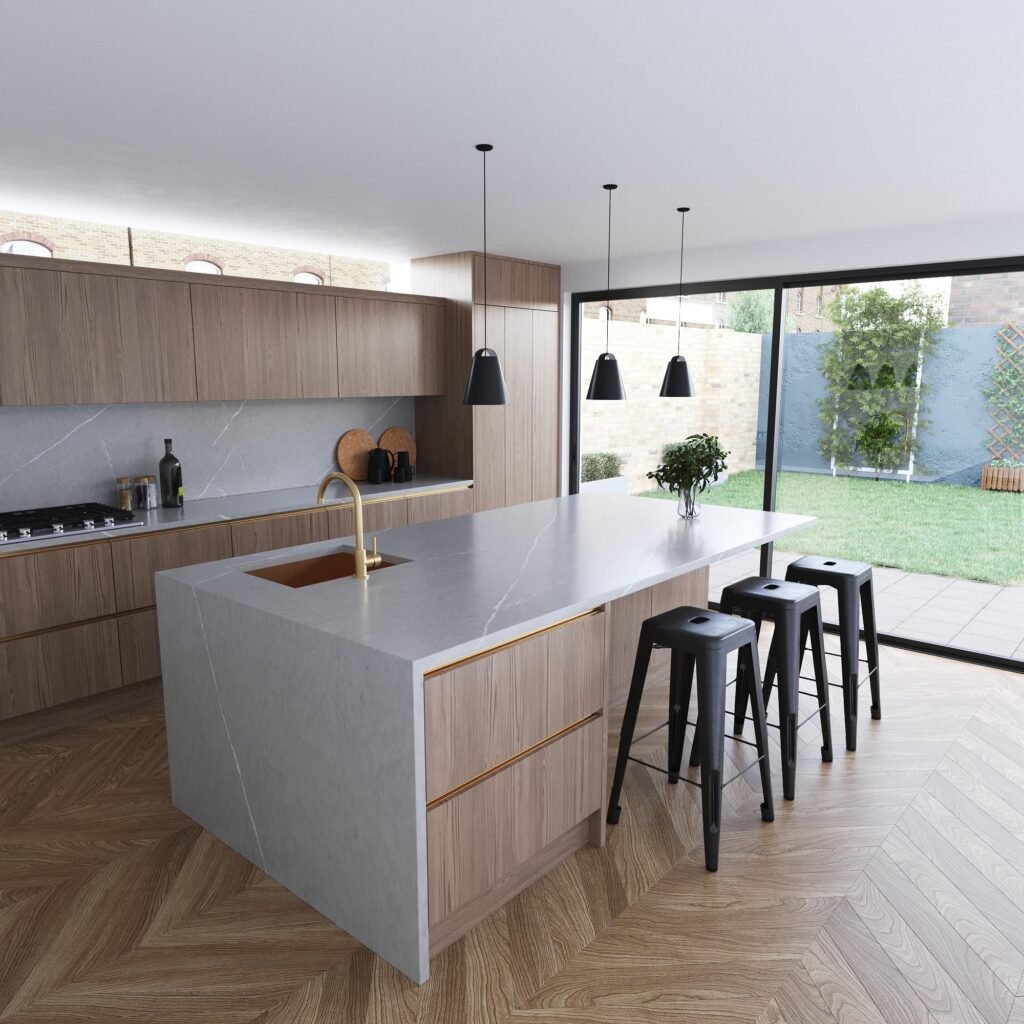
4. Maintenance Requirements
Maintenance affects the long-term convenience and cost of owning a kitchen countertop.
| Maintenance activity | Quartz | Granite |
|---|---|---|
| Daily cleaning | Mild cleaner and soft cloth | Mild cleaner and soft cloth |
| Periodic sealing | Normally not required | May be required |
| Spill management | Clean spills promptly | Clean spills promptly |
| Special care | Avoid excessive heat and harsh chemicals | Use suitable stone-care products |
| Long-term maintenance | Generally low | Depends on sealing and care |
Quartz is usually easier to maintain because it does not require routine sealing.
Granite requires more attention, especially when the selected variety is porous. However, homeowners who prefer natural stone may find this additional maintenance worthwhile.
5. Appearance: Which Looks Better in Modern Kenyan Kitchens?
The appearance of your countertop should complement your kitchen cabinets, flooring, backsplash and lighting.
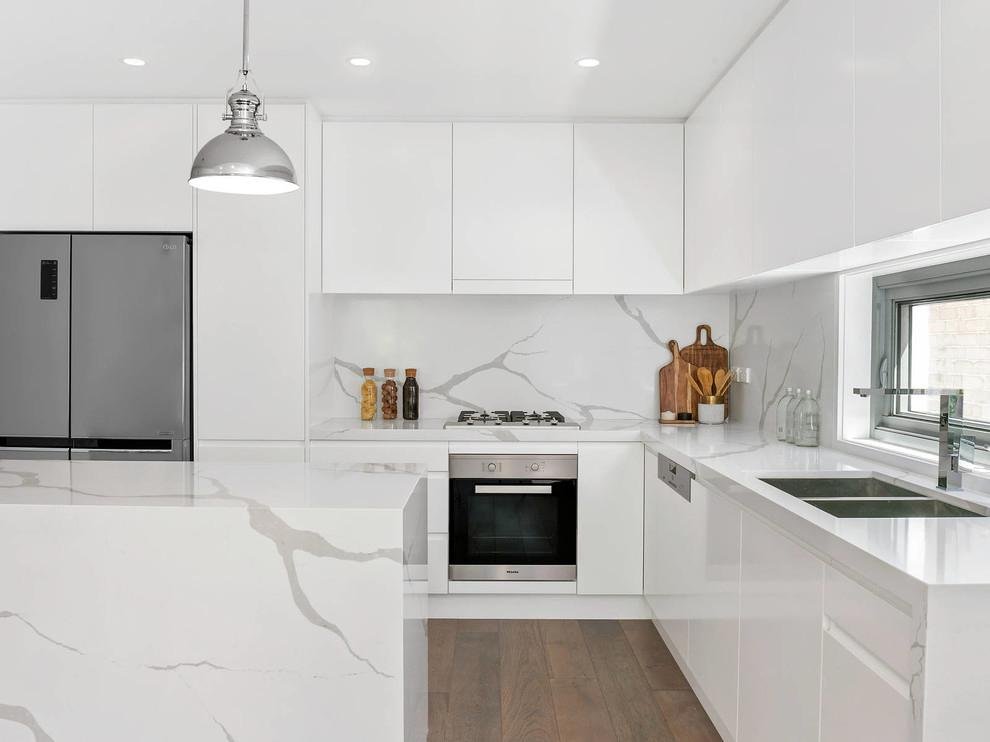
Quartz for contemporary kitchens
Quartz is suitable for modern kitchens that require uniform colours and patterns. White, grey, black and marble-inspired designs work well in minimalist and contemporary interiors.
It is also a good option for homeowners who want matching surfaces across a kitchen island and adjoining countertops.
Granite for natural and luxury kitchens
Granite offers natural patterns that cannot be reproduced exactly from one slab to another. Its mineral variations give kitchens a distinctive appearance.
Black Galaxy, white, grey and brown granite varieties can complement modern, traditional and luxury kitchen designs.
Which is better? This depends on your design preference. Choose quartz for consistency and granite for natural character.
6. Cost Comparison: Which Is More Affordable in Kenya?
When comparing quartz vs granite countertops in Kenya, consider both the material price and the complete installation cost.
Local granite can offer a lower starting price than many imported or engineered quartz varieties. However, premium imported granite may cost more than some quartz options.
Quartz pricing is influenced by brand, slab quality, thickness, colour, pattern and manufacturing specifications.
Granite pricing depends on the stone variety, origin, thickness, availability and fabrication requirements.
What affects the final countertop price?
- Material selection: Premium quartz and rare granite varieties generally cost more.
- Thickness: Thicker slabs may increase material and handling costs.
- Kitchen measurements: Larger countertop areas require more material.
- Edge profiles: Decorative edges may involve additional fabrication.
- Sink openings: Cut-outs for sinks and taps affect fabrication costs.
- Kitchen islands: Large islands may require additional slabs and specialised support.
- Transportation: Delivery distance and handling requirements affect the final quotation.
- Installation: Labour, joint finishing and site conditions influence the total project cost.
For accurate pricing, request quotations using the same measurements and specifications so that you can compare suppliers fairly.
7. Which Is Better for Different Types of Kitchens?
The best countertop material depends on how you use your kitchen.
Family kitchens
Quartz is a convenient option for busy households because it is easy to clean and offers good resistance to common stains.
Granite is also suitable, particularly for families who cook frequently and prefer natural stone.
Luxury kitchens
Both materials can create attractive luxury kitchens.
Quartz provides consistent marble-inspired designs, while granite offers distinctive natural patterns and premium stone finishes.
Rental apartments
The choice depends on the project’s budget, expected use and desired finish. Local granite may provide a more affordable starting point, while quartz may appeal where low-maintenance finishes are a priority.
Outdoor kitchens
Granite is generally the more suitable option because many varieties tolerate outdoor exposure better than resin-based engineered quartz.
However, confirm the selected stone’s suitability for the specific outdoor conditions before installation.
Commercial kitchens
For commercial kitchens, consider the intended food preparation activities, hygiene requirements, maintenance arrangements and applicable food safety standards. Neither material should automatically be selected without assessing the intended application.
8. Installation of Quartz and Granite Countertops in Kenya
Both quartz and granite require accurate measurements, professional fabrication and proper installation.
A poorly installed countertop can develop problems such as uneven joints, unsupported sections, incorrect cut-outs and poor alignment with kitchen cabinets.
The installation process generally involves the following stages:
Step 1: Kitchen measurements
Measure the length, width and depth of the countertop area. Identify the positions of sinks, taps, cookers and other fittings.
Step 2: Material selection
Choose the preferred quartz or granite variety. Confirm its colour, pattern, thickness, finish and availability.
Step 3: Slab fabrication
The selected slab is cut according to the kitchen measurements. Fabrication may include edge profiling, polishing and openings for sinks or cooking appliances.
Step 4: Cabinet preparation
Ensure the cabinets and supporting structures are level and strong enough to carry the weight of the countertop.
Step 5: Countertop installation
Position the fabricated slabs carefully and complete the necessary joints, supports and finishing.
Step 6: Final inspection
Check alignment, joints, edges, sink openings and the overall finish. Follow the supplier’s care recommendations before using the countertop.
For homeowners planning a complete kitchen makeover, professional 3D design and layout planning can help coordinate countertop selection with cabinetry, appliances and other finishes.
9. Common Mistakes to Avoid When Choosing Kitchen Countertops
Even high-quality materials may disappoint when selected without considering the kitchen’s practical requirements.
Avoid these common mistakes:
- Choosing based on appearance alone: Consider maintenance, heat exposure and everyday use.
- Ignoring the kitchen measurements: Incorrect measurements can lead to material wastage and installation problems.
- Overlooking cabinet strength: Ensure the supporting cabinets can carry the countertop.
- Placing hot cookware directly on quartz: Always use suitable heat protection.
- Ignoring granite sealing requirements: Follow the recommended maintenance schedule.
- Comparing prices without checking specifications: Confirm thickness, material quality, fabrication and installation inclusions.
- Selecting a colour without considering the full kitchen: Check how the countertop works with cabinets, flooring and lighting.
- Hiring inexperienced installers: Poor fabrication and installation can affect the appearance and performance of the countertop.
10. Quartz vs Granite: Which One Should You Choose?
There is no single winner for every kitchen. The better option depends on your priorities.
Choose quartz if you want:
- A modern, consistent appearance.
- Low-maintenance surfaces.
- Good resistance to everyday stains.
- A wide selection of manufactured colours and patterns.
- A countertop that does not normally require sealing.
Choose granite if you want:
- Natural stone patterns.
- Better tolerance of high temperatures.
- Strong scratch resistance.
- Different natural colours and textures.
- More affordable options through locally sourced varieties.
Our verdict: Quartz is generally better for homeowners who prioritise easy maintenance, consistent designs and stain resistance. Granite is generally better for those who prefer natural stone, higher heat resistance and distinctive patterns.
Before making your decision, compare actual samples, inspect the slab where possible and request a quotation that includes fabrication and installation.
Contact Suimas for Kitchen Countertop and Interior Design Solutions
Planning a new kitchen or renovating your existing space? Suimas can help you explore kitchen design, layout planning and related interior solutions.
Discuss your preferred countertop material, kitchen measurements, cabinetry, appliances and budget before proceeding with installation.
- Call Us: 0717044443 / 0739255050 / 0725021709
- Email: info@suimas.co.ke / info@interiordesigners.co.ke
- Location: Nairobi CBD
- Website: https://suimas.co.ke
Other Interior Design and Kitchen Services We Offer
Apart from quartz and granite countertops, Suimas and its associated interior design platforms offer related services to help homeowners and businesses create functional, attractive and durable kitchen spaces.
Explore our other services:
1. Quartz Kitchen Countertops in Kenya – Explore quartz countertop solutions for modern kitchens, including different colours, patterns and finishes.
2. Granite Kitchen Countertops in Kenya – Discover natural granite countertop options for kitchen islands, preparation surfaces and worktops.
3. Kitchen Design and Installation Services – Explore kitchen design, space planning and installation solutions for residential and commercial properties.
4. 3D Designs and Layout Planning – Visualise your proposed kitchen layout, cabinetry, countertops and finishes before installation.
5. Kitchen Renovation Services in Kenya – Improve existing kitchens through renovation, upgrades and interior improvements.
6. Interior Finishing Services in Kenya – Explore flooring, wall finishes, decorative materials and other finishing solutions for modern kitchens.
7. Commercial Kitchen Design and Equipment Installation – Plan and equip professional kitchens for hotels, restaurants, cafés and catering businesses.
8. Office and Commercial Interior Design – Explore commercial interior design and fit-out solutions for business environments.
Frequently Asked Questions About Quartz vs Granite Countertops in Kenya
1. Is quartz better than granite for kitchen countertops?
Quartz is better for homeowners who prioritise low maintenance, stain resistance and consistent designs. Granite is better for those who prefer natural stone patterns and higher heat resistance.
2. Which is cheaper between quartz and granite in Kenya?
Locally sourced granite is generally more affordable than many engineered quartz varieties. However, imported granite and premium quartz can have higher prices depending on their specifications.
3. Does quartz stain easily?
Quality quartz is generally resistant to everyday stains because it has a non-porous surface. However, spills should still be cleaned promptly, and harsh chemicals should be avoided.
4. Does granite require sealing?
Many granite varieties benefit from periodic sealing to reduce liquid absorption and staining. The frequency depends on the stone’s porosity and the manufacturer’s recommendations.
5. Can I place hot pots directly on quartz countertops?
It is not recommended. Excessive heat can damage the resin components in quartz. Use heat-resistant mats or trivets.
6. Is granite suitable for modern kitchens?
Yes. Granite is available in different natural colours and patterns that complement modern, minimalist and luxury kitchen designs.
7. Which countertop is easier to maintain?
Quartz is generally easier to maintain because it does not normally require sealing. Granite requires additional care depending on its porosity and finish.
8. How much does a quartz countertop cost in Kenya?
Indicative budgeting estimates for standard to premium quartz range from approximately KES 18,000 to KES 35,000 per square metre. Actual prices depend on the product, fabrication and installation requirements.
9. How much does a granite countertop cost in Kenya?
Indicative estimates range from approximately KES 8,000 to KES 30,000 per square metre, depending on whether the granite is locally sourced or imported and on its quality and finish.
10. Can quartz and granite be used for kitchen islands?
Yes. Both materials can be used for kitchen islands. Ensure the supporting structure is suitable and that the slab is fabricated and installed correctly.
Areas We Serve
Suimas serves clients in Nairobi and other locations across Kenya. Homeowners and businesses in Mombasa, Kisumu, Nakuru, Eldoret, Thika, Kiambu, Machakos, Nyeri, Meru, Naivasha, Nanyuki, Kakamega, Kisii, Malindi, Kitale, Kericho, Embu, Bungoma, Busia, Voi, Narok, Migori, Homa Bay, Garissa and other areas can contact the team to discuss their kitchen design and countertop requirements.