- Call Us: 0717044443 / 0739255050 / 0725021709
- Email: info@suimas.co.ke / info@interiordesigners.co.ke

Types of office partitions in Kenya
- Description
Description
Types of Office Partitions in Kenya – Designs, Materials, Uses & Costs
If you are looking for the types of office partitions in Kenya, you have several options to consider. Modern offices can use glass, aluminium, gypsum, MDF, acoustic and movable partition systems. Each option serves a different purpose. Therefore, the right choice depends on your office layout, privacy needs, budget, lighting and the way your team uses the space.
At Suimas Interior Designers, we design and install office partitions for businesses in Nairobi and across Kenya. We can help you divide a large office into private rooms, meeting areas, boardrooms, executive offices and workspaces without making the space feel crowded.
More importantly, we do not look at partitioning as a standalone job. We consider the full office layout, doors, lighting, flooring, ceilings, furniture, branding and other interior finishes. This approach helps create a workplace that is both practical and professional.
Whether you are setting up a new office, renovating an existing workplace or expanding your business, our team can help you choose an office partition system that suits your needs.
What Are Office Partitions?
Office partitions are interior systems used to divide a large space into smaller rooms or work areas.
Unlike permanent masonry walls, many partition systems can be installed with less disruption to the existing building. As a result, they are useful for rented offices, new commercial spaces and businesses that may need to change their layout later.
Office partitions can create:
- Private offices
- Executive offices
- Meeting rooms
- Boardrooms
- Reception areas
- HR offices
- Finance offices
- Interview rooms
- Training rooms
- Staff rooms
- Consultation rooms
- Open-plan work areas
- Departmental spaces
The best system depends on what you want the room to achieve.
For example, a boardroom may need privacy and good sound control. On the other hand, a reception area may benefit from more glass and natural light.
Types of Office Partitions in Kenya
There are several types of office partitions in Kenya, and each has its own benefits.
The most common options include:
- Glass office partitions
- Frameless glass partitions
- Aluminium partitions
- Aluminium and glass partitions
- Gypsum partitions
- MDF partitions
- Acoustic partitions
- Movable partitions
- Foldable partitions
- Hybrid partitions
Let’s look at each option in more detail.
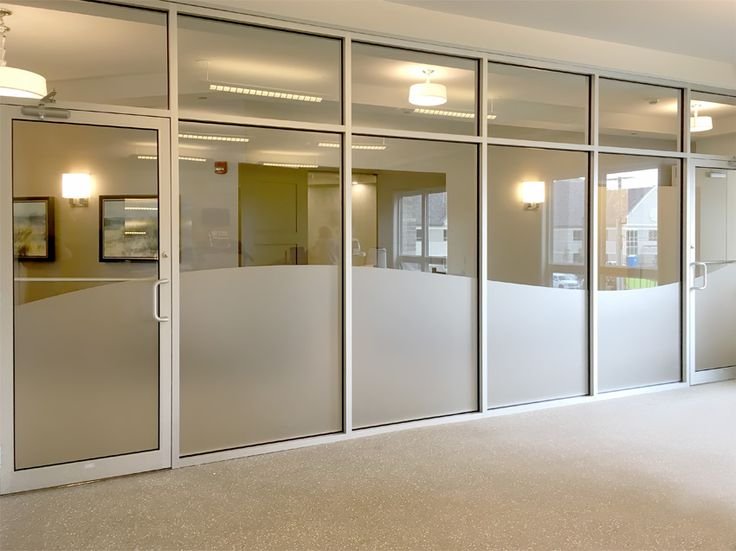
1. Glass Office Partitions
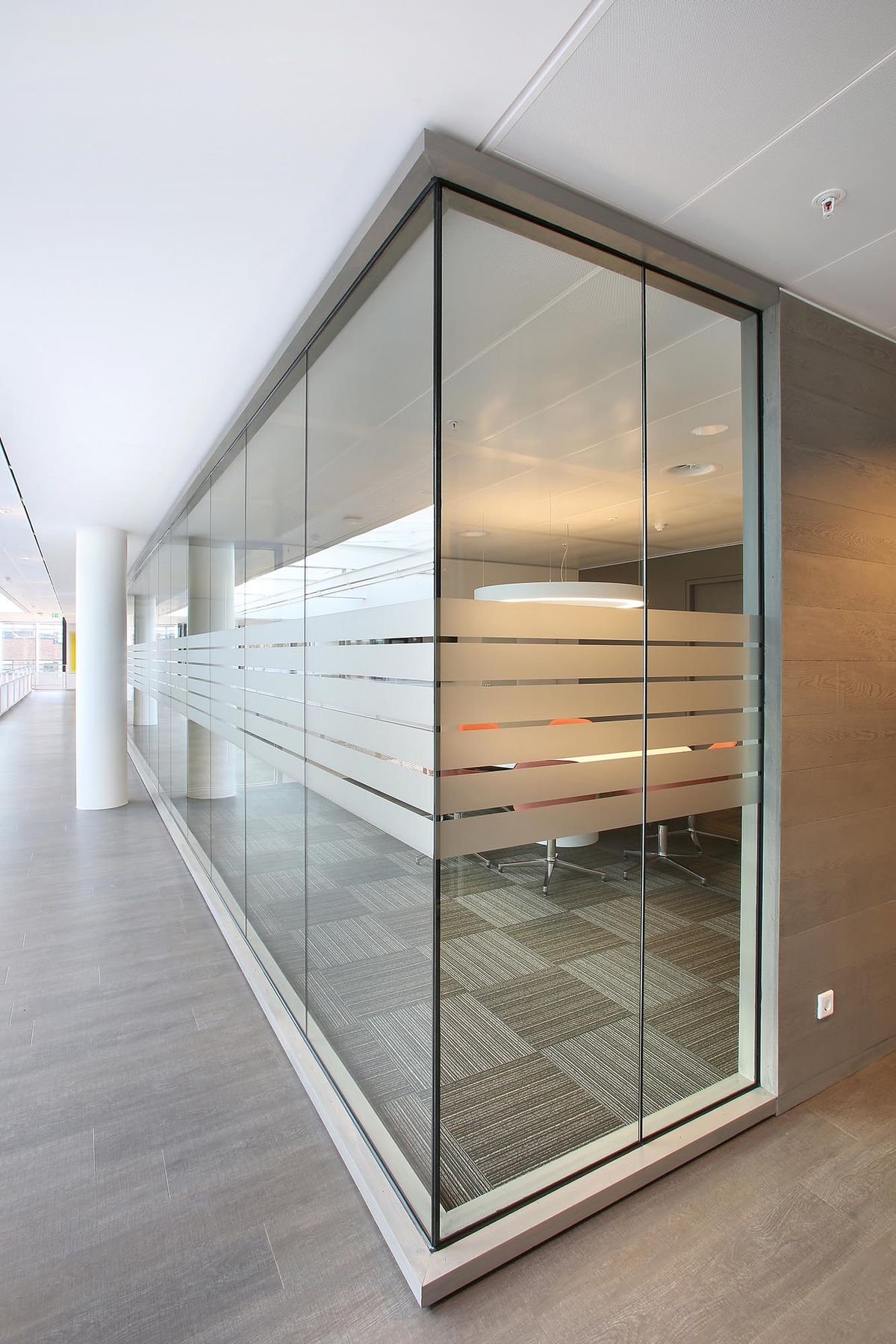
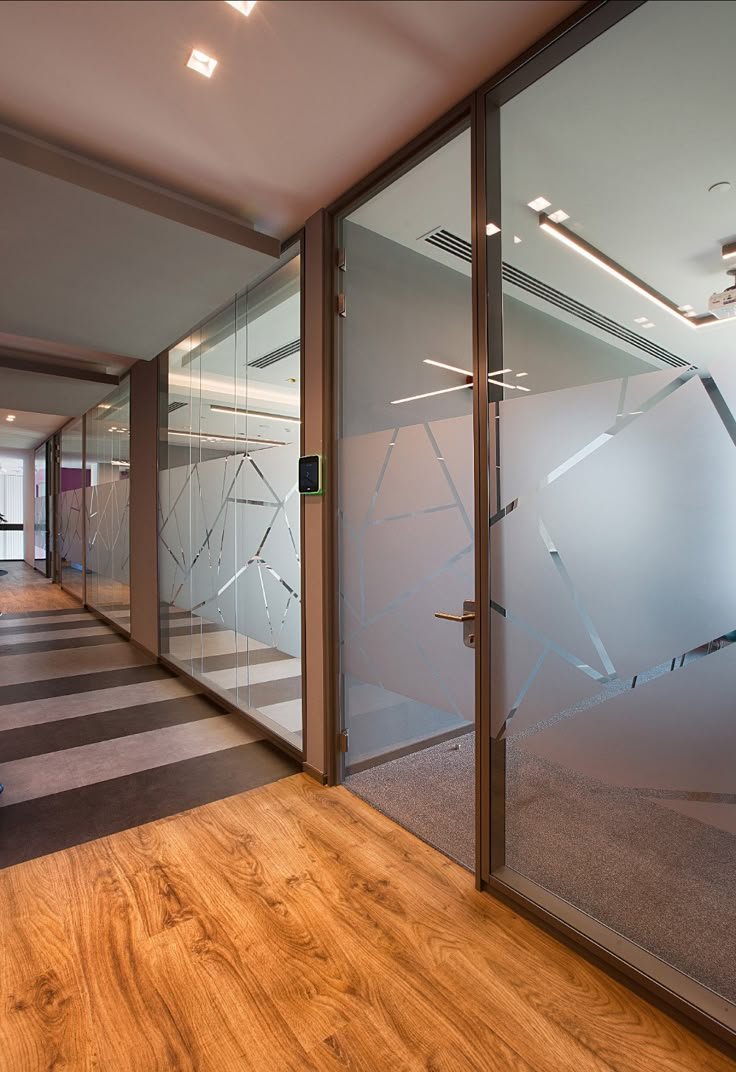
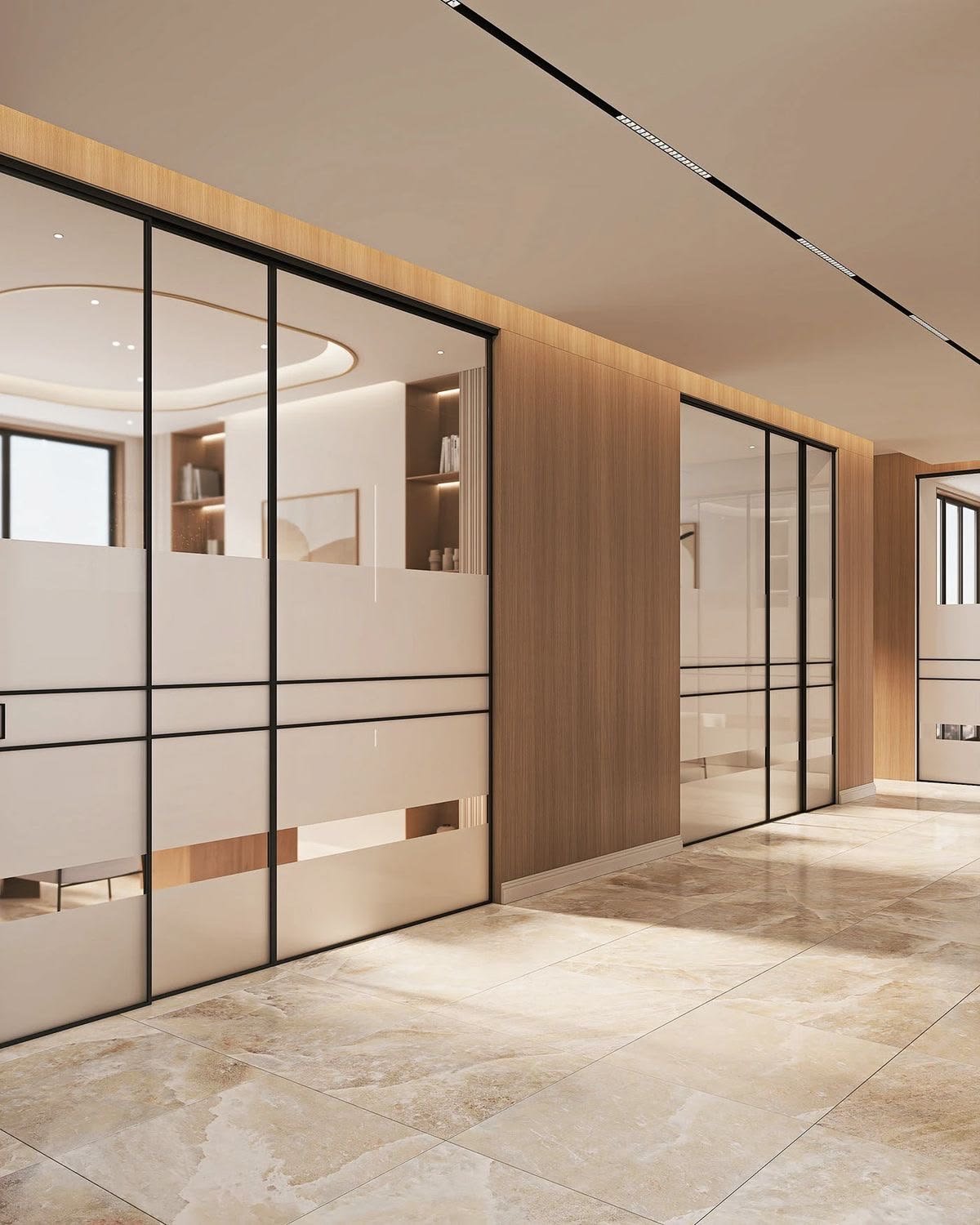
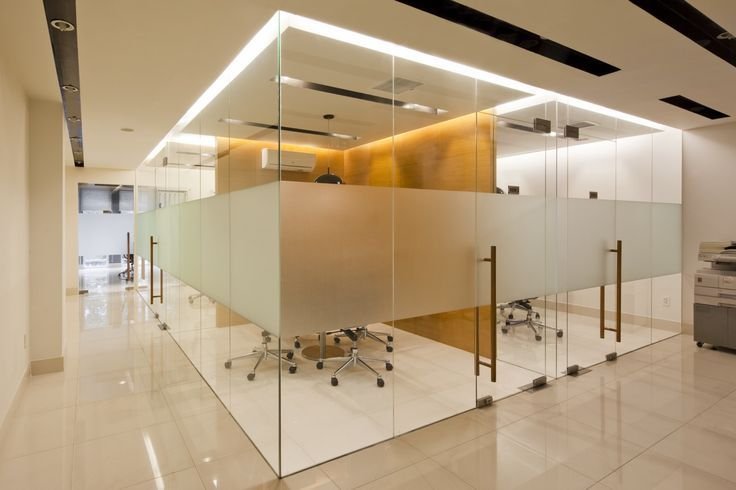
Glass partitions are widely used in modern offices because they divide rooms while keeping the workplace bright and open.
For example, a glass partition can separate a meeting room from the main office without blocking natural light. It can also make a small office feel more spacious.
Glass partitions are suitable for:
- Executive offices
- Meeting rooms
- Boardrooms
- Reception areas
- Consultation rooms
- Management offices
- Modern corporate offices
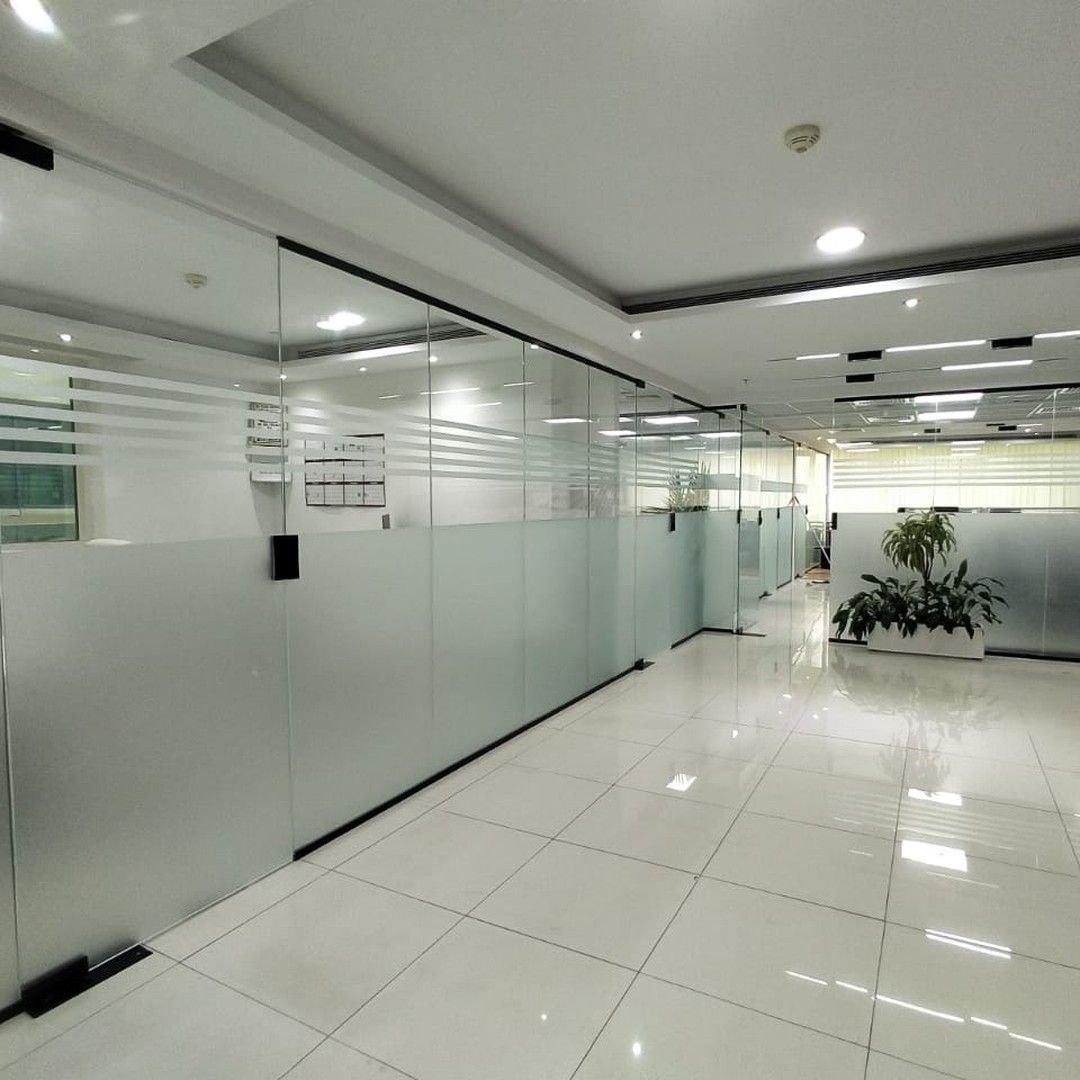
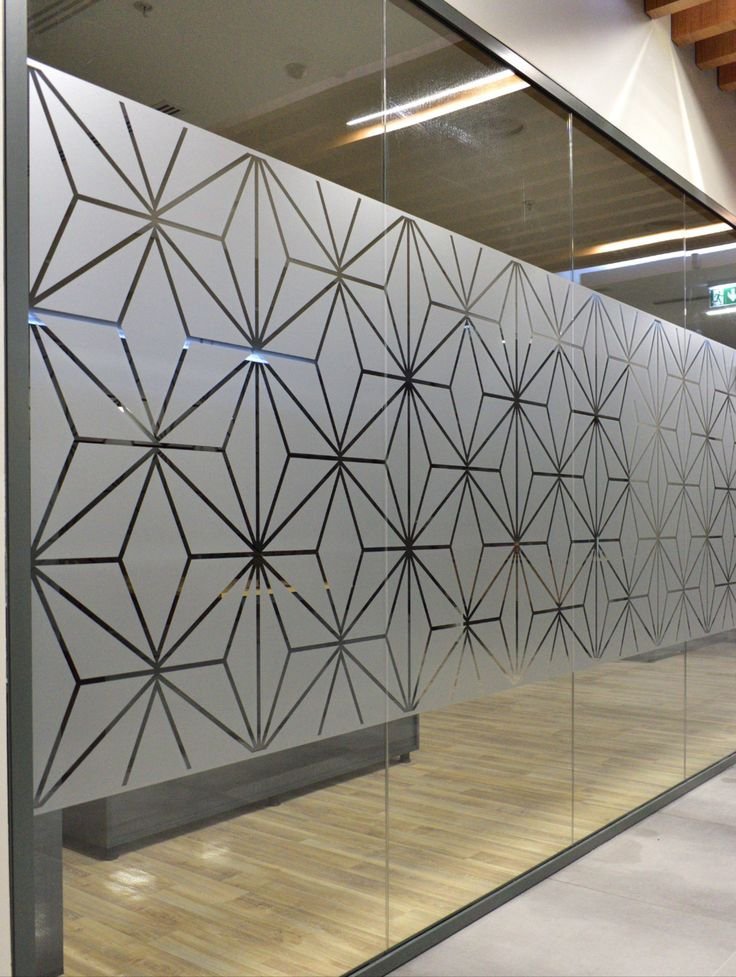
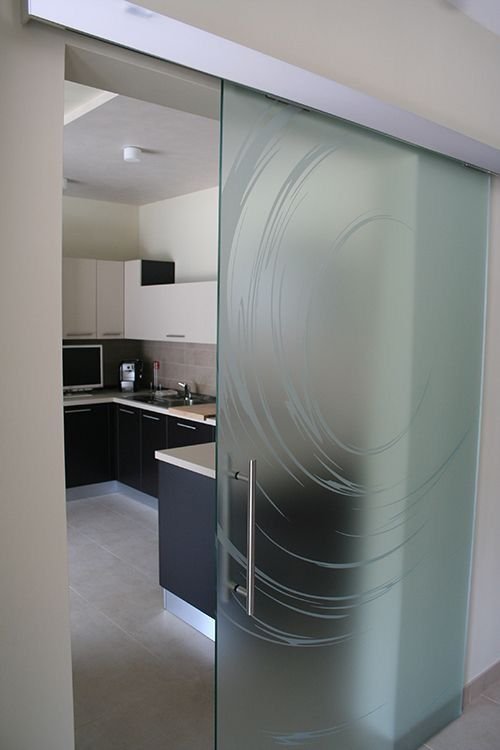
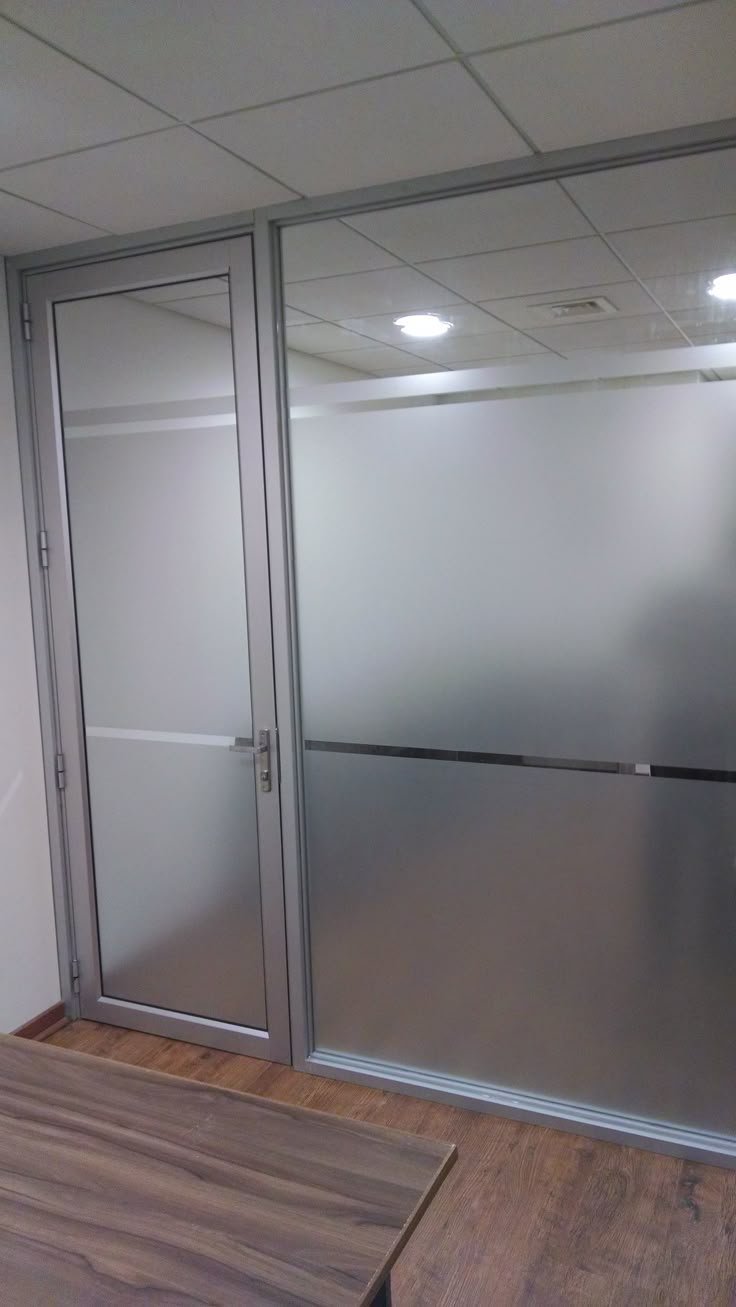
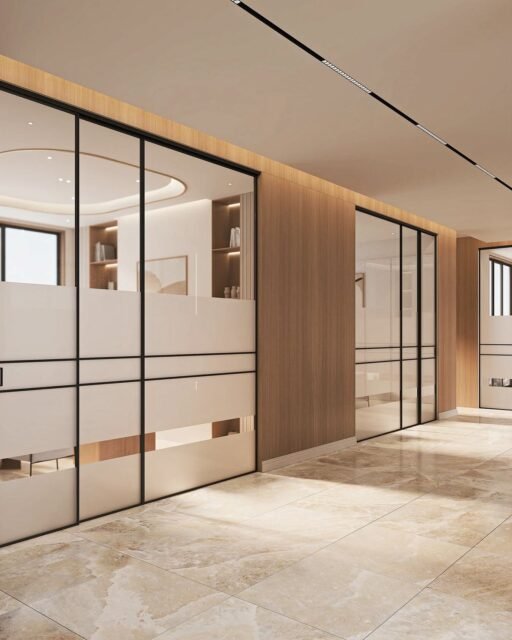
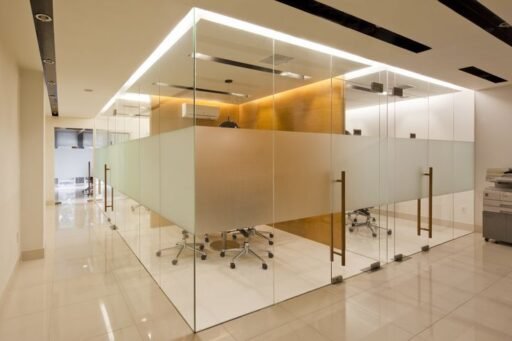
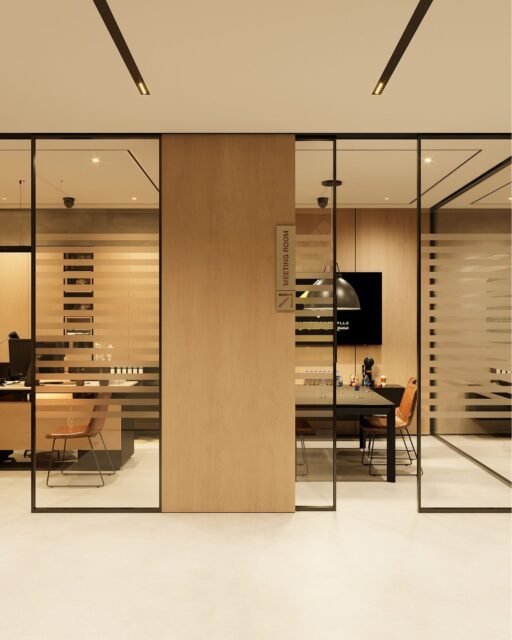
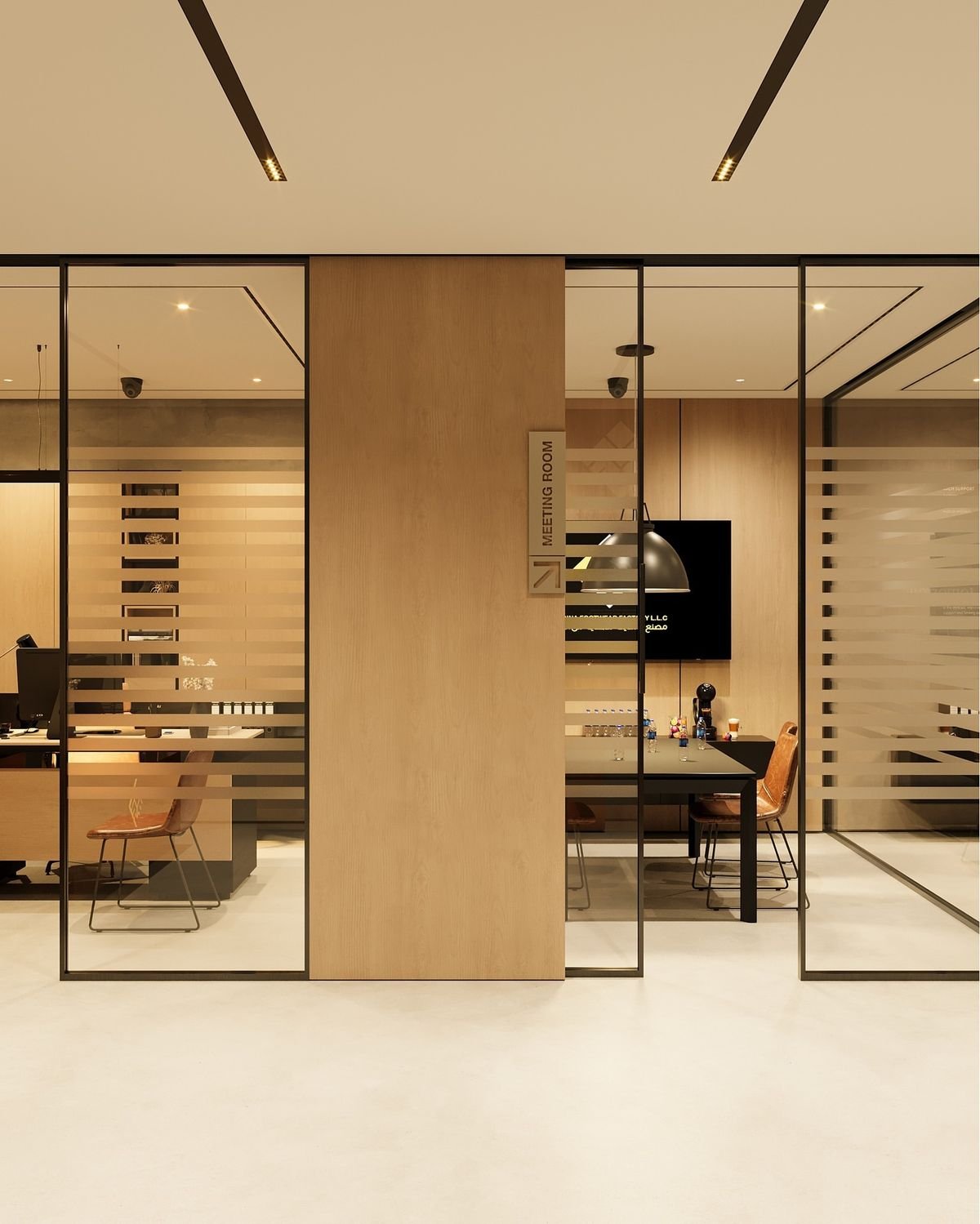
You can choose clear glass where visibility is important. However, frosted or tinted glass can provide more privacy where needed.
Glass can also be combined with aluminium frames, doors and office branding to create a complete interior design.
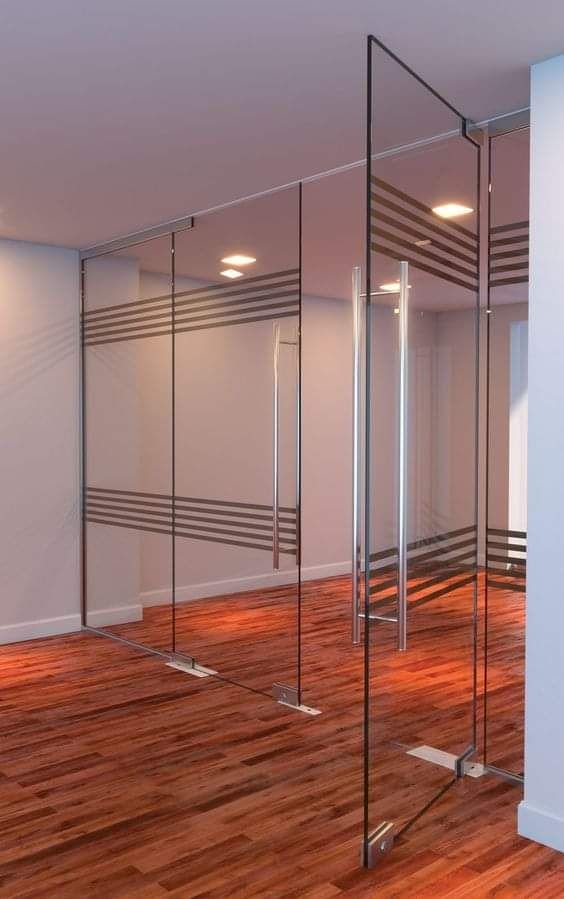
2. Frameless Glass Partitions
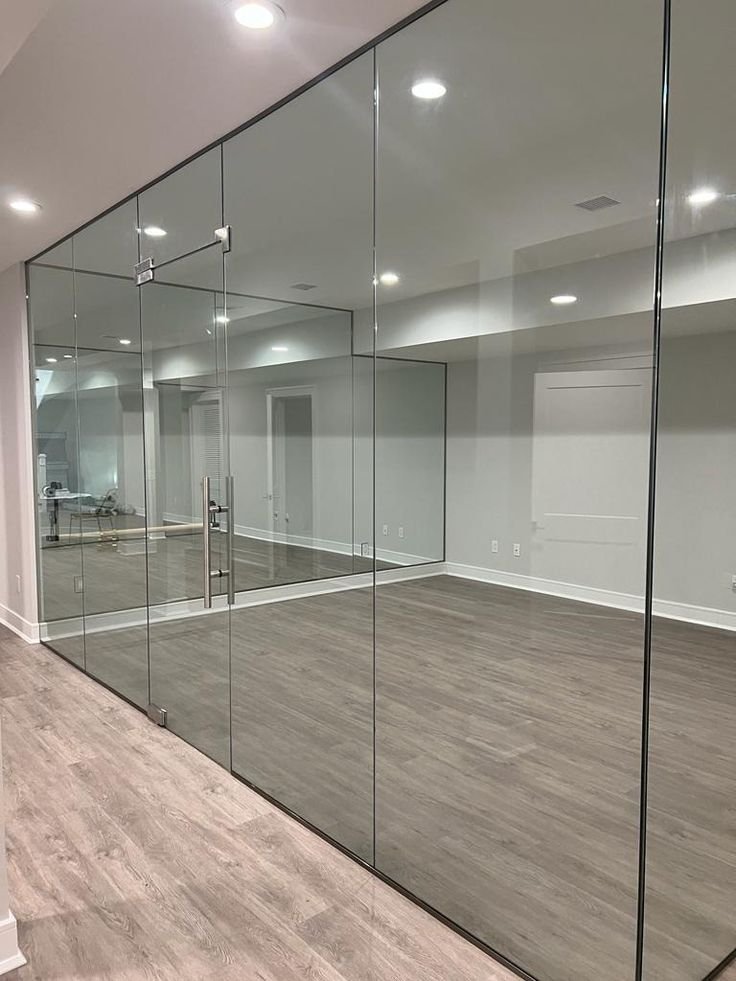
Frameless glass partitions have minimal visible framing. Therefore, they create a clean and modern appearance.
This option works particularly well in offices that want a premium contemporary look. It can also help maintain a visual connection between different parts of the workplace.
Frameless glass can be used for:
- Boardrooms
- Executive offices
- Meeting rooms
- Reception areas
- Management offices
- Modern commercial offices
However, clear glass does not provide much visual privacy. For that reason, frosting, tinted sections or other privacy treatments can be added where necessary.
3. Aluminium Office Partitions
Aluminium partitions provide a practical way to divide office space.
The aluminium frame can be combined with glass, MDF, gypsum or other panels. As a result, you can create different levels of privacy within the same office.
Aluminium partitions are suitable for:
- Private offices
- Managerial offices
- Meeting rooms
- Reception areas
- Training rooms
- Departmental offices
- General work areas
Another advantage is flexibility. You can use more glass in areas where natural light is important and more solid panels in rooms that need additional privacy.
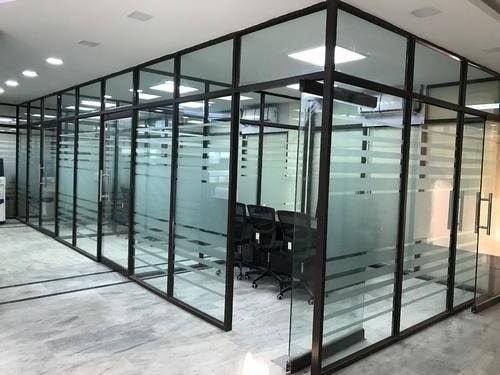
4. Aluminium and Glass Partitions
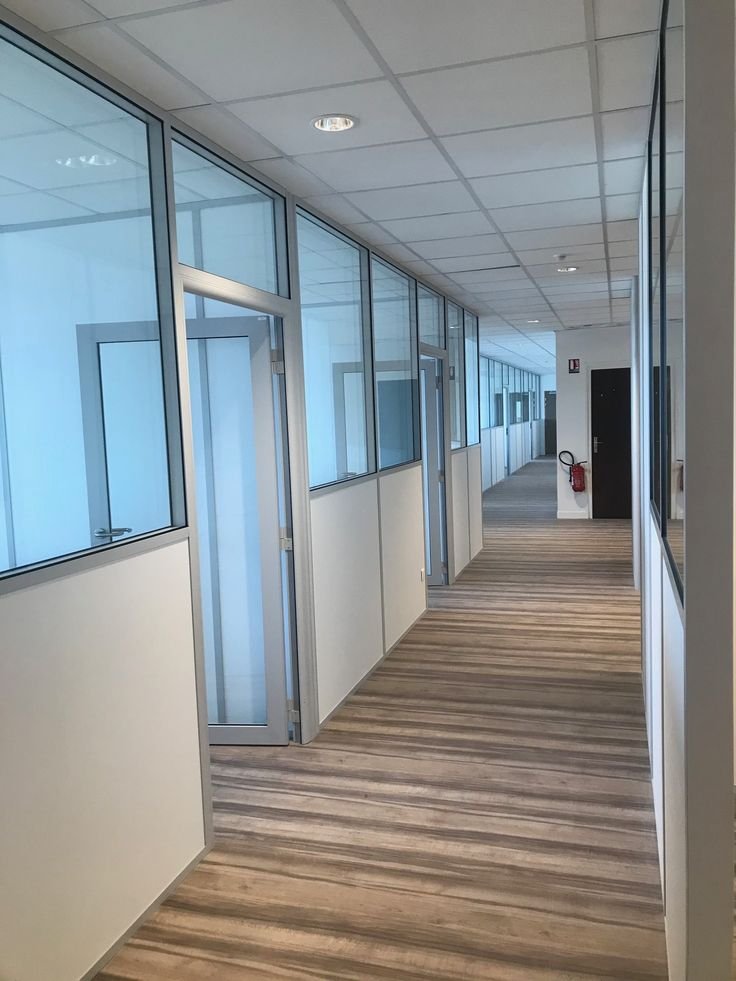
Aluminium and glass partitions combine a strong frame with glass panels.
This makes them a popular choice for businesses that want separate rooms without creating a heavy or closed appearance.
Depending on the project, the glass may be:
- Clear
- Frosted
- Tinted
- Laminated
- Double glazed
For example, clear glass can work well in a meeting room where visibility is useful. Meanwhile, frosted glass may be more suitable for an HR or management office.
The final design can also include aluminium-framed doors, handles and other hardware.
5. Gypsum Office Partitions
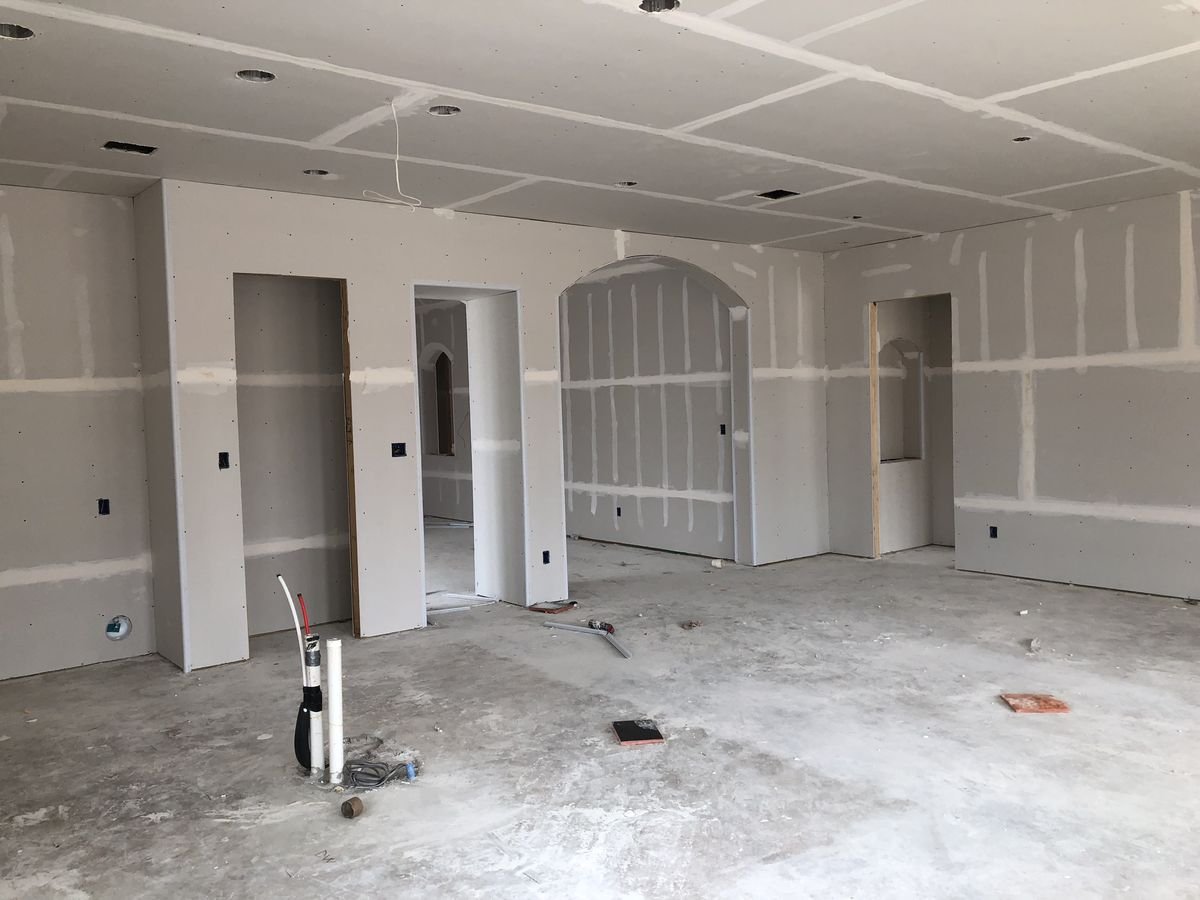
Gypsum partitions provide a solid alternative to glass.
They are useful when you want a room to feel more private and enclosed. In addition, the finished surface can be painted to match the rest of the office.
Gypsum partitions can be used for:
- Private offices
- HR offices
- Finance offices
- Staff rooms
- Storage rooms
- Service areas
- Meeting rooms
- Enclosed workspaces
They can also be combined with glass. For instance, the lower part of a partition can be solid gypsum while the upper section uses glass.
This gives you privacy without completely blocking light.
6. MDF Office Partitions
MDF panels provide another option for creating solid office divisions.
They can be used on their own or combined with aluminium and glass. Moreover, MDF can be coordinated with office furniture, cabinetry and reception areas.
MDF partitions can work well in:
- Executive offices
- Reception areas
- Meeting rooms
- Feature walls
- Departmental offices
- Branded office spaces
If you want a more customized office, MDF can also be used to introduce colours, patterns and other design features.
7. Acoustic Office Partitions
Some offices need more privacy than a simple visual barrier can provide.
For example, boardrooms, HR offices, consultation rooms and meeting rooms may handle confidential conversations. Therefore, sound control should be considered when planning these spaces.
Acoustic partition systems can help reduce the movement of sound between rooms. However, the partition alone does not determine the final acoustic performance.
The doors, seals, ceiling, floor, insulation and other openings also matter. Therefore, acoustic requirements should be considered as part of the complete room design.
Acoustic solutions are useful for:
- Boardrooms
- Meeting rooms
- Interview rooms
- Call rooms
- HR offices
- Executive offices
- Consultation spaces
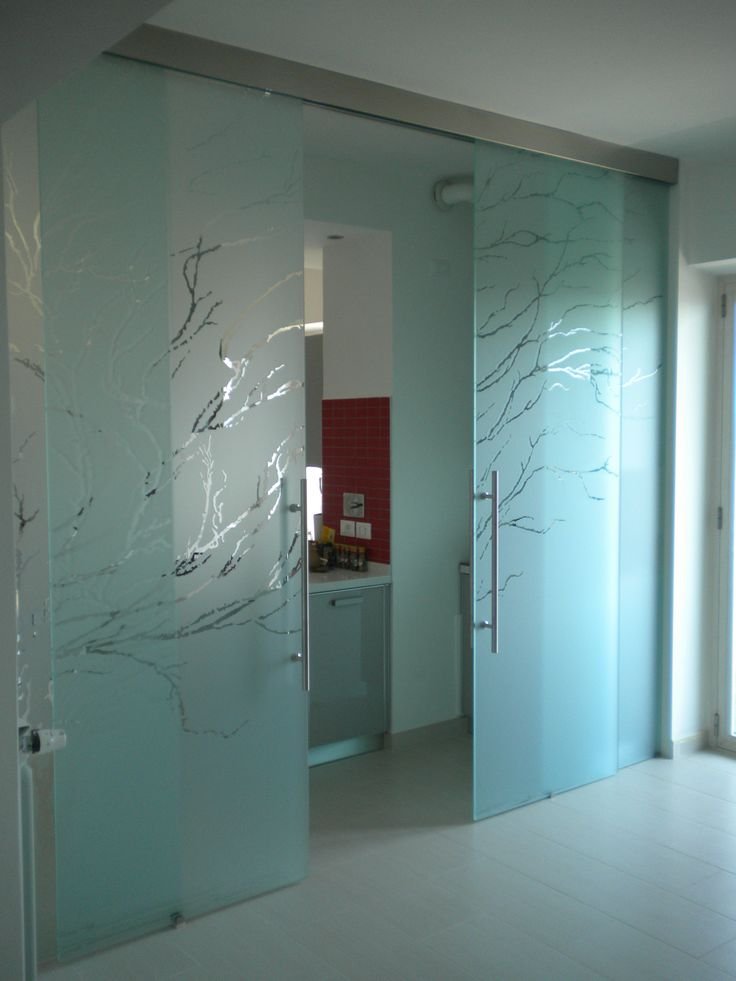
8. Movable Office Partitions
Movable partitions are designed for offices that need flexible spaces.
Instead of keeping a room permanently divided, the system can allow the space to be changed when requirements change.
For example, a large training room can be divided into smaller sections when needed. Later, the partitions can be moved to create a larger open space.
Movable partitions can be useful for:
- Training rooms
- Conference spaces
- Flexible offices
- Multi-purpose rooms
- Large commercial spaces
They are particularly useful for businesses that expect their space requirements to change over time.
9. Foldable Office Partitions
Foldable partitions provide another flexible option.
They allow a large room to be separated when required. At the same time, the room can be opened up when more floor space is needed.
They may be suitable for:
- Conference rooms
- Training rooms
- Meeting halls
- Large offices
- Multi-purpose commercial spaces
Before selecting this option, it is important to consider the room size, available storage space, frequency of use and required privacy.
10. Hybrid Office Partitions
A hybrid partition combines different materials in one office design.
For example, you can combine:
- Aluminium + glass
- Gypsum + glass
- Aluminium + MDF
- Aluminium + gypsum + glass
This approach gives you more control over privacy, lighting and appearance.
For instance, a boardroom may use more solid materials for privacy. Meanwhile, the reception area can use more glass to create an open feeling.
As a result, you do not have to use the same partition type throughout the entire office.
How to Choose the Right Office Partition in Kenya
Choosing an office partition should start with the purpose of the room.
Instead of selecting a material simply because it looks good, consider how the space will be used.
1. Consider Privacy
First, decide how much privacy each room needs.
A reception area usually does not need the same privacy as an HR office. Similarly, an executive office may require more privacy than an open workspace.
Consider whether you need:
- Visual privacy
- Speech privacy
- A fully enclosed room
- Partial separation
The answer will help determine whether glass, gypsum, MDF, acoustic or hybrid partitioning is appropriate.
2. Think About Natural Light
Natural light can make an office feel brighter and more welcoming.
Glass partitions can help daylight move between rooms. Therefore, they can be useful where the office has limited windows or where you want enclosed rooms to remain visually connected.
However, privacy still matters.
For that reason, clear glass can be combined with frosting or tinted sections where required.
3. Consider Acoustics
Noise can affect meetings, phone calls and confidential conversations.
For example, an open office may need different sound-control solutions from a boardroom.
Therefore, think about acoustic requirements before installation. The design should consider the partition, doors, seals, ceiling and other parts of the room.
4. Check the Office Layout
Good planning should come before installation.
Consider:
- Number of employees
- Departments
- Executive offices
- Meeting rooms
- Reception
- Storage
- Walkways
- Door positions
- Furniture
- Lighting
- Electrical points
- Air conditioning
- Future expansion
This helps prevent a new partition from creating problems later.
5. Consider Your Budget
Your budget will influence the materials, finishes and level of customization available.
Glass, aluminium, gypsum, MDF and acoustic systems have different costs. In addition, doors, hardware, finishes, branding and installation can affect the final quotation.
Therefore, it is better to compare complete specifications rather than comparing material prices alone.
Office Partition Options for Different Rooms
Different rooms have different requirements. As a result, the best office partition may change from one area to another.
Reception Area
A reception should create a professional first impression.
Glass and aluminium partitions can help define the reception without making the entrance feel closed. Feature walls and branded elements can also be added.
Executive Office
An executive office can combine glass and solid panels.
For example, clear or frosted glass can provide a modern appearance, while solid sections can increase privacy.
Boardroom
A boardroom often requires privacy and a professional appearance.
Glass, frosted glass or acoustic systems can be considered depending on the level of privacy required.
HR Office
HR departments may handle confidential employee information. Therefore, greater privacy may be required.
Solid gypsum, MDF, privacy glass or acoustic solutions can be considered.
Finance Office
Finance departments may also require enclosed rooms for confidential discussions and documents.
The partition design can therefore combine privacy with practical access and good lighting.
Open-Plan Workspace
Open offices often benefit from partial separation.
Glass, low partitions or selected workstation dividers can help organize departments without making the entire office feel closed.
Training Room
Training spaces often need flexibility.
For this reason, movable or foldable partition systems can be considered where the room needs to support different group sizes.
Office Partition Prices in Kenya
The cost of office partitions in Kenya depends on several factors.
These include:
- Type of partition
- Wall dimensions
- Partition height
- Glass specification
- Panel or board type
- Number of doors
- Hardware
- Acoustic requirements
- Finishes
- Branding
- Project size
- Site conditions
- Installation requirements
Therefore, there is no single price that applies to every office.
For initial budgeting, current SUIMAS pricing information places some gypsum partition systems at approximately KES 3,500–7,000 per m², while aluminium and glass systems vary depending on the design and specification.
A detailed quotation should be based on actual measurements and the selected materials. This approach gives the client a clearer picture of the total project cost.
What We Offer
At Suimas Interior Designers, we provide office partitioning as part of a wider commercial interior design service.
Our services include:
Office Partition Design
We plan partition layouts around your office size, room requirements, privacy needs and business operations.
Glass Office Partitions
We design glass partition systems for meeting rooms, boardrooms, executive offices and other modern office spaces.
Aluminium Partitions
Our aluminium systems can be combined with glass, MDF, gypsum and other materials to create practical office layouts.
Gypsum Partitions
We install gypsum partitions for private offices, meeting rooms and other enclosed areas.
Office Space Planning
Before installation, we can plan rooms, walkways, furniture positions and other important areas.
3D Office Design
A 3D design can help you understand how the proposed office layout will look before work begins.
Office Doors
Doors can be coordinated with the selected partition system, room layout and intended use.
Acoustic Office Solutions
Where privacy and sound control are important, we can incorporate suitable acoustic considerations into the office design.
Complete Office Fit-Out
We can coordinate partitions with ceilings, flooring, painting, lighting, joinery, furniture and branding.
Complete Office Fit-Out Services
An office partition is only one part of a complete workplace.
A well-planned office can combine:
- Space planning
- Interior design
- Office partitions
- Glass works
- Aluminium works
- Gypsum works
- Ceilings
- Flooring
- Painting
- Lighting
- Electrical coordination
- Joinery
- Reception desks
- Furniture
- Office branding
This coordinated approach can make the finished workplace feel more consistent.
For example, partition colours can match the reception desk and furniture. Similarly, ceiling and lighting positions can be planned around the new rooms.
Our Office Partitioning Process
1. Consultation
First, we discuss your office, business requirements and the type of rooms you need.
2. Site Assessment
Next, we review the available space and take the measurements required for planning.
3. Space Planning
We then plan the room arrangement, doors, walkways and work areas.
4. Material Selection
After that, we discuss suitable materials such as glass, aluminium, gypsum, MDF or acoustic systems.
5. Design and 3D Visualization
Where required, we prepare design concepts to help you visualize the proposed office.
6. Quotation
Once the requirements are clear, we prepare a quotation based on the agreed specifications.
7. Fabrication and Installation
After approval, the required materials are prepared and installation is carried out according to the agreed design.
8. Inspection and Handover
Finally, the completed work is inspected and the finished office is handed over.
Why Plan Office Partitions With the Rest of the Interior?
Office partitions can affect many other parts of a workplace.
For example, moving a wall can change the position of:
- Lighting
- Power sockets
- Data points
- Air conditioning
- Furniture
- Flooring
- Ceiling systems
- Door openings
Therefore, partitioning should ideally be planned together with the wider interior design.
This is especially important for a complete office renovation or new office fit-out.
Benefits of Professional Office Partitioning
A professionally planned partition system can help you:
- Make better use of available floor space
- Create private offices
- Improve workplace organization
- Maintain natural light
- Improve the appearance of the office
- Create meeting and boardroom spaces
- Support future office changes
- Coordinate furniture and lighting
- Improve privacy where required
- Create a professional business environment
More importantly, good planning helps reduce unnecessary changes after installation.
Office Partitions for New and Existing Offices
You do not have to build a new office to install partitions.
Existing offices can also be redesigned to create additional rooms or improve the current layout.
For example, a business may move into a large open-plan office and later need:
- More private offices
- A larger meeting room
- An HR office
- A finance office
- A boardroom
- A reception area
- Additional workstations
In such cases, partitioning can help reorganize the space without requiring major structural changes.
Office Partitioning for Rented Offices
Partition systems can also be useful for businesses operating from rented commercial premises.
However, the property owner’s requirements should be considered before installation.
Depending on the building and lease terms, the landlord may have specific requirements concerning alterations, electrical work, ceilings or partition layouts.
Therefore, confirm the building requirements before starting the project.
Related Services We Offer
- Building & Construction Services
- Commercial Interior Design
- 3D Design & Layout Planning
- Office Partitioning Design
- Gypsum Ceiling Installation
- Floor Installation Services
- Painting Services
- Reception Desk Design
- Branding Services
- Hotel Interior Design
- Residential Interior Design
- Interior Design Services
Other Services We Offer
In addition to office partitioning, Suimas Interior Designers provides a range of interior design, renovation and fit-out services. These include commercial interior design, residential interior design, 3D design and layout planning, gypsum ceiling installation, floor installation, professional painting, reception desk design, branding services, hotel interior design and other commercial interior solutions.
If you are planning a new office, renovation or complete fit-out, Contact SUIMAS to discuss your requirements and request a quotation.
Areas We Serve
Suimas Interior Designers provides office partitioning and commercial interior design services in Nairobi and across Kenya. In Nairobi, we serve areas such as CBD, Westlands, Upper Hill, Kilimani, Parklands, Lavington, Karen, Gigiri, Runda, Kileleshwa, Riverside, Industrial Area, Mombasa Road, South C, South B and Embakasi. We also serve clients in Mombasa, Kisumu, Nakuru, Eldoret, Thika, Kiambu, Machakos, Nyeri and other towns across the country. Our projects can cover all 47 counties, depending on the project requirements.
Frequently Asked Questions About Office Partitions in Kenya
What are the main types of office partitions in Kenya?
The main options include glass, frameless glass, aluminium, aluminium and glass, gypsum, MDF, acoustic, movable, foldable and hybrid partitions.
Which office partition is best for a modern office?
There is no single option for every office. Instead, the right choice depends on the room, privacy needs, natural light, budget and design style.
Glass and aluminium can create a modern open appearance. On the other hand, gypsum and solid panels can provide greater privacy.
Are glass office partitions private?
Clear glass provides visibility. However, you can use frosted or tinted glass when more visual privacy is needed.
Are gypsum partitions good for offices?
Yes. Gypsum partitions can create enclosed offices, meeting rooms, staff rooms and other areas where a solid wall finish is preferred.
Can glass and gypsum partitions be combined?
Yes. A hybrid system can combine glass and gypsum in the same office.
For example, solid gypsum can provide privacy at the lower section while glass allows light through the upper section.
Can office partitions be moved later?
Some systems offer more flexibility than others. Movable and foldable systems are designed for spaces that may need regular changes.
Fixed gypsum partitions may require more work if the office layout changes later.
Are office partitions soundproof?
Not automatically. Acoustic performance depends on the complete room construction.
For better sound control, the partition, doors, seals, ceiling, insulation and other openings should all be considered.
How much do office partitions cost in Kenya?
The cost depends on the partition material, measurements, glass or panel specification, doors, hardware, finishes, installation and project size.
For that reason, a detailed quotation should be prepared after reviewing the project requirements.
Can you partition a rented office?
Yes. Office partitions can be installed in rented premises. However, you should first confirm the landlord’s requirements and any conditions in the lease.
Do you offer office partitioning outside Nairobi?
Yes. Suimas Interior Designers serves Nairobi and other locations across Kenya, including suitable projects in all 47 counties.
Get Professional Office Partitioning in Kenya
The right partition can transform an open office into a more organized and professional workplace.
Whether you need glass office partitions, aluminium partitions, gypsum partitions, acoustic solutions, movable partitions or a combination of different materials, Suimas Interior Designers can help you plan the space.
We can also coordinate the partitions with ceilings, flooring, lighting, furniture, reception areas, branding and other interior finishes.
If you are planning an office renovation, new workplace or commercial fit-out, Contact SUIMAS Today for professional office partitioning, interior design and quotation services.
Suimas Interior Designers – Creating Functional, Professional and Modern Spaces Across Kenya.