Main Types of Ceilings Compared: Gypsum, Suspended, Tray and Coffered
A room can have beautiful furniture, expensive tiles and freshly painted walls yet still feel unfinished. Sometimes, the missing element is overhead. The ceiling influences how spacious a room feels, where light falls and whether the interior looks simple, elegant or dramatic.
For homeowners and businesses in Kenya, choosing a ceiling is not just about copying a design seen online. Room height, budget, lighting, maintenance and the building’s purpose all matter. A ceiling that looks impressive in a large house may overwhelm a small apartment, while a decorative design may be impractical for an office that needs regular access to cables and air-conditioning services.
Here is how four popular options compare.
1. Gypsum Ceilings: Flexible and Modern
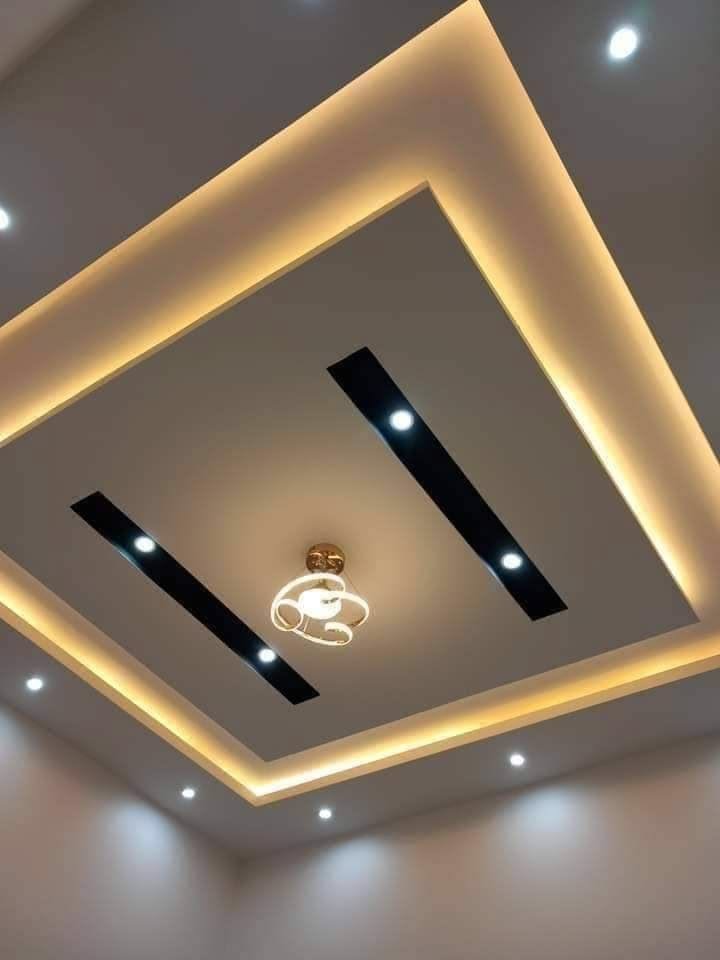
Gypsum-board ceilings are popular because they can create clean, smooth surfaces and a wide range of custom shapes.
Best uses
- Living rooms and bedrooms
- Dining areas and entrance halls
- Office receptions and boardrooms
- Selected retail and hospitality interiors
Gypsum can be used for simple flat ceilings, layered sections, bulkheads, recessed details and integrated lighting features. It is particularly suitable when you want a tailored design rather than a standard grid appearance.
Consider: Design complexity, framing, joint finishing, painting and lighting all affect the final cost. Areas exposed to moisture require materials and detailing suitable for those conditions.
2. Suspended Ceilings: Practical for Commercial Spaces
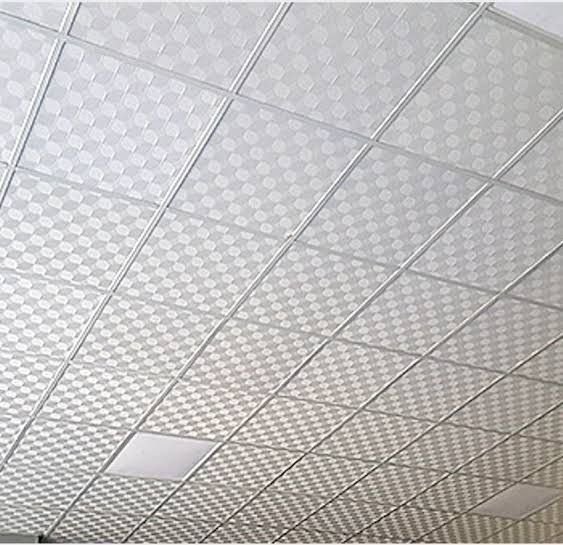
Suspended ceilings sit below the main structure and can use a grid framework with removable tiles or other panel systems.
Best uses
- Corporate offices
- Training rooms
- Commercial corridors
- Spaces with services requiring periodic access
The major advantage of a suitable modular system is maintenance access. Technicians may be able to lift individual tiles to reach selected services above the ceiling without dismantling a large section.
Some ceiling tiles also provide acoustic benefits, depending on their specification.
Consider: Grid ceilings have a more modular appearance than seamless gypsum ceilings. Choose panel dimensions, lighting positions and the grid layout carefully to achieve a neat finish.
3. Tray Ceilings: Depth Without Overcrowding
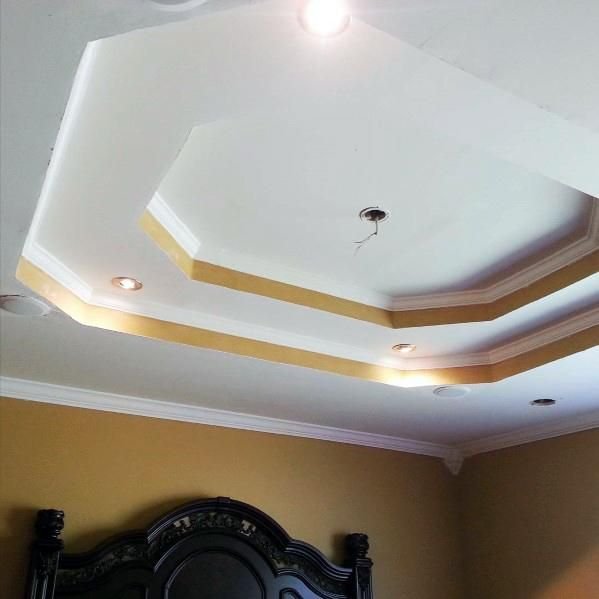
A tray ceiling has a central section that appears recessed or raised relative to the surrounding perimeter. The design can be simple or include multiple levels.
Best uses
- Living rooms
- Master bedrooms
- Dining rooms
- Selected reception and hospitality spaces
Tray ceilings are effective when you want to define a room’s central area without covering the entire ceiling with elaborate decoration. Cove lighting or carefully positioned downlights can add depth and a softer atmosphere.
Consider: The room needs sufficient ceiling height for the design to feel balanced. Keep the number of levels and lighting details proportionate to the room.
4. Coffered Ceilings: Structured and Architectural
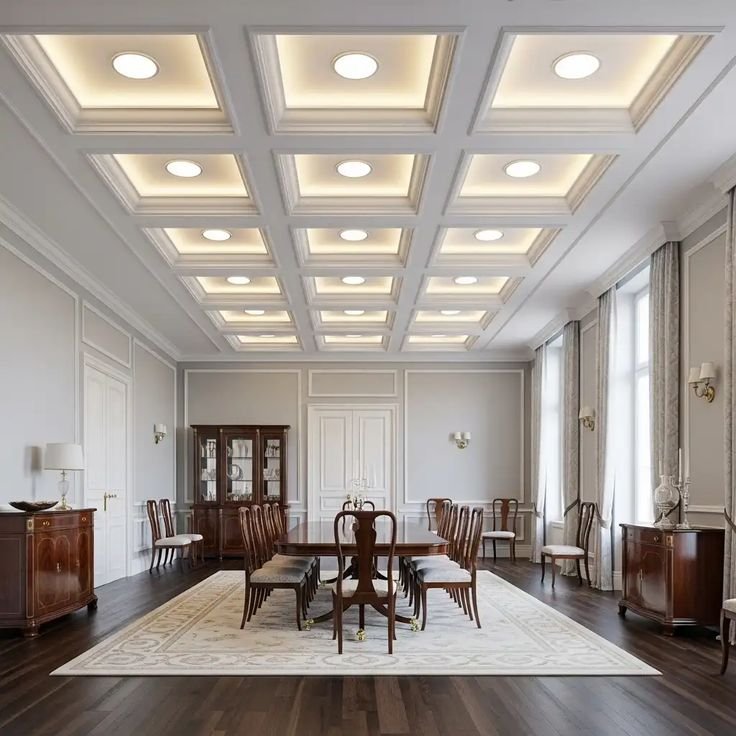
Coffered ceilings feature a repeated pattern of recessed panels formed by beams, mouldings or a decorative framework. The pattern can be traditional, contemporary or geometric.
Best uses
- Large living and dining rooms
- Executive boardrooms
- Hotel reception areas
- Formal meeting spaces
Coffered ceilings create rhythm and architectural character. Their repeated shapes can also help organise lighting or visually define different areas in a larger room.
Consider: Detailed patterns require careful setting out and finishing. They may cost more than a plain ceiling, particularly when the design includes many recesses, mouldings or decorative finishes.
Quick Comparison
| Feature | Gypsum | Suspended | Tray | Coffered |
|---|---|---|---|---|
| Main appeal | Flexible custom design | Practical access and modular finish | Depth and integrated lighting | Repeated architectural pattern |
| Common setting | Homes and offices | Commercial spaces | Homes and selected receptions | Larger, formal interiors |
| Lighting options | Recessed, cove, surface-mounted | Compatible fixtures and panels | Cove and recessed lighting | Downlights and feature lighting |
| Maintenance access | May need access panels | Often easier with removable tiles | Depends on construction | Depends on construction |
| Main consideration | Finishing and design detail | Tile, grid and service coordination | Room height and proportions | Cost and precise workmanship |
How to Choose the Right Ceiling
Start with the room’s purpose, ceiling height and the type of lighting you need. Then consider your budget and whether electrical, air-conditioning or other services need access above the ceiling.
A small bedroom may benefit from a simple gypsum design with soft lighting. A busy office may be better served by a suitable suspended system. A spacious living room could suit a tray ceiling, while a formal boardroom may benefit from coffered detailing.
Ask for a measured design and a quotation based on the actual room. Compare what each quotation includes, especially framing, finishing, paint, lighting provisions and electrical work.
Ceiling Design and Installation by SUIMAS Interiors
SUIMAS Interiors helps homeowners and businesses plan ceiling designs that complement the rest of the interior. From contemporary gypsum ceilings to layered details and lighting integration, the objective is to combine appearance with practical use.
Call/WhatsApp: 0717 044443 / 0739 255050 / 0725 021709
Email: info@suimas.co.ke
Related Post Resources
- Ceiling Gypsum Designs
- Gypsum Ceiling Installation Services
- Ceiling Design Experts in Kenya
- Gypsum Ceiling Installation Services in Kenya
- Cost of Gypsum Ceiling Installation in Kenya
- Home Designs and Interior Services
- Residential Interior Design
- Modern Home Interiors
- Residential Interior Design Trends in Kenya
- Office Design Trends in Kenya
- Best Ceiling Designs for Modern Offices
- Floor Installation Services
- Gypsum Ceilings and Integrated Lighting
- How Much Should You Budget for a Complete Home Interior Makeover?
- Contact SUIMAS Interiors