- Call Us: 0717044443 / 0739255050 / 0725021709
- Email: info@suimas.co.ke / info@interiordesigners.co.ke

- Description
Description
Quartz vs Granite Countertops Kenya – Which Is Better for Your Kitchen?
Choosing between quartz vs granite countertops in Kenya is an important decision when designing or renovating a kitchen. Both materials offer attractive finishes, durability and practical benefits. However, they differ in composition, heat resistance, maintenance, appearance and installation costs. Understanding these differences helps you select a countertop that suits your cooking habits, kitchen design and budget.
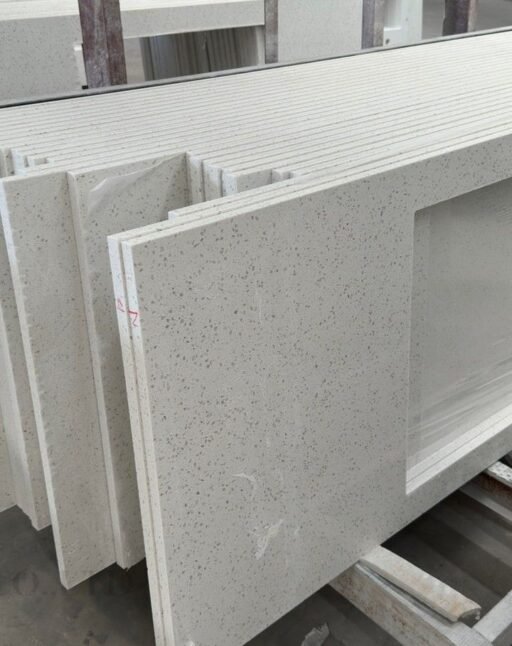
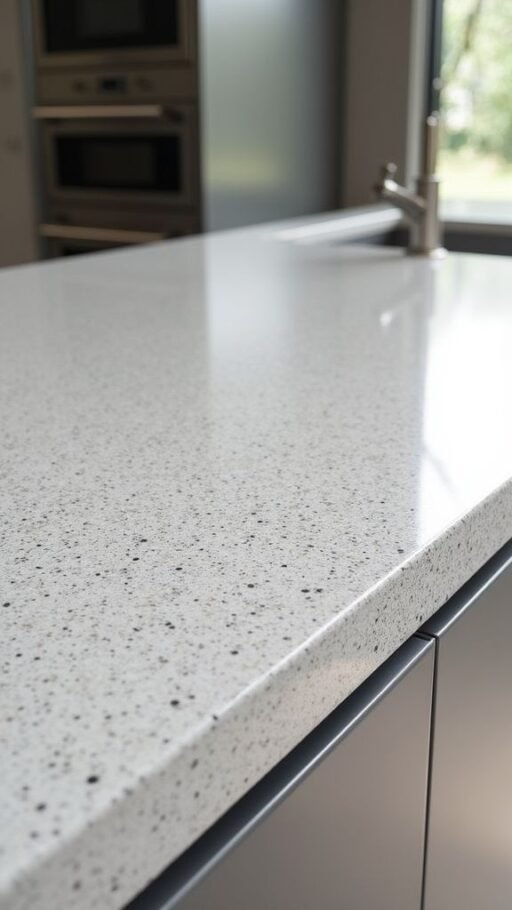
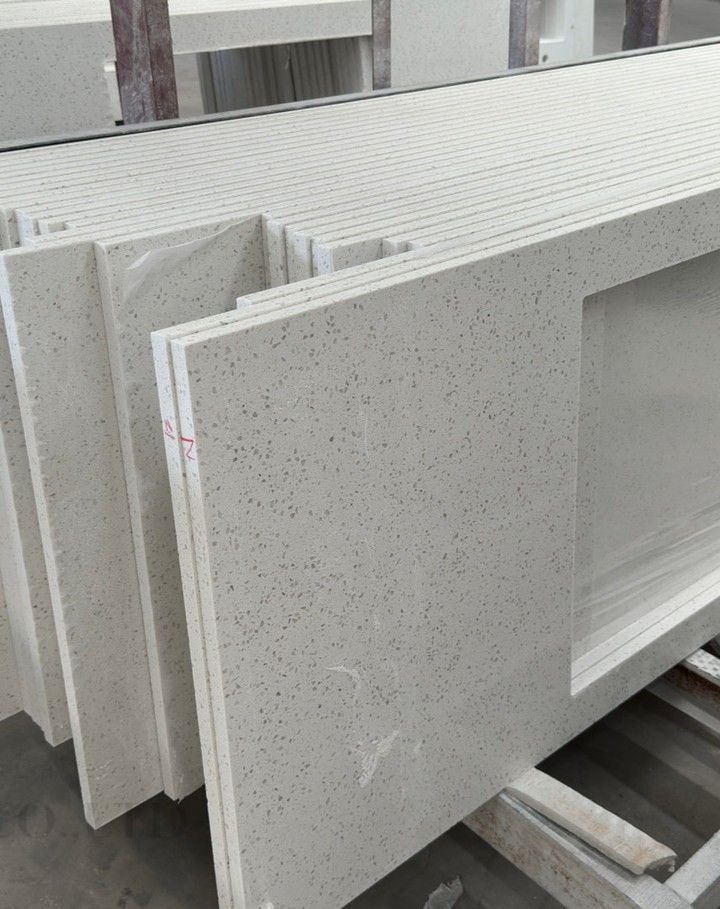
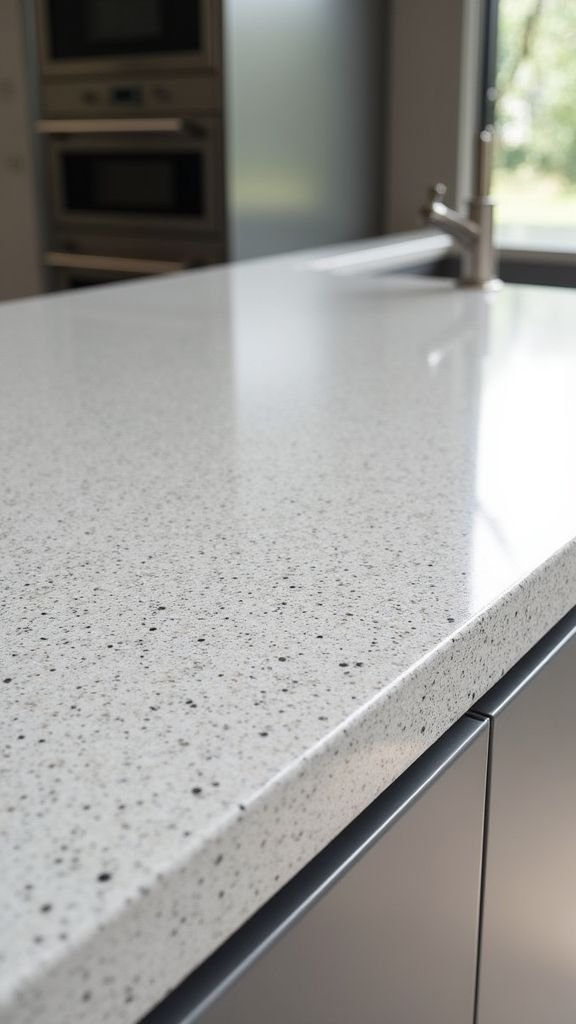
Quartz countertops are engineered surfaces made using natural quartz particles, resins and pigments. They are popular for their consistent colours, non-porous structure and relatively easy maintenance. Granite, on the other hand, is a natural stone quarried from the earth. It features unique mineral patterns, excellent heat resistance and a distinctive appearance.
At Suimas Interior Designers, we help homeowners and property developers plan modern kitchens with suitable countertops, cabinetry, storage and complementary interior finishes. Whether you prefer the natural beauty of granite or the contemporary appearance of quartz, selecting the right material can improve your kitchen’s functionality and overall design.
What We Offer
Suimas provides professional kitchen design, renovation and interior finishing solutions to help create coordinated and functional kitchen spaces.
- Kitchen Interior Design Services: Explore professional kitchen layouts, custom cabinetry, countertop selection and complete kitchen interior design.
- Kitchen and Interior Finishes: Discover suitable flooring, wall finishes, splashbacks and decorative materials for modern kitchens.
- Kitchen Renovation Services: Upgrade existing kitchens through remodelling, replacement of countertops and modern interior improvements.
- Commercial and Office Interior Solutions: Explore professional interior fit-out solutions for commercial properties and hospitality environments.
Understanding Quartz Kitchen Countertops
Quartz countertops are engineered stone surfaces manufactured using natural quartz crystals combined with resin binders, pigments and other materials.
The manufacturing process produces a dense surface with consistent colours, patterns and finishes. Unlike natural granite, quartz can be manufactured to achieve specific decorative appearances, including marble-inspired veining, plain colours and textured finishes.
Advantages of Quartz Countertops
1. Non-Porous Surface
Engineered quartz has a non-porous structure that makes it resistant to liquid absorption. This helps reduce staining and makes everyday cleaning easier.
2. Low Maintenance
Quartz generally does not require periodic sealing. Regular cleaning using mild soap and water is usually sufficient.
3. Consistent Colours and Patterns
Quartz is manufactured under controlled conditions, allowing manufacturers to produce consistent designs. This is useful for long countertops and kitchen islands where visual uniformity matters.
4. Good Stain Resistance
Quality quartz surfaces resist many common kitchen stains, including cooking oil and food spills. Prompt cleaning is still recommended.
5. Modern Appearance
Quartz is available in white, black, grey, beige and marble-effect designs, making it suitable for contemporary kitchens.
Disadvantages of Quartz Countertops
Despite its advantages, quartz has some limitations.
- It is generally more expensive than locally sourced granite.
- It is less tolerant of direct high heat than granite.
- Excessive heat can damage the resin content or cause discolouration.
- Strong impact can damage edges and corners.
- Some varieties may be affected by prolonged direct sunlight.
- Large or complicated installations may require additional fabrication work.
Quartz is particularly suitable for homeowners who prioritise consistent designs, low maintenance and good everyday stain resistance.
Understanding Granite Kitchen Countertops
Granite is a natural igneous stone formed through the cooling of molten material beneath the Earth’s surface. It is extracted from quarries, cut into slabs and processed into countertops.
Its natural mineral composition creates distinctive patterns, colours and textures. Each slab has variations that make it different from another.
Granite is available in black, white, grey, brown, red and other natural stone colours.
Advantages of Granite Countertops
1. Excellent Heat Resistance
Granite handles heat better than engineered quartz. This makes it a practical choice for kitchens where cooking activities generate considerable heat.
However, using heat-resistant mats or trivets remains advisable.
2. High Durability
Granite is a hard natural stone that offers excellent resistance to normal kitchen wear when correctly fabricated and installed.
3. Unique Natural Appearance
Every granite slab has its own mineral patterns and colour variations. This creates a distinctive appearance that cannot be perfectly replicated by manufactured surfaces.
4. Good Scratch Resistance
Granite provides a hard surface that resists everyday scratching. Nevertheless, chopping boards should always be used during food preparation.
5. Suitable for Outdoor Kitchens
Unlike many engineered quartz products, suitable granite varieties can be used in outdoor kitchens because natural granite generally handles sunlight and temperature variations better.
6. Different Natural Finishes
Granite is available in polished, honed and leathered finishes, giving homeowners flexibility when planning kitchen interiors.
Disadvantages of Granite Countertops
Granite also has limitations that should be considered before installation.
- It is naturally porous to varying degrees.
- It generally requires periodic sealing.
- Some varieties have limited availability.
- Natural patterns can vary between slabs.
- Heavy slabs require suitable cabinet support.
- Repairs and replacement can be complicated when the original slab is unavailable.
Granite is suitable for homeowners who prefer natural stone, excellent heat resistance and distinctive patterns.
Quartz vs Granite Countertops: Detailed Comparison
Although both materials are popular for kitchen countertops in Kenya, they perform differently depending on how the kitchen is used.
| Comparison factor | Quartz | Granite |
|---|---|---|
| Material | Engineered stone | Natural stone |
| Appearance | Consistent patterns | Unique natural patterns |
| Porosity | Generally non-porous | Naturally porous |
| Heat resistance | Moderate | Excellent |
| Scratch resistance | Very good | Very good |
| Stain resistance | Generally very good | Depends on sealing |
| Sealing | Generally unnecessary | Usually required |
| Maintenance | Low | Moderate |
| Colour selection | Wide manufactured range | Natural stone variations |
| Outdoor suitability | Product-dependent; generally less suitable | Suitable varieties available |
| Cost in Kenya | Generally higher | Local granite generally cheaper |
| Best application | Modern indoor kitchens | Busy kitchens and natural stone designs |
1. Quartz vs Granite: Which Is More Durable?
Both quartz and granite are durable countertop materials.
Granite offers excellent hardness and heat resistance, making it suitable for demanding kitchen environments. Quartz also provides very good durability and resistance to everyday stains and scratches.
However, both materials can chip or crack under severe impact, particularly around unsupported edges.
Winner: Both perform well. Granite has an advantage in heat resistance, while quartz offers excellent everyday stain resistance.
2. Quartz vs Granite: Which Is More Heat Resistant?
Heat resistance is one of the biggest differences between these materials.
Granite naturally withstands high temperatures better than engineered quartz. Quartz contains resin binders that can be affected by excessive heat.
For kitchens where hot cookware is frequently handled, granite provides greater heat tolerance.
However, neither material should be treated as completely immune to thermal damage. Using trivets and heat-resistant mats is recommended.
Winner: Granite.
3. Quartz vs Granite: Which Resists Stains Better?
Quartz generally performs better when it comes to stain resistance because its non-porous surface limits liquid absorption.
Granite is naturally porous, although suitable sealing helps reduce the absorption of liquids and staining substances.
Both surfaces should be cleaned promptly after food and liquid spills.
Winner: Quartz.
4. Quartz vs Granite: Which Requires Less Maintenance?
Quartz is generally easier to maintain because it does not normally require periodic sealing.
Granite needs appropriate sealing depending on its porosity, the sealant used and manufacturer recommendations.
Both materials can be cleaned using mild soap and water with a soft cloth.
Winner: Quartz.
5. Quartz vs Granite: Which Has Better Designs?
This depends on the appearance you prefer.
Quartz offers consistent colours and manufactured patterns, including marble-inspired designs. This makes it easier to coordinate several countertop sections.
Granite offers natural mineral patterns and variations. Each slab has a distinctive appearance that creates a natural stone finish.
Winner: Quartz for consistency; granite for natural uniqueness.
6. Quartz vs Granite: Which Is More Affordable?
Local Kenyan granite is generally more affordable than premium engineered quartz.
However, imported granite can cost considerably more than local varieties. Similarly, quartz prices vary depending on manufacturer, colour, thickness and quality.
Winner: Local granite for initial affordability.
Quartz vs Granite Countertop Prices in Kenya
The cost of installing quartz or granite countertops in Kenya depends on material quality, dimensions, slab thickness, fabrication and installation requirements.
The following figures are indicative supply-and-installation budgeting ranges.
| Countertop material | Estimated price per m² |
|---|---|
| Local Kenyan granite | KES 8,000–18,000 |
| Imported granite | KES 18,000–30,000 |
| Standard quartz | KES 18,000–24,000 |
| Premium quartz | KES 24,000–35,000 |
These estimates are not fixed supplier quotations. Actual prices may vary according to availability, selected slab, transportation, cut-outs, edge profiles and installation complexity.
Example: Comparing Quartz and Granite for a Kitchen
Suppose your kitchen requires approximately 3 metres of countertop length with a depth of 600mm.
The total countertop area would be:
3m × 0.6m = 1.8m².
Using the indicative prices above:
| Material | Estimated countertop budget |
|---|---|
| Local granite | KES 14,400–32,400 |
| Imported granite | KES 32,400–54,000 |
| Standard quartz | KES 32,400–43,200 |
| Premium quartz | KES 43,200–63,000 |
These are area-based estimates. They do not necessarily include all additional fabrication, cut-outs, transport or installation charges. Confirm the quotation inclusions before making a purchase decision.
Factors That Affect Quartz and Granite Prices
1. Material Origin
Locally sourced granite may cost less than imported granite. Imported quartz brands and premium collections may also attract higher prices.
2. Thickness
Common countertop thicknesses include 20mm and 30mm, depending on material availability and design requirements.
3. Colour and Pattern
Premium marble-effect quartz and distinctive natural granite varieties may cost more than standard designs.
4. Countertop Dimensions
Larger worktops require more material and fabrication work.
5. Edge Finishing
Straight edges are generally simpler to fabricate than decorative or built-up edge profiles.
6. Cut-outs and Fabrication
Sink openings, hob cut-outs, joints and other customised details influence the final quotation.
7. Installation and Transportation
Delivery distance, site access and installation complexity can affect overall project costs.
Which Is Better for Kenyan Cooking Habits?
Kitchen countertops in Kenyan homes are used for a wide range of activities, including food preparation, cooking, washing and serving meals.
From preparing ugali and chapati to handling cooking oil, vegetables, meat and other ingredients, the worktop needs to support regular kitchen activities.
Both granite and quartz can serve these purposes, but their different properties make them suitable for different households.
Granite for Heavy Cooking Activities
Granite is a good choice for households that prioritise heat resistance and natural stone durability.
Its ability to tolerate higher temperatures makes it suitable for busy cooking environments.
However, users should still clean spills promptly and maintain the stone’s protective seal.
Quartz for Busy Family Kitchens
Quartz is suitable for families who prefer low-maintenance surfaces and consistent kitchen designs.
Its non-porous structure helps resist everyday staining, while its wide range of finishes makes it easy to coordinate with kitchen cabinets.
However, hot cookware should never be placed directly on quartz.
Quartz for Modern Apartments
Quartz is a popular option for contemporary apartment kitchens because of its consistent appearance and range of modern finishes.
White, grey and marble-effect designs complement modern cabinetry and open-plan living spaces.
Granite for Natural Stone Interiors
Granite is suitable for homeowners who prefer natural materials and distinctive stone patterns.
It can create an attractive finish in both traditional and contemporary kitchens.
Which Countertop Is Better for Kitchen Islands?
Both quartz and granite are excellent options for kitchen islands.
The choice depends on the desired appearance, available budget and intended use.
Quartz Kitchen Islands
Quartz is particularly suitable for modern kitchen islands because it offers consistent patterns and a wide selection of colours.
Popular choices include:
- White marble-effect quartz.
- Grey quartz.
- Black quartz.
- Beige quartz.
- Calacatta-inspired quartz.
Granite Kitchen Islands
Granite is suitable for statement islands where natural stone patterns are desirable.
Popular options include:
- Black Galaxy granite.
- White granite.
- Tan Brown granite.
- Grey granite.
- Blue Pearl granite.
For waterfall island designs, both materials can create attractive finishes. Proper fabrication and structural support are essential, especially where the countertop includes extended overhangs.
How to Choose Between Quartz and Granite Countertops
Before choosing either material, consider the following factors.
1. Establish Your Kitchen Budget
If affordability is your priority, locally sourced granite may offer better initial value.
If you have a higher budget and prefer a consistent, low-maintenance surface, quartz may be more suitable.
2. Consider Your Cooking Habits
Households that frequently handle hot cookware may prefer granite because of its higher heat tolerance.
Those who prioritise stain resistance and easy maintenance may prefer quartz.
3. Decide on Your Preferred Appearance
Quartz is suitable for homeowners who prefer consistent colours and modern marble-inspired patterns.
Granite is ideal for those who appreciate natural variations and authentic stone characteristics.
4. Consider Long-Term Maintenance
Quartz generally requires less maintenance because it does not normally require sealing.
Granite requires periodic sealing depending on the selected stone and manufacturer’s recommendations.
5. Check Material Quality
Not all quartz and granite products are identical.
Ask suppliers about material specifications, thickness, origin, finish, warranty and maintenance recommendations.
6. Consider the Kitchen Layout
The countertop should complement the kitchen cabinets, island, splashback, flooring and overall interior design.
Professional kitchen planning helps coordinate these elements.
Quartz vs Granite Installation Considerations
Both materials require accurate measurements, appropriate fabrication and professional installation.
The installation process generally includes:
- Site Assessment: Evaluate the kitchen layout and existing cabinet arrangement.
- Material Selection: Select the preferred quartz or granite colour, pattern and finish.
- Measurements: Measure the countertop sections, including islands and breakfast counters.
- Fabrication: Cut the material according to the approved dimensions.
- Cabinet Preparation: Ensure the cabinets are level and structurally suitable.
- Installation: Position and secure the countertop using appropriate installation methods.
- Finishing: Complete joints, edges and other details.
- Final Inspection: Check alignment, finishing and installation quality.
Granite and quartz are both heavy materials. Cabinet support, slab handling and installation details should be assessed by qualified installers.
Why Choose Suimas for Kitchen Countertop Solutions?
Suimas Interior Designers provides professional interior design and fit-out solutions for residential and commercial properties across Kenya.
We understand that countertop selection is only one part of creating a functional kitchen. The material should complement the cabinets, storage, lighting, flooring and overall kitchen layout.
Our kitchen design approach focuses on:
- Professional Kitchen Design: Planning functional layouts that maximise available space.
- Material Selection: Guidance on selecting suitable quartz, granite and complementary finishes.
- Customised Planning: Developing designs based on individual kitchen requirements.
- Coordinated Finishes: Matching countertops with cabinets, flooring and wall finishes.
- Project Coordination: Coordinating the activities involved in kitchen interior improvement.
- Nationwide Coverage: Supporting interior design and fit-out projects across all 47 counties in Kenya.
Whether you prefer the natural appearance of granite or the contemporary finish of quartz, Suimas can help you plan a coordinated kitchen interior.
Frequently Asked Questions About Quartz vs Granite Countertops in Kenya
1. Which is better between quartz and granite countertops in Kenya?
Quartz is generally better for low maintenance, consistent designs and stain resistance. Granite is better for heat resistance, natural stone patterns and affordability when locally sourced. The right choice depends on your cooking habits, budget and design preferences.
2. Is quartz more expensive than granite in Kenya?
Quartz is generally more expensive than locally sourced granite. Indicative supply-and-installation prices range from KES 18,000–35,000 per m² for quartz and KES 8,000–18,000 per m² for local granite.
3. Which countertop is more heat resistant?
Granite has better heat resistance than engineered quartz. Quartz contains resin binders that may be damaged by excessive heat. Using trivets is recommended for both materials.
4. Does granite require more maintenance than quartz?
Yes. Granite generally requires periodic sealing to help reduce liquid absorption and staining. Quartz is non-porous and does not normally require sealing.
5. Which countertop is more resistant to stains?
Quartz generally offers better stain resistance because of its non-porous structure. Properly sealed granite also provides good protection against many everyday stains.
6. Can quartz countertops be used outdoors?
Most engineered quartz products are intended primarily for indoor applications. Prolonged sunlight and outdoor temperature exposure may affect some products. Check the manufacturer’s specifications before considering outdoor installation.
7. Can granite countertops be used outdoors?
Yes. Suitable granite varieties are commonly used in outdoor kitchens because natural granite generally handles sunlight and weather exposure better than engineered quartz. The specific stone and installation materials should be selected for outdoor conditions.
8. Which material is better for a kitchen island?
Both materials work well for kitchen islands. Quartz provides consistent colours and modern finishes, while granite offers unique natural patterns and excellent heat resistance.
9. How long do quartz and granite countertops last?
Both can last many years when properly selected, fabricated, installed and maintained. Their lifespan depends on material quality, usage, installation and care.
10. Can I replace granite with quartz without changing my kitchen cabinets?
In many cases, yes. However, the existing cabinets must be assessed to confirm that they are level and structurally suitable for the new countertop. Measurements and sink or hob arrangements may also need adjustment.
11. Which countertop is easier to clean?
Quartz is generally easier to maintain because it does not normally require sealing. Both materials can be cleaned using mild soap, water and a soft cloth.
12. Can quartz and granite be combined in one kitchen?
Yes. Different countertop materials can be used in separate kitchen sections, such as quartz on the main worktop and granite on an island. However, the colours, thicknesses and finishes should be coordinated to maintain a consistent design.
Get Expert Guidance on Quartz and Granite Countertops in Kenya
Still deciding between quartz and granite countertops for your kitchen?
Suimas Interior Designers can help you assess your kitchen layout, compare suitable countertop materials and plan a coordinated interior design solution.
Whether you are building a new kitchen, renovating an existing space or upgrading your kitchen island, our team can help you plan a practical and attractive finish.
Suimas Interior Designers
Location: Nairobi CBD, Kenya
Phone: 0717 044 443 / 0739 255 050 / 0725 021 709
Email: info@suimas.co.ke
Website: https://suimas.co.ke/
We provide interior design and fit-out solutions across Nairobi, Mombasa, Kisumu, Nakuru, Eldoret, Kiambu, Machakos and all 47 counties in Kenya.
Related Interior Design Services We Offer
Apart from quartz and granite kitchen countertops, Suimas Interior Designers provides a range of interior design, renovation and fit-out services to help create complete and functional spaces.
Explore our related services:
- Kitchen Interior Design Services in Kenya: Professional kitchen layouts, cabinetry, countertop selection and modern kitchen design solutions.
- Kitchen Renovation Services in Kenya: Kitchen remodelling, countertop replacement, cabinetry upgrades and interior improvements.
- Interior Finishes in Kenya: Quality flooring, wall finishes, ceiling solutions and decorative materials for residential and commercial spaces.
- Office Interior Design Services: Modern office layouts, partitioning, workspace planning and commercial interior fit-outs.
- Quartz Kitchen Countertops in Kenya: Explore engineered quartz worktops, modern colours and countertop designs.
- Granite Kitchen Countertops in Kenya: Discover natural granite worktops, colours, finishes and countertop options.